Piano Exercises for Beginners
Practise five beginner piano exercises for finger control, rhythm, coordination, and keyboard confidence with a simple ten-minute routine.
Quick Answer
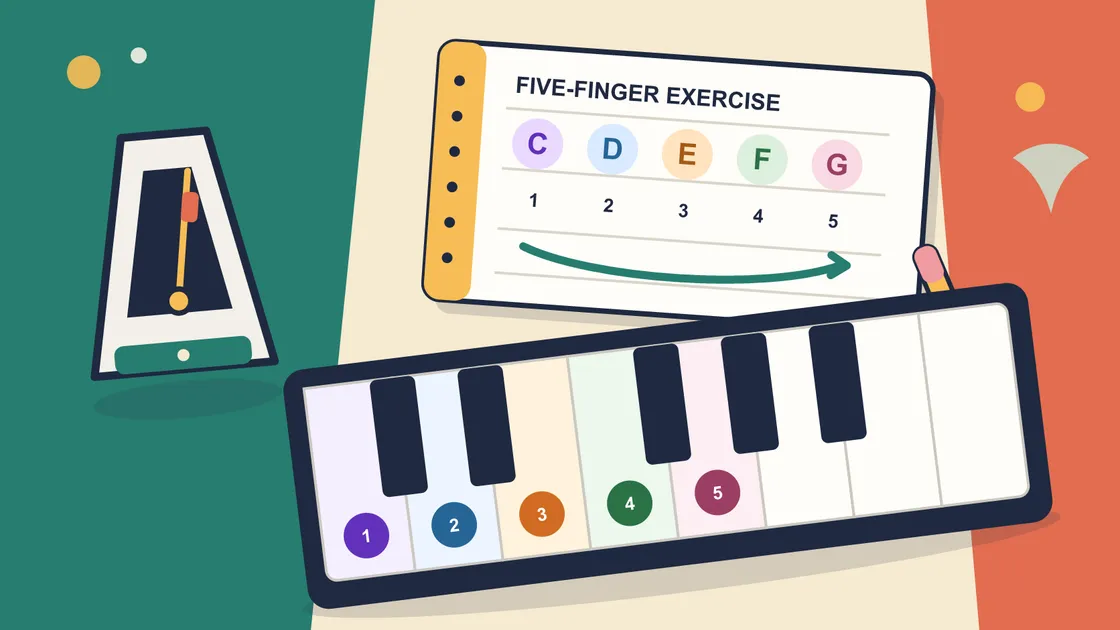
The best piano exercises for beginners are short, slow, and focused on one skill at a time. Start with a five-finger pattern on C-D-E-F-G, then practise steps and skips, simple rhythm patterns, one C major scale, and a basic two-hand exercise. Use consistent fingering, keep the hands relaxed, and stop if you feel pain. Ten careful minutes is enough; the goal is controlled movement and steady rhythm, not speed or exhaustion.
What Should Beginner Piano Exercises Improve?
An exercise is useful when it solves a real playing problem. Beginners usually need help with:
- finding notes without hesitation
- moving each finger with control
- keeping a steady pulse
- playing evenly from one note to the next
- coordinating the left and right hands
- staying relaxed while concentrating
Exercises should support songs, not replace them. A short technical exercise can prepare your hands for the exact movement that appears in a piece of music.
If you are still learning the layout, read Piano Keys Explained for Beginners first.
Five Beginner Piano Exercises At A Glance
| Exercise | Main focus | Start with |
|---|---|---|
| Five-finger pattern | Control | C-D-E-F-G |
| Steps and skips | Keyboard distance | C-D-E and C-E-G |
| Rhythm on one note | Timing | C only |
| C major scale | Smooth hand shifts | One octave |
| Two-hand pattern | Coordination | Separate C positions |
Work on one or two exercises per practice session. You do not need to complete the whole list every day.
Exercise 1: The Five-Finger Pattern
A five-finger pattern keeps each finger over one nearby key. It is simpler than a full scale because the hand does not need to change position.
Use the notes:
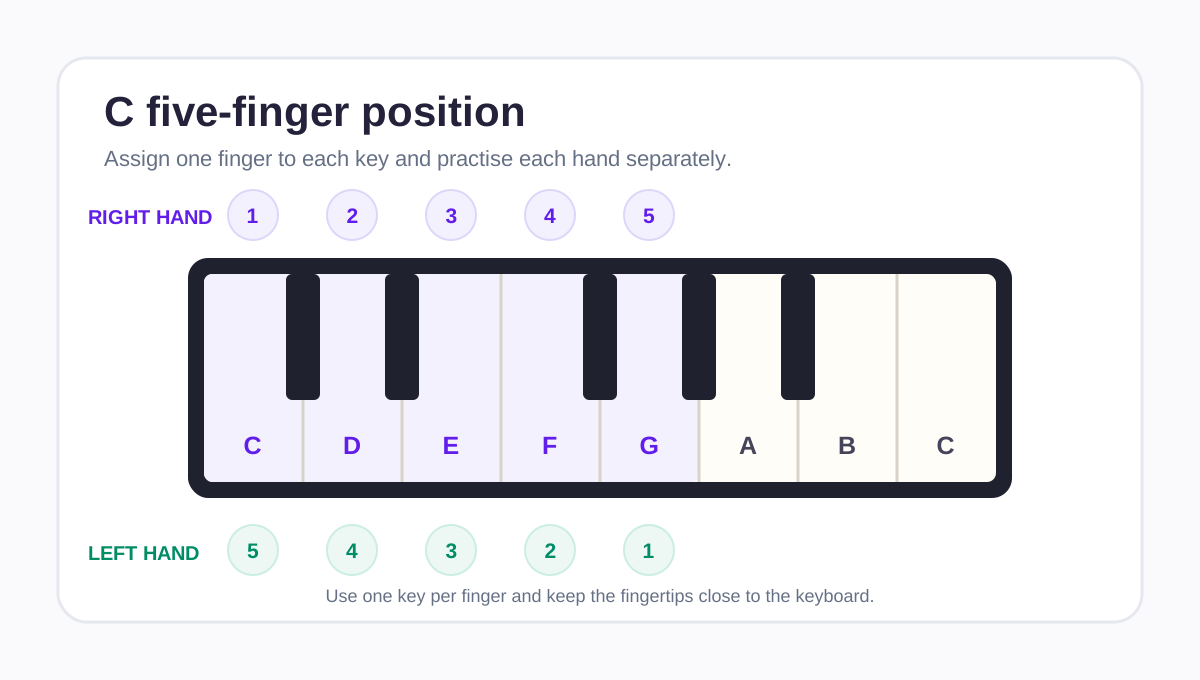
C-D-E-F-G-F-E-D-C
Right Hand
Place:
- thumb on C
- finger 2 on D
- finger 3 on E
- finger 4 on F
- finger 5 on G
Play up with 1-2-3-4-5, then back down with 5-4-3-2-1.
Left Hand
Place the left little finger on C and the thumb on G. Play up with 5-4-3-2-1, then back down with 1-2-3-4-5.
Practise each hand separately. Listen for an even sound and keep every fingertip close to its key. The fourth and fifth fingers may feel less independent, but they should not be forced or lifted dramatically.
Exercise 2: Steps And Skips
A step moves to the next neighboring key. A skip passes over one key.
First play a step pattern:
C-D-E-D-C
For the right hand, use 1-2-3-2-1. For the left hand, use 5-4-3-4-5.
Then play a skip pattern:
C-E-G-E-C
For the right hand, use 1-3-5-3-1. For the left hand, use 5-3-1-3-5.
This exercise teaches your hand to feel different distances. It also prepares you to recognize scale movement, broken chords, and melody shapes in beginner songs.
Look at the keys before starting, then try to keep your eyes on the general area instead of checking every finger individually.
Exercise 3: Rhythm On One Note
You can practise rhythm without worrying about note changes. Choose one comfortable C and play it with your right-hand finger 2.
Try these patterns with a steady count:
- Play four steady notes while counting 1-2-3-4.
- Play on counts 1 and 3, letting each note last for two counts.
- Play two even notes on each count: 1-and-2-and-3-and-4-and.
- Alternate one slow measure and one faster measure.
Clap each pattern before playing it. If the faster notes become uneven, return to the slower pattern.
A metronome can help, but it is optional. Start around 50 or 60 beats per minute and use it to check steadiness, not to push speed.
Exercise 4: One C Major Scale
The C major scale extends beyond a five-finger position and teaches the hand to move smoothly along the keyboard.
Its notes are:
C-D-E-F-G-A-B-C
Practise one hand at a time. The standard ascending fingering is:
- Right hand: 1-2-3-1-2-3-4-5
- Left hand: 5-4-3-2-1-3-2-1
Play slowly enough to make the thumb movement comfortable. One accurate scale up and down is more useful than several rushed repetitions.
For the complete fingering and practice steps, use Piano Scales for Beginners.
Exercise 5: Simple Two-Hand Coordination
Place both hands in separate C five-finger positions, about one octave apart. The right thumb starts on C. The left little finger starts on a lower C.
Play both hands in the same direction:
C-D-E-F-G-F-E-D-C
The finger numbers are:
- Right hand going up: 1-2-3-4-5
- Left hand going up: 5-4-3-2-1
Start with only C-D-E. When those three notes line up, add F and G. Move slowly and listen for both notes sounding together.
If one hand repeatedly arrives early, practise that hand alone once, then combine the hands again. Do not solve coordination problems by pressing harder.
A Ten-Minute Piano Exercise Routine
Use this as a complete short session or as the technical part of a longer practice.
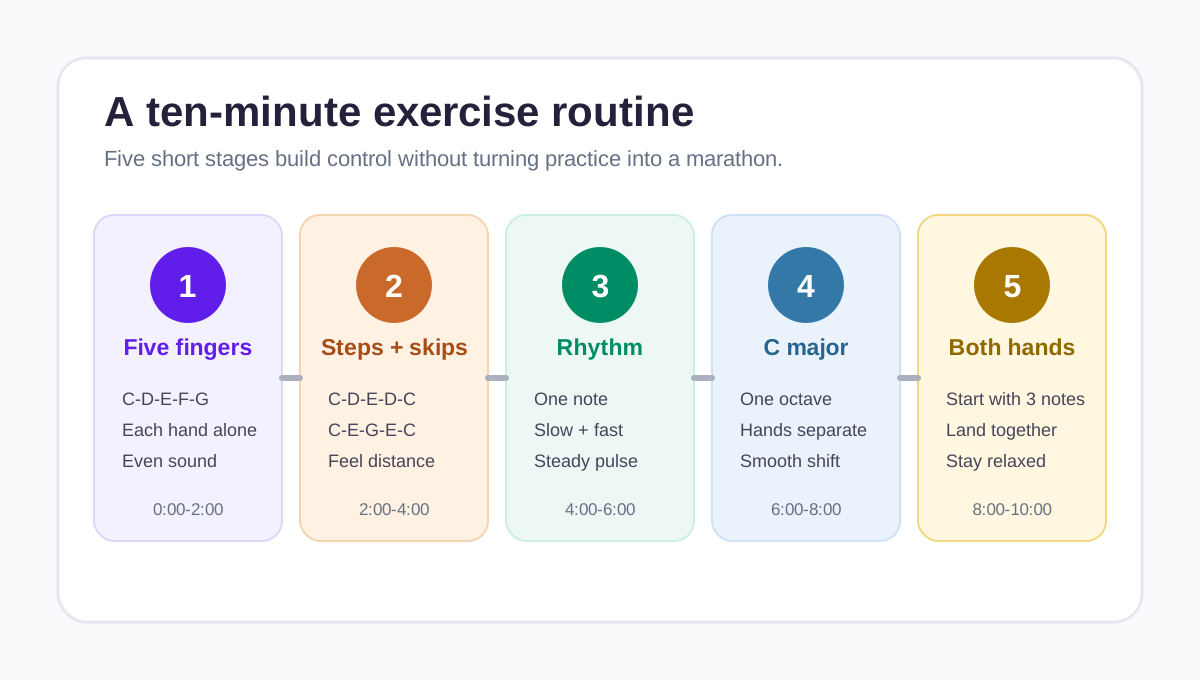
- Minutes 0-2: Five-finger pattern, one hand at a time.
- Minutes 2-4: Steps and skips.
- Minutes 4-6: Rhythm on one note.
- Minutes 6-8: C major scale, one hand at a time.
- Minutes 8-10: Simple two-hand coordination.
You can shorten any stage. If one exercise is new, spend the entire session on its first few notes instead of rushing through all five.
For a broader practice structure that also includes songs and review, see the 15-Minute Piano Practice Routine for Beginners.
How Slowly Should You Practise?
Choose a tempo that lets you:
- use the planned fingering
- play without stopping
- hear an even rhythm
- keep the wrist and shoulders relaxed
- notice mistakes before repeating them
That tempo may feel very slow. This is useful because slow practice gives you time to control each movement.
Increase speed only after several accurate repetitions. A small change of two to five beats per minute is enough when using a metronome.
Should Piano Exercises Feel Difficult?
An exercise can require concentration, but it should not cause pain.
Stop and reset if you notice:
- pain in the fingers, wrist, forearm, or shoulder
- a locked wrist
- raised shoulders
- gripping or pressing harder than necessary
- holding your breath
Shake out the hands gently, check your sitting position, and restart more slowly. Persistent discomfort should be discussed with a qualified piano teacher or healthcare professional.
Common Beginner Exercise Mistakes
Repeating Mistakes Without Pausing
Repetition only helps when the movement is correct enough to reinforce. Stop, identify the problem, and reduce the exercise to fewer notes.
Trying To Strengthen Fingers By Force
Piano playing depends on coordination and efficient movement, not on forcing individual fingers downward. Avoid pressing into the key after the note has sounded.
Lifting Fingers Too High
Keep unused fingers close to the keys. Large movements make the next note harder to control.
Practising Only The Stronger Hand
Give each hand separate attention. The weaker hand may need a slower tempo or a shorter pattern.
Making Every Exercise Fast
Speed is only useful when rhythm, fingering, and comfort remain stable. Most beginner exercise time should feel controlled rather than urgent.
Skipping Songs
Exercises train small components of piano playing. Songs teach phrasing, listening, expression, memory, and musical continuity. Keep both in your routine.
How To Measure Progress
Useful progress is not only a higher metronome number. Look for:
- fewer hesitations
- consistent fingering
- more even volume
- a steadier pulse
- smoother hand changes
- less tension
- easier transfer into songs
Record one short exercise occasionally. Listening back can reveal uneven rhythm that is difficult to notice while playing.
Exercises For Adult Beginners And Children
Adult beginners often try to fix everything at once. Choose one clear target, such as keeping finger 4 close to the keys or aligning both hands on three notes.
For children, turn exercises into short challenges:
- Can you play five notes without stopping?
- Can you make every note the same volume?
- Can you clap the rhythm first?
- Can both hands land together three times?
Keep the challenge achievable and finish with music the child enjoys.
tonestro gives beginners guided exercises, songs, and immediate feedback on notes and rhythm. Use that feedback to identify what to practise, while continuing to watch fingering, posture, and physical comfort at the instrument.
Related Reading
- Piano Scales for Beginners
- 15-Minute Piano Practice Routine for Beginners
- Piano Keys Explained for Beginners
- Piano Notes for Beginners
- How to Learn Piano for Beginners
- Easy Piano Songs for Beginners
FAQ
What are the best piano exercises for beginners?
Start with a five-finger C-D-E-F-G pattern, steps and skips, rhythm on one note, one C major scale, and a simple two-hand pattern. Each exercise should train one clear skill.
How long should a beginner practise piano exercises?
Five to ten minutes is enough for most beginners. Exercises should be only one part of practice; leave time for songs, reading, and review.
Should beginners do piano exercises every day?
Short exercises on most practice days can help, but careful repetition matters more than an unbroken daily streak. Stop when concentration or physical comfort declines.
Do piano exercises make fingers stronger?
They mainly improve coordination, control, timing, and efficient movement. Beginners should not try to build finger strength by pressing hard or forcing isolated movements.
What is a five-finger piano exercise?
It is a pattern played with each finger assigned to one nearby key. A common first example uses C-D-E-F-G with fingers 1-2-3-4-5 in the right hand.
Should I use a metronome for piano exercises?
Use a metronome after the notes and fingering are familiar. It can help develop steady rhythm, but it should not force you to play faster than you can control.
Should piano exercises be played with both hands?
Learn new movements one hand at a time first. Add both hands only when each hand can play its part comfortably and consistently.
What should I do if an exercise causes pain?
Stop playing. Check your posture, relax the hand, and reduce the tempo or range. Persistent pain should be assessed by a qualified teacher or healthcare professional.
Last updated