How to Play Jingle Bells on Piano for Beginners
Learn Jingle Bells on piano with five white keys, easy fingering, letter notes, and clear sheet music. Start with the melody, then add simple bass notes.

Quick Answer
To play an easy version of Jingle Bells on piano, put your right thumb on C and the next four fingers on D, E, F, and G. Start on E with finger 3. The opening is E-E-E, E-E-E, E-G-C-D-E. Count four beats per measure, holding the longer notes instead of repeating them. Learn the melody in short sections before adding the left hand. This lesson teaches a simplified chorus using five white keys, with sheet music and an optional one-note-per-measure accompaniment.
Which Version Are We Learning?
This is a simplified arrangement of the familiar Jingle Bells chorus, beginning with the repeated E notes. It is a complete 16-measure chorus, divided into four sections.
The melody is by James Lord Pierpont. The scores below are tonestro’s simplified teaching arrangement.
It uses:
- the key of C major, with no sharps or flats
- five melody notes: C, D, E, F, and G
- 4/4 time, with four quarter-note beats per measure
- quarter notes, half notes, and whole notes
- a right-hand melody, with optional bass notes later
The rhythm has been made more regular for first-stage learners. Some repeated notes and short-long patterns differ from versions you may hear people sing. Follow the counts in these scores while learning this arrangement.
The verse beginning with the sleigh ride is not included. You can add that later using a suitable beginner arrangement.
Find The Five Keys And Place Your Hand
Find a group of two black keys. C is the white key immediately to its left. Choose middle C or another C near the centre of the keyboard.
Place your right hand like this:
- C: thumb, finger 1
- D: index finger, finger 2
- E: middle finger, finger 3
- F: ring finger, finger 4
- G: little finger, finger 5
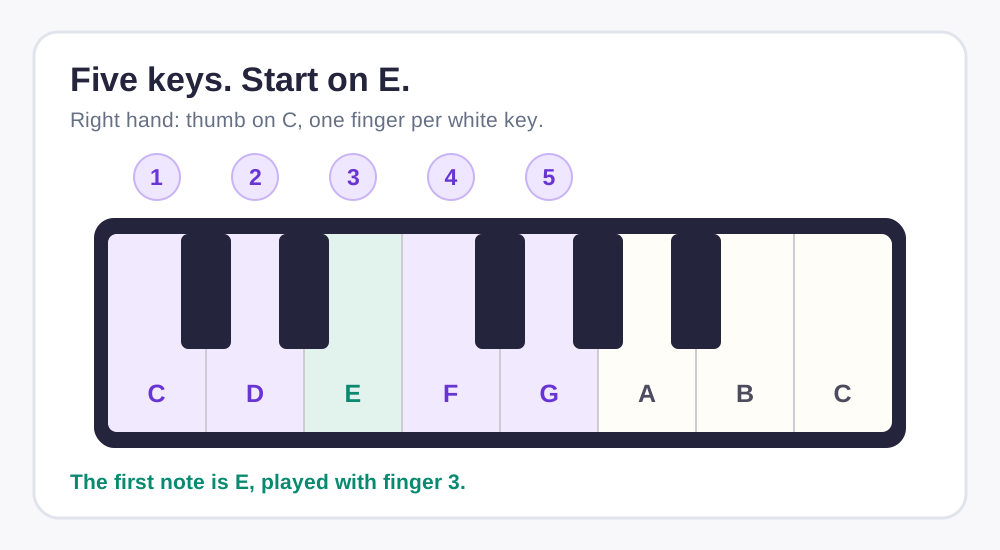
Keep the fingertips close to the keys. Your hand can stay in this five-finger position throughout the chorus.
Play C-D-E-F-G slowly once, then find E again. E is the first note of this arrangement, even though your thumb rests on C.
If the key pattern is new, use Piano Keys Explained for Beginners or What Is Middle C on Piano? first.
How To Read The Lesson Scores
Each score below contains four measures. Learn one measure, then two, before joining the whole section.
- The small purple numbers above the notes are right-hand finger numbers.
- The green numbers beneath the staff are beat counts: 1-2-3-4.
- The letter sequences in the text identify the notes; they do not show how long to hold them.
The scores place C on the short ledger line below the treble staff. D is the space just above that ledger line, E is the bottom staff line, F is the next space, and G is the second line from the bottom.
Keep these durations in mind:
- Quarter note: one beat.
- Half note: two beats.
- Whole note: four beats.
For more explanation and counting exercises, see Piano Rhythm for Beginners.
Section 1: Learn The Opening
The first four measures use these notes:
- Measure 1: E-E-E
- Measure 2: E-E-E
- Measure 3: E-G-C-D
- Measure 4: E
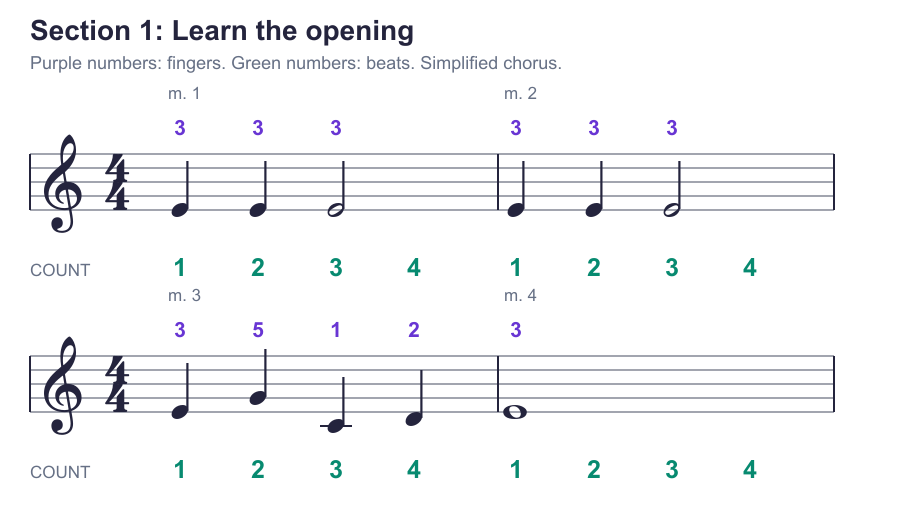
Start With The Repeated E Notes
For measure 1, use finger 3 for all three E notes:
- Play E on count 1.
- Play E again on 2.
- Play E on 3, then hold through 4.
Measure 2 is identical. Keep the beat moving as you cross the bar line; there is no extra pause before the next 1.
Repeated notes need a small release before each new press. Keep the finger close to the key so the movement remains comfortable.
Practise The E-G-C-D Movement
Measure 3 uses fingers 3-5-1-2, one note on each beat. The jump from G to C often needs separate practice.
Prepare the thumb over C while finger 5 plays G. Release G as you play C, without moving the whole hand out of position.
In measure 4, play E on 1 and hold through all four beats. The next section begins at the next measure’s 1. Do not release E early when you say 4.
Section 2: Play The First Ending
The next four measures are:
- Measure 5: F-F-F-F
- Measure 6: F-E-E-E
- Measure 7: E-D-D-E
- Measure 8: D-G
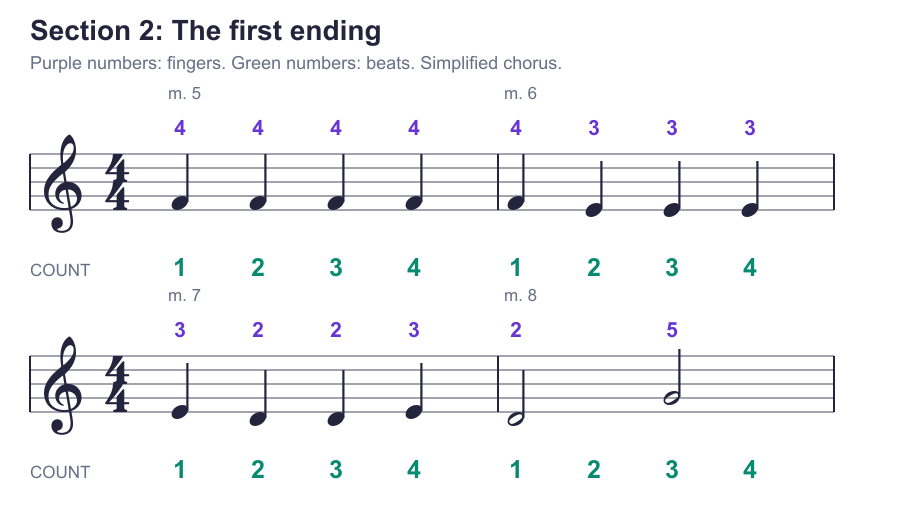
Every note in measures 5-7 lasts one beat. Use finger 4 for F, finger 3 for E, and finger 2 for D.
The first F of measure 6 continues the repeated-note pattern from measure 5. Count the bar line carefully so you do not accidentally leave it out.
Measure 8 has two half notes:
- Play D with finger 2 on 1 and hold through 2.
- Play G with finger 5 on 3 and hold through 4.
This first ending leaves the melody ready to return to the opening. Practise the connection from that G to the next E with fingers 5-3.
Section 3: Repeat The Opening
Measures 9-12 repeat section 1 exactly:
- Measure 9: E-E-E
- Measure 10: E-E-E
- Measure 11: E-G-C-D
- Measure 12: E
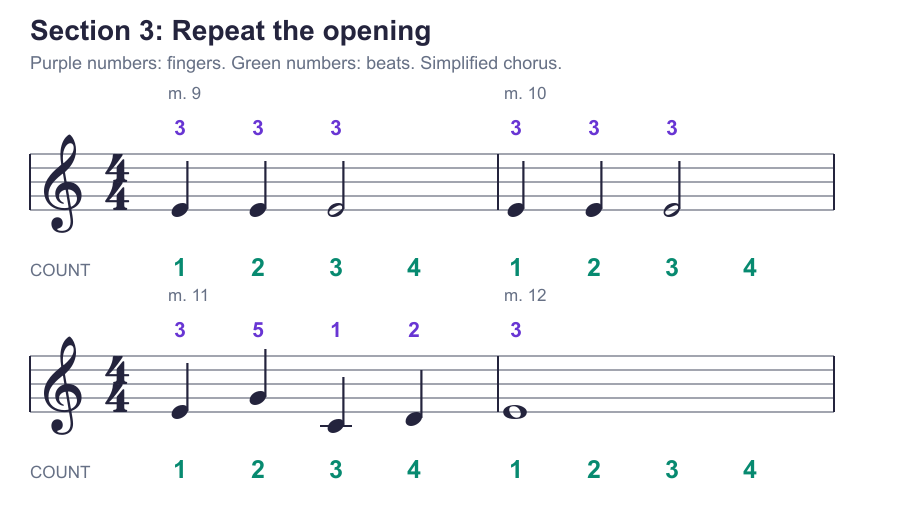
Use the same fingers and note lengths. The new task is beginning this section smoothly after the D-G ending of section 2.
Practise measures 8-9 together before attempting the whole chorus. Joining sections is a separate skill from knowing each one on its own.
Section 4: Finish On C
The final four measures are:
- Measure 13: F-F-F-F
- Measure 14: F-E-E-E
- Measure 15: G-G-F-D
- Measure 16: C
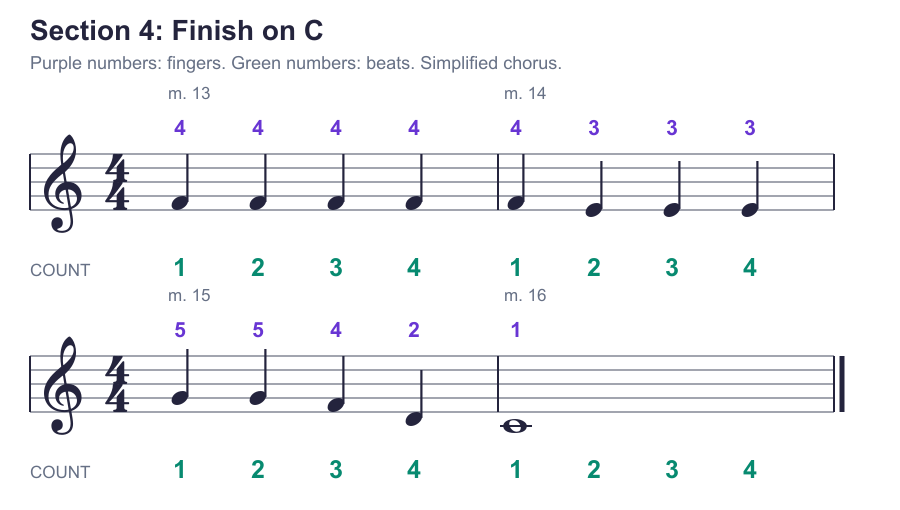
Measures 13-14 match measures 5-6. The difference begins in measure 15.
Play G-G-F-D with fingers 5-5-4-2, one note per beat. Then land on C with the thumb on the next 1.
Hold the final C for all four beats. Count one more silent 1 to mark its release after beat 4 is complete.
Compare the two endings before combining the song:
- First ending: E-D-D-E, then D-G.
- Final ending: G-G-F-D, then C.
Saying the note names can help you remember which ending comes next.
How To Put The Chorus Together
Build it in overlapping pieces:
- Learn measures 1-2 and 3-4 separately, then connect them.
- Learn measures 5-6 and 7-8, then connect those.
- Practise the join between measures 4-5.
- Connect sections 1 and 2.
- Practise measures 8-9 before adding the repeated opening.
- Learn the final ending, then practise measures 12-13.
- Play one complete slow chorus.
If you lose your place, start at the measure before the problem. That gives you a short run into the difficult movement without repeating the entire song.
Choose a pace at which you can find every note and keep counting. A metronome setting around 60-80 BPM, with one click per quarter-note beat, can be a useful starting range once the movements are familiar.
The song can sound cheerful at a modest tempo. Increase speed only when the notes, holds, and section joins remain reliable.
Optional Left Hand: One Bass Note Per Measure
Add this only after the right-hand melody feels comfortable. A melody-only performance is already a complete beginner goal.
Find a lower C, one octave below the C used by the right thumb. Place the left little finger on C, finger 2 on F, and the thumb on G. Let the other fingers rest naturally over the intervening keys.
Press the bass note on beat 1 and hold it for the full measure. Release and play again at the next 1, even when the note name stays the same.
Use this simple accompaniment:
- Measures 1-4: C, C, C, C.
- Measures 5-8: F, C, G, G.
- Measures 9-12: C, C, C, C.
- Measures 13-16: F, C, G, C.
These are single bass notes, not full chords. Other arrangements may use different harmonies or more active patterns.
To combine the hands, begin with one measure. Play the left C and first right E together, hold the C, and finish the right-hand pattern. Release both parts at the correct time before beginning the next measure.
If the left hand copies every right-hand note, practise the bass notes alone, then return to a single combined measure. How to Play Piano With Both Hands explains this coordination process in more detail.
Do You Need Chords Or The Sustain Pedal?
You can complete this lesson with the right hand alone or with the single-note accompaniment above. Full chords can wait until that version is comfortable.
Keep the sustain pedal up while learning. Listen for the repeated E notes, clean changes between notes, and holds that last for their written value.
If you already know a few chords, the bass notes can later become simple C, F, and G major chords. Learn those shapes with Piano Chords for Beginners and add them gradually.
A Ten-Minute Jingle Bells Practice Session
- Minutes 0-2: Find the five keys and play the opening two measures.
- Minutes 2-5: Work on one new section or one difficult measure.
- Minutes 5-7: Practise a join between two sections.
- Minutes 7-9: Play the sections you know at a steady slow tempo.
- Minute 10: Choose the next small target and finish with a comfortable phrase.
Spend the whole session on two measures if those are new. You can use this song as the piece-work section of the 15-Minute Piano Practice Routine for Beginners.
Common Beginner Mistakes
Starting On C Instead Of E
The hand is in C position, but the melody starts on E. Prepare finger 3 before the count-in.
Playing Every Written Count As A New Note
Counts continue beneath half and whole notes. Hold the key through those counts; press again only when the next note begins.
Missing The Extra F At A Bar Line
Measures 5 and 13 each have four F notes. Measures 6 and 14 begin with another F. Practise the five-note repetition across the bar line while counting.
Using The First Ending Both Times
The second half ends differently. Isolate G-G-F-D-C until that final movement is familiar.
Rushing The G-To-C Jump
Keep the thumb ready over C. Practise the two-note movement with fingers 5-1 before adding the surrounding notes.
Trying To Match A Recording Immediately
Recordings may use a faster tempo, a different key, or a more detailed rhythm. Learn the counted arrangement shown here before comparing versions.
Tips For Adult Beginners And Parents
For adults, the repeated opening can give a quick sense of progress. Use it as a starting point, then give the less familiar endings their own practice time.
For children, make the goal small and audible: three clean E notes, one correct long hold, or a confident ending on C. Ask the child to count or tap a measure before playing it.
Support a child’s feet with a stable footrest if needed, and adjust the bench before practice. Piano Posture and Hand Position for Beginners has a short setup checklist.
Play Jingle Bells With Backing Tracks In tonestro
Jingle Bells is available in the tonestro app in different difficulty versions, with high-quality backing tracks to play along with. Choose an arrangement that matches your current skills, then try a more challenging version as you become comfortable. The backing tracks give your melody a fuller musical setting and a steady pulse to follow.
Learn a short section first, then practise playing it with the backing track. tonestro’s immediate feedback on notes and rhythm helps you identify what needs another repetition. Follow the selected version’s own score and fingering; its key or rhythm may differ from the simplified chorus in this article.
Related Reading
- Easy Piano Songs for Beginners
- Piano Rhythm for Beginners
- What Is Middle C on Piano?
- How to Read Sheet Music for Piano Beginners
- How to Play Piano With Both Hands
- 15-Minute Piano Practice Routine for Beginners
FAQ
What are the first notes of Jingle Bells on piano?
In this C-major chorus arrangement, the opening is E-E-E, E-E-E, followed by E-G-C-D-E. Start on E with right-hand finger 3.
Can a complete beginner play Jingle Bells?
Yes, a simplified chorus is a suitable early goal once you can find five nearby keys and count a steady beat. Start with two measures and the right hand alone.
Which piano keys do I need for this version?
The right-hand melody uses C, D, E, F, and G. The optional left hand adds lower C, F, and G notes. No black keys are needed.
What fingers should I use for Jingle Bells?
Keep the right thumb on C and use fingers 2, 3, 4, and 5 for D, E, F, and G. The small numbers above each score note show this fingering.
Can I learn Jingle Bells using letter notes?
Letter notes help you find pitches, but they do not show duration. Use the letter sequences together with the sheet music and counts so the song keeps its rhythm.
Is this the full Jingle Bells song?
It is the full familiar chorus in a simplified 16-measure arrangement. The verse is not included, and some rhythmic details have been made more regular for beginners.
How long will it take to learn Jingle Bells?
The opening may become familiar quickly, while the complete chorus and both-hand version can take several practice sessions or longer. Measure progress by clean phrases and reliable timing rather than a deadline.
Should I add the left hand immediately?
Learn the melody first. When it stays steady, add one held bass note per measure and combine the hands one measure at a time.
Last updated