How to Play Piano With Both Hands
Learn to play piano with both hands using simple coordination exercises, slow practice steps, and a practical ten-minute beginner routine.
Quick Answer
To play piano with both hands, learn each hand separately first, then combine very small sections at a slow tempo. Start with both hands playing the same rhythm. Next, let one hand hold a note while the other moves. Finally, practise a short pattern in which the hands play on different beats. Repeat one or two beats until they feel controlled, then add the next beat. Two-hand playing is a coordination skill, not a test of natural talent, and it improves through short, accurate repetitions.
Why Is Playing Piano With Both Hands Difficult?
Each hand may need to play different notes, rhythms, fingerings, and movements at the same time. Your attention must follow both parts while also keeping a steady pulse.
Beginners often describe this as a problem of hand independence, but the hands are not completely independent. They must coordinate around the same beat and musical phrase.
The difficulty usually comes from trying to manage too many new tasks at once:
- reading two lines of music
- finding notes in two areas of the keyboard
- remembering two finger patterns
- coordinating different rhythms
- listening to the combined sound
The solution is to reduce the number of new tasks and rebuild the music in small layers.
What Does Each Hand Do On Piano?
In many beginner arrangements:
- the right hand plays a melody
- the left hand plays bass notes or chords
This is common, but it is not a fixed rule. Either hand can play melody, harmony, repeated notes, or accompaniment patterns.
At first, choose music with a simple left-hand part. One held note, one note per measure, or one blocked chord gives the right hand space to move without creating too much coordination work.
If the keyboard layout is still unfamiliar, review Piano Keys Explained for Beginners before adding two-hand exercises.
Before You Combine The Hands
Each hand should be able to play its part separately without frequent stops. This does not mean the part must be fast or memorised.
Before combining, check that you can:
- find the starting note for each hand
- use the intended fingers
- count the rhythm aloud
- play a short section slowly
- stop at the same planned point each time
If one hand still needs all your attention, practise that hand alone for another minute. Separate-hand practice is preparation, not a failure to play the real piece.
A Step-By-Step Method For Playing With Both Hands
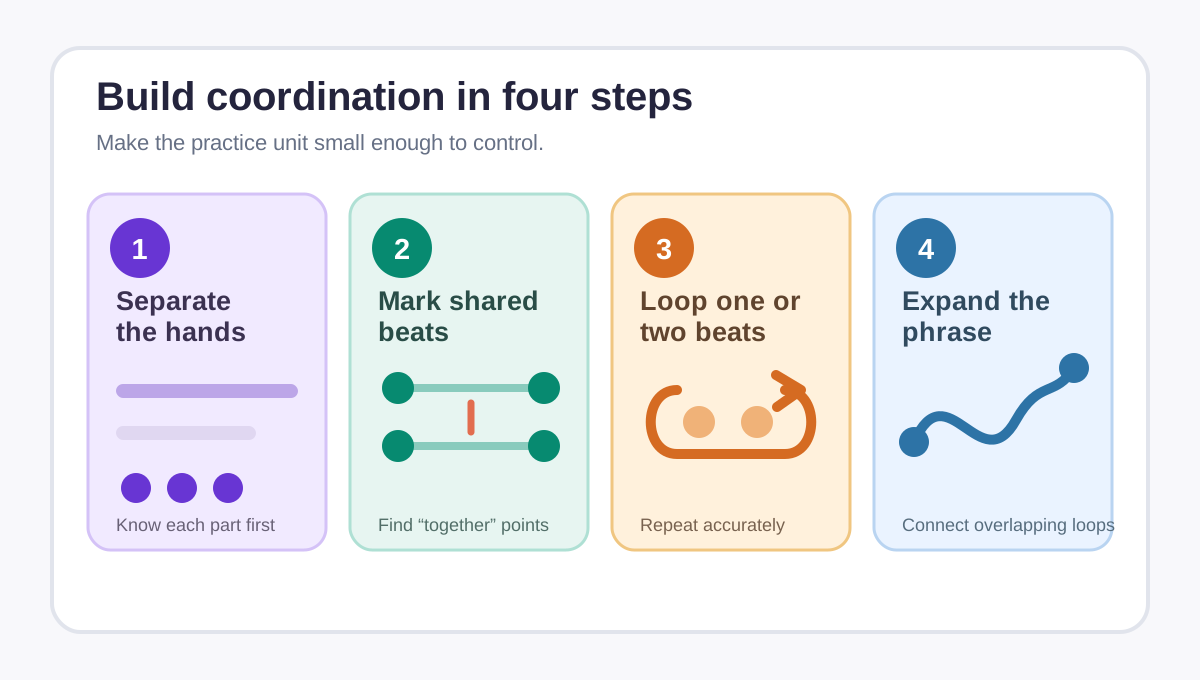
1. Learn Each Hand Separately
Play the right-hand part slowly. Then play the left-hand part at the same slow tempo. Use consistent fingering so the movements do not change every repetition.
2. Mark Where The Hands Play Together
Look for beats where both hands press a key at the same moment. These shared moments act as coordination landmarks.
Count aloud and say together on those beats if that helps.
3. Combine One Beat Or One Small Group
Do not begin with the entire phrase. Play the first beat with both hands, stop, and check the result.
Then practise two beats. A loop of two correct beats is more useful than repeatedly losing control across a full measure.
4. Expand With Overlapping Loops
After beats 1-2 feel comfortable, practise beats 2-3. Then practise beats 3-4. The overlap helps you connect each small section instead of creating new pauses between them.
5. Slow Down More Than You Expect
Your combined tempo may be much slower than either hand alone. That is normal. Choose a speed that gives you time to anticipate both movements.
6. Finish With One Complete Attempt
After practising the small loops, play the short phrase once from beginning to end. Notice the first point that becomes uncertain; that is the starting point for the next focused loop.
Exercise 1: The Same Notes In Both Hands
Place both hands in separate C five-finger positions, about one octave apart.
Play:
C-D-E-F-G-F-E-D-C
Use:
- Right hand going up: 1-2-3-4-5
- Left hand going up: 5-4-3-2-1
Both hands play the same note names and rhythm. The finger numbers are mirrored, but the movements happen together.
Start with C-D-E only. Add F and G when the first three notes land at the same time.
Exercise 2: Hold One Note While The Other Hand Moves
Play and hold a low C with left-hand finger 5. While holding it, play this right-hand pattern:
C-D-E-F-G-F-E-D-C
Use right-hand fingers 1-2-3-4-5-4-3-2-1.
The left hand has one job: hold the key without adding pressure. The right hand can then practise moving while the left remains quiet.
Release both hands together at the end. Repeat with a shorter C-D-E-D-C pattern if the full sequence is difficult.
Exercise 3: Different Notes On Different Beats
Use a slow four-beat count. The left hand plays on beats 1 and 3, while the right hand plays on every beat.
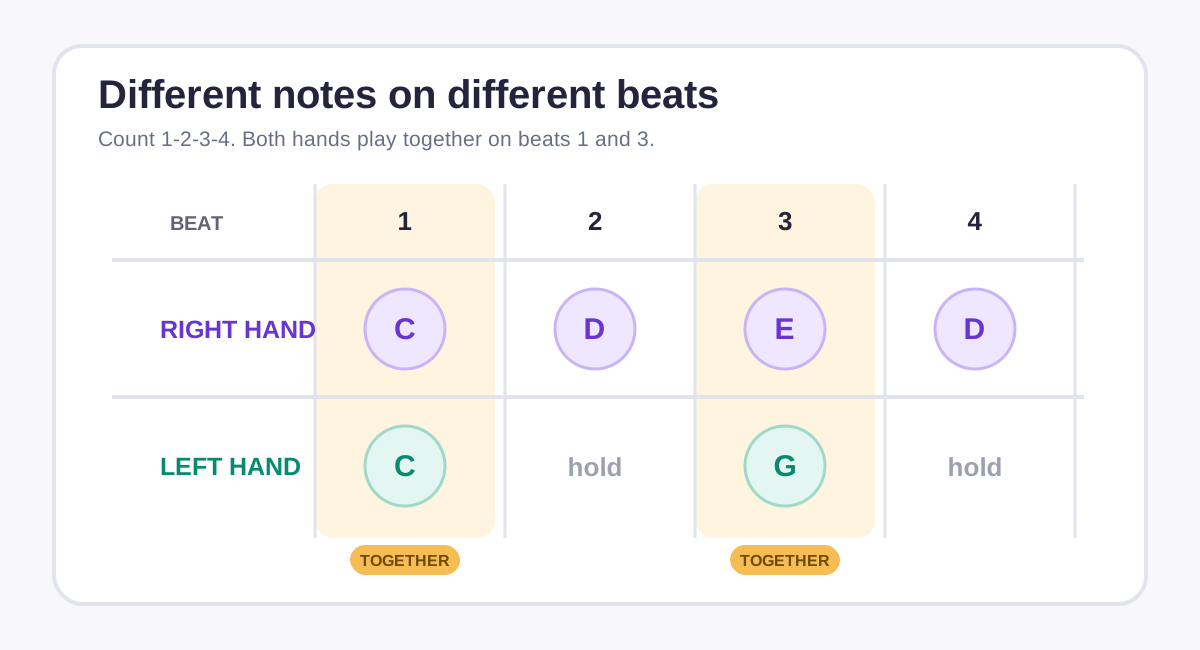
- Beat 1: play and hold left C while playing right C
- Beat 2: play right D while the left C remains held
- Beat 3: change the left hand to G while playing right E
- Beat 4: play right D while the left G remains held
Use left-hand finger 5 on C and finger 1 on G. Use right-hand fingers 1-2-3-2 for C-D-E-D.
Practise beats 1-2 first. Then practise beats 2-3, followed by beats 3-4. Finally, connect the complete measure.
Exercise 4: A Left-Hand Chord And Right-Hand Melody
Play a C major chord with the left hand using C-E-G and fingers 5-3-1. Hold the chord while the right hand plays C-D-E-D-C with fingers 1-2-3-2-1.
Keep the hands in different octaves so they do not compete for the same keys.
Practise in this order:
- Play and release the left-hand chord alone.
- Play the right-hand melody alone.
- Play the chord and first melody note together.
- Hold the chord while completing the melody.
For more chord shapes and fingering, see Piano Chords for Beginners.
How To Count Different Rhythms
Count a steady pulse aloud before playing. For a four-beat measure, say:
1-2-3-4
Tap the left-hand rhythm on your left leg and the right-hand rhythm on your right leg. When the tapping is stable, transfer the same timing to the keyboard.
If eighth notes appear, subdivide the beat:
1-and-2-and-3-and-4-and
Do not stop counting when one hand becomes difficult. The count is the shared timeline that keeps both hands organised.
Should You Use A Metronome?
A metronome is useful after you understand the notes and movements. It can reveal hesitations, but it cannot fix an unlearned hand part.
Start without it while building the first loops. Then choose a slow setting, such as 40 to 60 beats per minute, and play one beat per click.
If the metronome makes you rush, turn it off, simplify the section, and restore the correct movements first.
Reading Two Staves At The Same Time
Piano sheet music usually places the treble and bass staves together as a grand staff. Beginners often try to read every note in both staves simultaneously.
Instead:
- identify the first note in each hand
- notice the direction of each part
- mark where the hands play together
- read one small beat group at a time
Use landmarks rather than calculating every note from the beginning. How to Read Sheet Music for Piano Beginners explains useful staff landmarks and interval reading.
A Ten-Minute Both-Hands Practice Routine
- Minutes 0-2: Play each hand separately and confirm the fingering.
- Minutes 2-4: Tap and count the two rhythms away from the keyboard.
- Minutes 4-6: Combine the first one or two beats.
- Minutes 6-8: Build overlapping loops through the difficult section.
- Minutes 8-10: Play one complete slow attempt and choose the next practice target.
This can replace the skill-focus block in the 15-Minute Piano Practice Routine for Beginners.
Common Two-Hand Practice Mistakes
Combining The Hands Too Early
If neither hand knows its part, combining them multiplies the uncertainty. Give each hand a clear movement plan first.
Starting At The Beginning Every Time
Repeatedly playing the easy opening does not repair a difficult middle section. Begin directly at the first uncertain beat.
Practising A Section That Is Too Long
Use one beat, two beats, or one short measure. Expand only after the small unit is controlled.
Playing Faster After One Correct Attempt
Repeat the correct version several times before changing the tempo. One successful attempt may be accidental.
Letting One Hand Copy The Other
If both hands accidentally use the same rhythm, tap the rhythms separately and identify exactly where they differ.
Tensing The Shoulders Or Holding Your Breath
Pause, release the hands, and restart more slowly. Coordination improves through efficient movement, not force.
Both-Hand Practice For Adults And Children
Adult beginners may understand the rhythm intellectually while their hands still struggle to perform it. That delay is normal. Physical coordination develops through repetition at an achievable speed.
For children, turn the process into short coordination challenges:
- Can both hands land together three times?
- Can the left hand hold while the right hand moves?
- Can you play two beats without stopping?
- Can you identify the next together point?
Keep the challenge short and finish with a piece or pattern the learner already enjoys.
tonestro gives piano learners guided exercises, songs, and immediate feedback on notes and rhythm. Use the feedback to identify where the hands stop aligning, then isolate that small section and rebuild it slowly.
Related Reading
- Piano Exercises for Beginners
- Piano Chords for Beginners
- Piano Scales for Beginners
- Easy Piano Songs for Beginners
- How to Read Sheet Music for Piano Beginners
- 15-Minute Piano Practice Routine for Beginners
FAQ
Why can I play each piano hand separately but not together?
Combining the hands creates a new coordination task. Knowing both parts separately is necessary, but your brain must still learn how their movements align around the same beat.
How long does it take to play piano with both hands?
Most beginners can play very simple two-hand patterns early, but comfortable coordination develops gradually over months and years. Progress depends on the difficulty of the music and the quality of practice.
Should beginners always practise hands separately first?
For new or difficult passages, separate-hand practice is usually helpful. Very simple patterns can sometimes begin with both hands, but each hand should still have a clear role and fingering.
How slowly should I practise with both hands?
Practise slowly enough to anticipate each movement without guessing or stopping. This may be much slower than your separate-hand tempo.
What is the best first both-hands piano exercise?
Play C-D-E-F-G and back down with both hands one octave apart. The hands use mirrored fingering but play the same notes and rhythm together.
Does playing scales with both hands improve coordination?
Yes, but learn each hand’s fingering separately first. Both-hand scales are more demanding because the hands change position at different moments.
Can a piano app help with hand coordination?
An app can provide structured exercises and feedback on notes and rhythm. You still need to monitor fingering, tension, and movement at the physical keyboard.
Last updated