Piano Rhythm for Beginners: Note Values, Counting, and Rests
Learn piano rhythm with clear note values, rests, and counting in 4/4 time. Try five simple exercises and a five-minute routine for a steadier beat.
Quick Answer
To learn piano rhythm, start by counting a steady 1-2-3-4 and tapping once on each number. In 4/4 time, a quarter note lasts one beat, a half note two beats, a whole note four beats, and an eighth note half a beat. A rest uses time too, but you stay silent. Clap a short rhythm, then play it on one piano key. Keep the count moving while you hold notes or rest. Add changing notes and both hands after the timing feels familiar.
Beat, Rhythm, And Tempo: What Is The Difference?
These three terms describe different parts of musical timing:
- Beat: the regular pulse you tap along with.
- Rhythm: the pattern of note lengths and silences that fits around that pulse.
- Tempo: the speed of the pulse, often measured in beats per minute, or BPM.
Imagine four evenly spaced counts. You could play a note on every count, hold one note across all four, or play on counts 1 and 3 with silence between them. The beat stays the same; the rhythm changes.
Try tapping an even pulse on your leg while saying 1-2-3-4. Then say a familiar song’s words over that pulse. The words may arrive more often or less often than the taps. That is a practical way to feel the distinction.
Start With 4/4 Time
A time signature appears near the beginning of written music. For this article, all exercises use 4/4 time:
- The top 4 means there are four beats in each measure, also called a bar.
- The bottom 4 means the quarter note receives one beat.
Count each measure 1-2-3-4, then begin the next measure with 1. Keep the gap between 4 and the next 1 the same as the gap between any other two beats.
The note values below are counted using this quarter-note beat. They are not fixed numbers of seconds, and other time signatures can use a different beat unit.
For the wider reading picture, including staff lines and pitches, see How to Read Sheet Music for Piano Beginners.
Four Note Values To Learn First
Quarter Note: One Beat
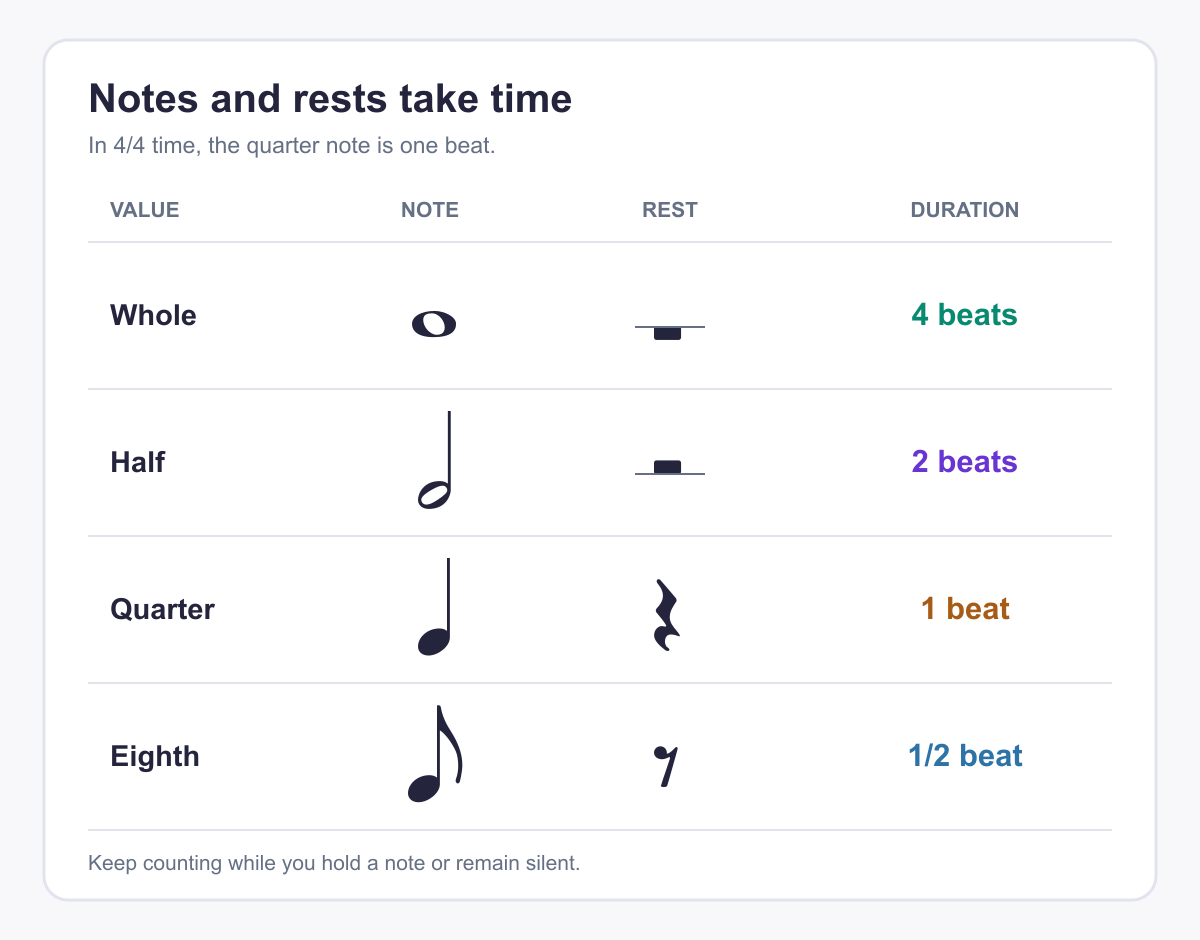
A quarter note has a filled notehead and a stem. Play it at the start of a beat and give it one beat of time.
Four quarter notes fill one measure of 4/4. You play once on each count: 1, 2, 3, 4.
Half Note: Two Beats
A half note has a hollow notehead and a stem. Play once and hold the key for two beats.
For two half notes in one measure, play on 1, hold through 2, play again on 3, and hold through 4. Do not strike the key again just because you say another number.
Whole Note: Four Beats
A whole note has a hollow oval notehead with no stem. In 4/4, play on 1 and hold through 2, 3, and 4. Release at the start of the next measure, unless the music indicates otherwise.
This means you hold throughout beat 4, not only until you say the number 4.
Eighth Note: Half A Beat
An eighth note has a filled notehead, a stem, and one flag. Groups of eighth notes are often joined by a single beam instead of separate flags.
Two even eighth notes fit inside one quarter-note beat. Count:
1-and-2-and-3-and-4-and
The numbers remain the main beats. Each and sits halfway between two numbers. Do not speed up the main pulse when the extra notes arrive.
You may also see the British names semibreve (whole note), minim (half note), crotchet (quarter note), and quaver (eighth note).
What Are Rests?
A rest tells you when a part should be silent. Keep counting while the sound stops.
With the quarter-note beat used here:
- A quarter rest lasts one beat.
- A half rest lasts two beats.
- An eighth rest lasts half a beat.
- A whole rest fills our complete four-beat measure.
The whole-rest symbol is also commonly used for a full measure of silence in other time signatures. In 3/4, for example, a whole-measure rest means three beats of silence.
Half and whole rests look similar. The half rest sits on a staff line like a small block; the whole rest hangs below a line. The quarter rest looks like a compact zigzag, and the eighth rest has a hook and a small round head.
For these exercises, keep the sustain pedal up. Release the key when a rest begins so the silence is audible. If a real piece gives one hand a rest while the other continues, only the resting part stops.
How To Count Held Notes And Rests
The main distinction is what your hand does while the count continues:
- Play: press the key to begin a new note.
- Hold: keep the existing note going without pressing it again.
- Rest: release the key and remain silent for the written time.
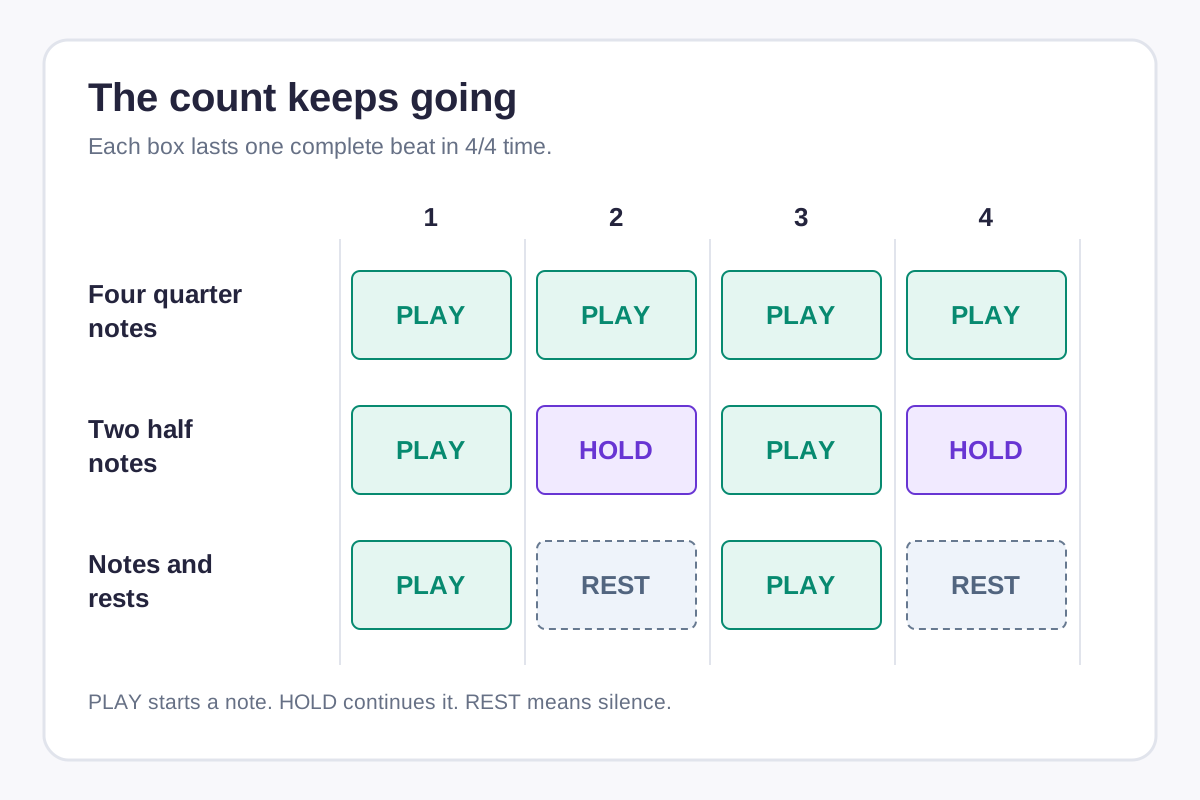
Say every count at the same speed, even when your hand does nothing new. Counting aloud makes it easier to notice an accidentally shortened hold or rest.
Clap The Rhythm Before Playing
Separate timing from the task of finding keys:
- Say 1-2-3-4 twice at a comfortable walking pace.
- Tap each beat on your leg.
- Clap only where a new note begins.
- Continue saying the counts between claps.
- Transfer the pattern to one piano key.
A clap cannot sustain like a piano note. For a long note, clap once and keep counting its remaining beats; do not add extra claps. For a rest, keep the count but make no clap.
Working with movement away from the keyboard is also a teaching approach described in Yamaha’s guidance on developing pulse and rhythmic accuracy.
Five Easy Piano Rhythm Exercises
Choose a comfortable C near the centre of the keyboard and use right-hand finger 2. Each exercise is one measure of 4/4. Count one full measure before you start, then repeat the exercise four times if it stays controlled.
To find the key, use What Is Middle C on Piano?. The exact octave does not matter for these timing exercises.
The scores below use middle C in the treble clef: the note on the short ledger line below the staff. Each score shows one measure of 4/4, with counts underneath. The & symbol means and, halfway between beats. Keep counting through held notes and rests, even when no new note appears above a count.
Exercise 1: Four Even Quarter Notes
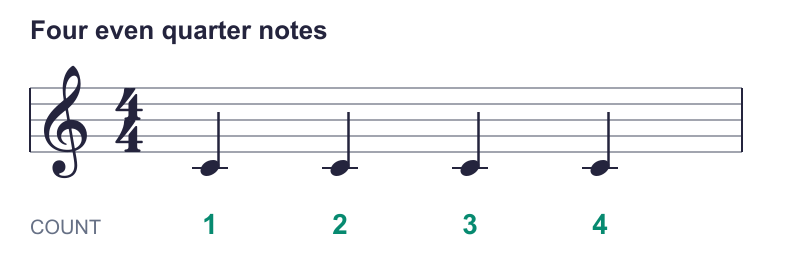
Play C on 1, 2, 3, and 4. Each note lasts one beat. Release and strike again at the next count, using only enough finger movement to repeat the key.
Listen for equal spacing. The fourth note needs the same time as the other three before the next measure starts.
Exercise 2: Two Half Notes
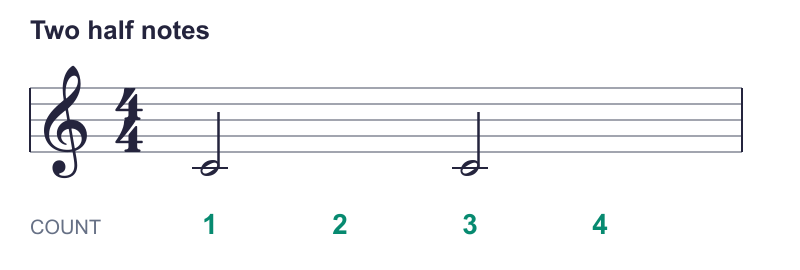
Play C on 1 and hold through 2. Release and play it again on 3, then hold through 4.
Your voice says four numbers, but your finger makes only two new notes. On the next measure’s 1, release and begin again.
Once this works, try one whole note: press on 1, hold for the full four beats, and begin the next note on the next 1.
Exercise 3: Quarter Notes And Rests
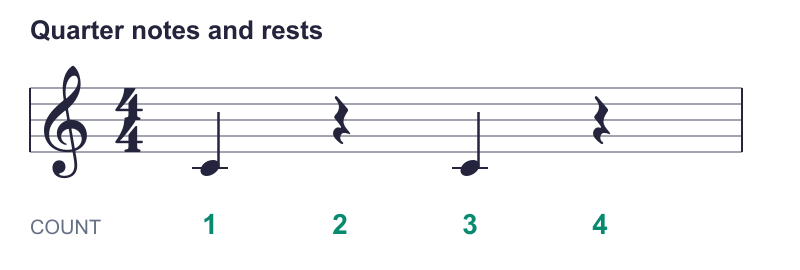
Play on 1, rest on 2, play on 3, and rest on 4.
Release the first note exactly as beat 2 starts and the second as beat 4 starts. Keep saying all four numbers. The silence on beat 4 lasts until the next 1.
Exercise 4: Eight Even Eighth Notes
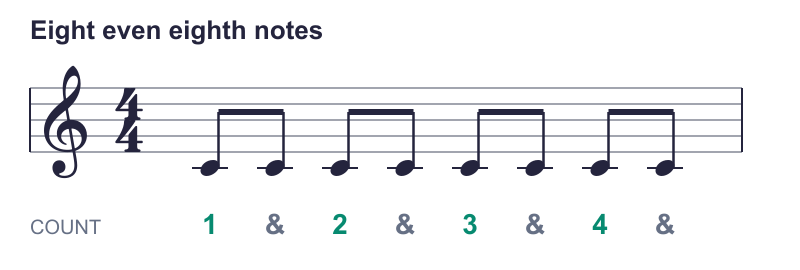
Say 1-and-2-and-3-and-4-and and play C on every syllable.
Each note lasts half a beat. Keep the and evenly spaced between the numbers. The last and still needs its half-beat before the next measure begins.
Try two beats first if a whole measure feels busy: 1-and-2-and, then pause and reset.
Exercise 5: A Mixed Rhythm
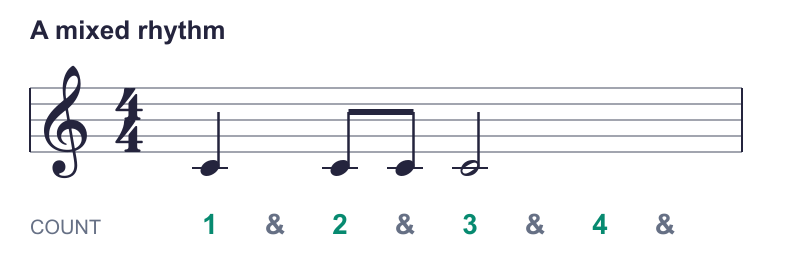
Play a quarter note, two eighth notes, and a half note. Together, they fill four beats:
- Beat 1: play C and hold for one beat.
- Beat 2: play C on 2 and again on and.
- Beat 3: play C and begin a two-beat hold.
- Beat 4: continue holding, then release at the next 1.
Keep the subdivisions going aloud: 1-and-2-and-3-and-4-and. Your new notes begin only on 1, 2, the and after 2, and 3.
When Should You Add A Metronome?
Use a metronome once you can explain and tap the pattern. For these exercises, set each click to one quarter-note beat. A starting tempo around 60 BPM is an option; choose a pace at which you can count comfortably.
At 60 BPM, those beats are one second apart. At another tempo, their duration changes. The relationship between the note values stays the same: two eighth notes still fit inside one quarter note.
Listen to four clicks before entering. If the rhythm falls apart, stop, clap it again, and restart. Avoid chasing a missed click by rushing several notes.
Practise with and without the metronome so you also learn to maintain the pulse yourself.
Add Notes, Then Both Hands
When a rhythm feels reliable on C, keep its timing and change the pitches. For example, play four quarter notes using C-D-E-D with fingers 1-2-3-2.
Next, repeat that pattern while the left hand holds a lower C for all four beats. Prepare both starting notes before the count-in.
This adds one coordination task while keeping the left-hand rhythm simple. For a fuller progression, continue with How to Play Piano With Both Hands.
What About Dotted Notes And Ties?
These are useful next steps once the basic durations are familiar:
- A dot adds half the note’s original value. A dotted half note lasts three quarter-note beats: two plus one.
- A tie connects two notes of the same pitch and combines their durations. Play the first note and keep holding through the second, without striking again.
A dotted quarter note lasts one and a half beats. Pairing it with an eighth note takes more careful subdivision, so practise the even eighth-note exercise first.
A Five-Minute Rhythm Routine
- Minute 1: count and tap a steady four-beat pulse.
- Minute 2: clap quarter notes and half-note beginnings.
- Minute 3: play the note-and-rest pattern on C.
- Minute 4: practise even eighth notes or the mixed rhythm.
- Minute 5: apply one pattern to a short passage from a beginner song.
Choose one new pattern per session. You can place this inside the skill-focus section of the 15-Minute Piano Practice Routine for Beginners.
Common Beginner Rhythm Mistakes
Giving Every Note The Same Length
Check the notehead, stem, flag, or beam before playing. Say where each new note starts and which counts belong to a hold.
Releasing Long Notes Too Soon
A two-beat note starting on 1 lasts until 3 begins. A four-beat note starting on 1 lasts until the next measure starts. Keep counting through the final beat.
Skipping The Rests
Treat silence as a timed action. Release on the rest and continue counting until the next note begins.
Speeding Up For Eighth Notes
Fit the extra attacks between the existing beats. Keep the spoken numbers at their original pace and place each and halfway between them.
Adding A Pause At Every Bar Line
A bar line groups beats; it does not add time. Practise the transition 3-4-1-2 to keep measures connected.
Trying To Fix Rhythm And Fingering Together
Return to clapping or a single key when timing becomes uncertain. Bring the written notes back once the rhythm is clear.
Rhythm Practice For Adults And Children
Adult beginners may understand the fractions before they can feel the pattern. Alternate saying, tapping, and playing it so the explanation connects to a physical pulse.
For children, try a short echo game: clap a four-beat pattern and ask them to repeat it. Start with quarter notes, then add one silent beat. Keep the count audible so silence has a clear place.
When you use tonestro’s guided piano exercises and songs, pay attention to rhythm feedback as well as note accuracy. Practise an uncertain pattern on one key, then return to the lesson or song with its original pitches.
Related Reading
- How to Read Sheet Music for Piano Beginners
- How to Play Piano With Both Hands
- Piano Exercises for Beginners
- Easy Piano Songs for Beginners
- 15-Minute Piano Practice Routine for Beginners
FAQ
What is the difference between beat and rhythm?
The beat is the recurring pulse. Rhythm is the arrangement of note lengths and silences around it. Different rhythms can share the same beat and tempo.
How many beats does each piano note last?
With a quarter-note beat, as in 4/4, a whole note lasts four beats, a half note two, a quarter note one, and an eighth note half a beat. Always check the time signature before applying beat counts.
How do you count eighth notes on piano?
In 4/4, count 1-and-2-and-3-and-4-and evenly. The numbers mark the beats, and each and divides a beat in half.
Do you keep counting during a rest?
Yes. Keep the same pulse while the resting part stays silent. For a one-note exercise, release the key at the start of the rest and wait its full duration.
Does a whole note always fill a measure?
No. It fills a standard measure of 4/4 because that measure contains four quarter-note beats. Other time signatures can have different measure lengths.
Should beginners count aloud while playing?
Counting aloud is a useful way to learn a rhythm and notice shortened holds or rests. Start with one key if counting, reading, and moving the hand feel like too many tasks at once.
Can I practise piano rhythm without a piano?
Yes. Count, tap, and clap short patterns away from the keyboard. Then transfer the same timing to the piano so you also practise holding and releasing notes.
Last updated