How to Learn Piano for Beginners
A complete beginner guide to learning piano, including what to learn first, how to practice, how to choose an instrument, and how to make steady progress.
Quick Answer
The best way to learn piano as a beginner is to start with the basics: choose a comfortable instrument, learn the pattern of the keys, find middle C, practice simple rhythm, play short melodies, and build a regular practice habit. You do not need to begin with difficult classical pieces or long practice sessions. A clear 15- to 20-minute routine, repeated several times per week, is enough to build real progress at the start.
Start With A Realistic Goal
Learning piano is easier when the first goal is clear. A beginner does not need to master every scale, chord, and symbol immediately. The first goal is much simpler: become comfortable at the instrument and learn how to make small pieces of music sound steady.
For most beginners, a good first goal is:
- Find the main notes on the keyboard.
- Play simple melodies with one hand.
- Count basic rhythms out loud.
- Add easy left-hand notes or chords.
- Practice short sections without restarting from the beginning every time.
This is enough to begin making music. It also gives you a foundation for later skills such as reading sheet music, playing chords, using both hands, and learning songs independently.
The Beginner Piano Learning Path
Use this path as a simple overview of what to learn first.
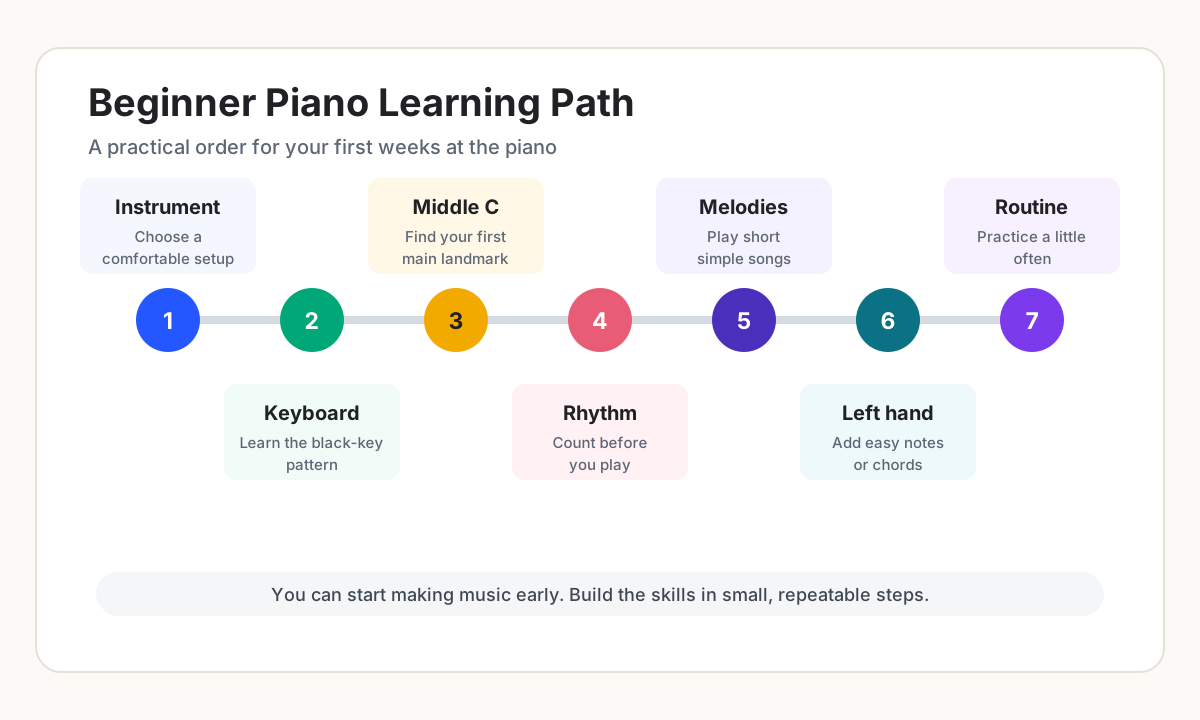
| Step | What To Learn | Why It Matters |
|---|---|---|
| 1 | Choose a comfortable instrument | Good setup makes practice easier |
| 2 | Learn the keyboard pattern | Note names become less confusing |
| 3 | Find middle C and nearby notes | Most beginner music starts in this area |
| 4 | Count simple rhythm | Notes need timing to become music |
| 5 | Play short melodies | You start connecting notes, fingers, and sound |
| 6 | Add simple left-hand parts | Two-hand coordination grows gradually |
| 7 | Build a practice routine | Consistency turns new ideas into skills |
You do not need to finish one step perfectly before touching the next. Piano learning is layered. You will return to notes, rhythm, hand position, and songs many times.
What Instrument Do Beginners Need?
You can start learning on an acoustic piano, a digital piano, or a keyboard. The most important thing is that the instrument feels comfortable enough to practice regularly.
For many beginners, a digital piano or beginner keyboard is enough to start. Full-size keys are helpful. Weighted keys are useful because they feel closer to an acoustic piano, but they are not required for the very first experiments.
If you are buying an instrument, look for:
- full-size keys
- touch-sensitive keys
- a stable stand
- a bench or chair at a good height
- headphone support if quiet practice matters
- enough keys for beginner music
Avoid overbuying at the start. A beginner needs an instrument that supports daily practice, not the most expensive model in the store.
Learn The Keyboard Pattern First
The piano keyboard looks long, but it is built from a repeating pattern. The black keys appear in groups of two and three. These groups help you find the white notes.
The white-key note names are:
C D E F G A B
After B, the pattern starts again at C.
The easiest starting point is C. C is the white key immediately to the left of a group of two black keys. Once you can find C, you can count up to D, E, F, G, A, and B.
Do not try to memorize every key as a separate object. Learn the pattern. The pattern is what makes the keyboard understandable.
Find Middle C
Middle C is the C near the center of the keyboard. It is one of the most useful landmarks for beginners because many first piano pieces begin near it.
To find middle C:
- Look near the center of the keyboard.
- Find a group of two black keys.
- Play the white key immediately to the left of that group.
That note is C. If it is near the center of the instrument, it is middle C.
Middle C also helps connect the right hand and left hand when you start reading music. It often appears between the treble and bass staff.
Learn Rhythm Early
Many beginners focus only on finding the correct notes. Notes matter, but rhythm is what makes music feel stable.
Start with simple rhythm values:
| Rhythm Value | Beginner Meaning |
|---|---|
| Quarter note | One beat |
| Half note | Two beats |
| Whole note | Four beats |
| Rest | A counted silence |
Before playing a short melody, clap the rhythm and count out loud. Then play the notes slowly while keeping the same count.
Counting may feel awkward at first, but it prevents a common beginner problem: playing the right notes with uneven timing.
Practice One Hand At A Time
Two-hand piano playing is a coordination skill. It does not need to happen all at once.
Start with the right hand alone. Play a short melody slowly. Then try the left hand alone with one simple note or chord. When each hand feels familiar, put them together at a slower tempo.
A good beginner process is:
- Say the note names.
- Clap or tap the rhythm.
- Play the right hand alone.
- Play the left hand alone.
- Play both hands slowly.
If both hands fall apart, the section is probably too fast or too long. Make it smaller.
Use Short Practice Sessions
Beginners often think they need long practice sessions. At the start, consistency matters more than length.
A useful beginner session can be only 15 to 20 minutes:
| Time | Focus |
|---|---|
| 3 minutes | Warm up with easy notes |
| 5 minutes | Practice one skill, such as note names or rhythm |
| 7 minutes | Work on one small section of a song |
| 2 minutes | Review what improved and what to practice next |
Short practice works because it is easier to repeat. One focused session will not solve everything, but many short sessions build skill steadily.
Choose Very Easy Songs
The best first songs are simple, short, and repetitive. They should use a small range of notes and a steady rhythm.
Good beginner songs usually have:
- a melody that stays near middle C
- repeated note patterns
- slow rhythm
- simple left-hand support
- short sections that can be practiced separately
Be careful with songs labeled “easy” online. Some easy arrangements are still too difficult for a true beginner. If you have to stop every few notes, the song is probably too hard for today.
Choose one comfort song and one stretch song. The comfort song should feel possible. The stretch song can teach one new skill.
Learn Notes And Chords Together
Beginners sometimes ask whether they should start with notes or chords. The best answer is: learn both gradually.
Notes help you play melodies and read music. Chords help you understand harmony and accompany songs. You do not need advanced theory at the beginning, but you should know that both skills matter.
Start with note names around middle C. Then add simple chords such as C major, F major, and G major when your hands are ready.
The goal is not to memorize a huge chord chart. The goal is to understand how notes combine to make music.
Should Beginners Read Sheet Music?
Yes, but slowly. Reading music is useful, but the first lesson should not become a memorization test.
Start with a small range of notes. Learn a few landmarks:
- middle C
- treble G
- bass F
Then count step by step to nearby notes. Reading this way is slower at first, but it builds real understanding.
You can also learn by listening, watching, and playing patterns. Many beginners use a mix of methods: sheet music, apps, videos, books, and occasional teacher feedback.
Adult Beginners: What To Know
Adults can learn piano successfully. The biggest challenge is often not age, but expectation.
Adults may compare their first attempts with polished performances and feel discouraged. That comparison is unfair. Piano is a coordination skill, a listening skill, and a reading skill. Those skills improve through repetition.
If you are learning as an adult, keep the first month realistic:
- Practice for short sessions.
- Use beginner music.
- Slow down before mistakes repeat.
- Record small signs of progress.
- Avoid judging every sound as proof of talent.
Progress is easier to notice when you measure concrete skills: finding notes faster, counting more steadily, or playing a short section without stopping.
Parents: How To Help A Child Beginner
Parents do not need to be piano experts to help a child start well.
The most useful parent role is to create a calm practice environment and ask simple questions:
- Can you find a group of two black keys?
- Which white key is just to the left?
- Can you clap the rhythm before playing?
- Which two measures should we practice slowly?
For young children, shorter sessions often work better. Five focused minutes can be more useful than 20 frustrated minutes.
Praise specific actions. Instead of only saying “good job,” try “You counted before you played” or “You found C using the black keys.” This helps the child understand what good practice looks like.
Common Beginner Mistakes
The first common mistake is choosing music that is too difficult. A hard piece can be motivating, but it can also hide the basics you need most.
The second mistake is restarting from the beginning after every error. If measure 6 is hard, practice measure 6. Then connect it to the measure before and after.
The third mistake is playing too fast. Fast repetition makes mistakes stronger. Slow practice gives your hands time to learn the correct movement.
The fourth mistake is ignoring rhythm. Correct notes with unstable timing do not sound like music yet.
The fifth mistake is changing methods too often. A new app, video, or book can be useful, but constant switching prevents the basics from settling.
How To Know You Are Improving
Beginner progress is often small but real. You may be improving if:
- You find notes with less hesitation.
- You can keep a steadier beat.
- You restart less often.
- Your hands feel more relaxed.
- You can name the problem more clearly.
- A song section feels easier than last week.
- You can practice without needing every step explained.
These signs matter. Piano learning is built from many small improvements, not one sudden breakthrough.
A Simple First-Month Plan
Use the first month to build comfort and routine.
| Week | Focus | Goal |
|---|---|---|
| Week 1 | Keyboard pattern | Find C, F, and middle C |
| Week 2 | Simple melodies | Play short right-hand songs |
| Week 3 | Rhythm | Count and clap before playing |
| Week 4 | Both hands | Add easy left-hand notes or chords |
This plan is flexible. If one week takes longer, stay with it. The goal is not speed. The goal is a foundation that lasts.
How tonestro Fits Into Learning Piano
Good music learning needs structure, feedback, and regular repetition. tonestro is built around helping learners practice instruments with more clarity and consistency.
For piano beginners, the same idea applies: know what to practice, listen carefully, repeat small sections, and return often. A clear learning path makes piano feel less overwhelming and more rewarding.
Related Reading
- Best Piano Keyboard for Beginners
- Piano Notes for Beginners
- 15-Minute Piano Practice Routine for Beginners
FAQ
Can I teach myself piano as a beginner?
Yes. Many beginners can teach themselves the basics with a structured path, beginner-friendly music, and regular practice. A teacher can help with posture, technique, and feedback, but self-learning can work well at the start.
What should I learn first on piano?
Start with the keyboard pattern, middle C, simple note names, relaxed hand position, basic rhythm, and short melodies. Avoid trying to learn every scale and chord at once.
How long should beginners practice piano?
Ten to 20 focused minutes is enough for many beginners. Consistency matters more than long sessions in the beginning.
Do I need an 88-key piano to start?
An 88-key digital piano is helpful, but not always required for the first steps. Beginners can start on a smaller keyboard if it has full-size, touch-sensitive keys and is comfortable to practice on.
Is piano hard for adults to learn?
Piano can feel awkward at first, but adults can learn successfully. Adults often understand patterns and goals well. The key is to use realistic beginner material and practice consistently.
Should beginners learn songs or exercises?
Both are useful. Songs keep practice musical and motivating. Exercises help with specific skills such as note finding, rhythm, and finger coordination.
Last updated