Best Piano Keyboard for Beginners
A practical buyer's guide for choosing a beginner piano keyboard or digital piano, including key count, weighted keys, touch sensitivity, pedals, stands, and common mistakes.
Quick Answer
The best piano keyboard for beginners is comfortable to practice on, has full-size touch-sensitive keys, and fits your home, budget, and learning goals. An 88-key digital piano with weighted keys is ideal if you can afford it and have space. A 61-key or 76-key keyboard can still work for the first steps if the keys are full-size and touch-sensitive. Avoid very small toy keyboards, unstable stands, and instruments that make practice physically uncomfortable.
Start With The Real Goal
The goal of a first piano keyboard is not to buy the most advanced instrument. The goal is to create a setup that makes regular practice easy.
A beginner needs an instrument that helps them sit comfortably, hear clearly, and repeat simple songs without fighting the equipment. If the keyboard is too high, too small, too unstable, or unpleasant to play, practice becomes harder than it needs to be.
This matters for adults and children. Adult beginners need a setup that fits into normal life. Parents need an instrument that lets a child practice without turning every session into a physical struggle.
Beginner Keyboard Buying Checklist
Use this checklist before comparing specific models.
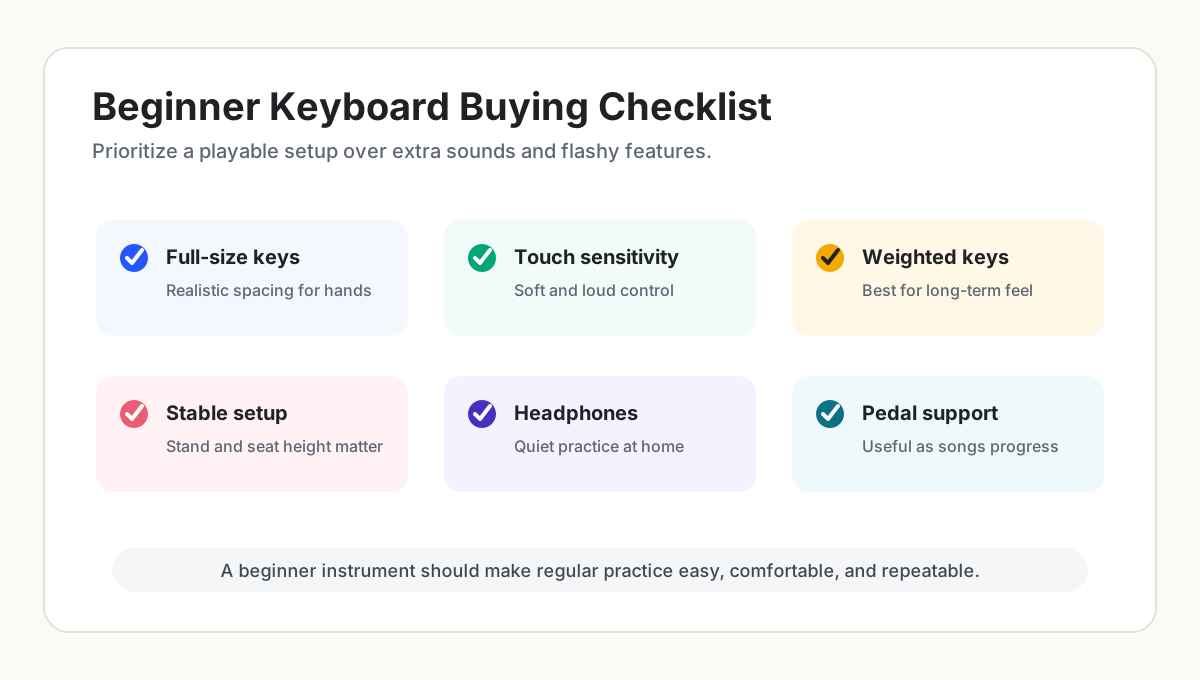
| Feature | Beginner Recommendation | Why It Matters |
|---|---|---|
| Key size | Full-size keys | Small keys make finger spacing unrealistic |
| Touch sensitivity | Strongly recommended | Lets soft and loud playing respond to your hands |
| Weighted keys | Helpful, especially long term | Feels closer to an acoustic piano |
| Key count | 61, 76, or 88 depending on budget and space | More keys give more room as music expands |
| Pedal | Useful soon, not essential on day one | Helps with sustained sound later |
| Stand and bench | Important | Good posture makes practice easier |
| Headphones | Very useful | Helps beginners practice without disturbing others |
If you remember only one rule, remember this: comfort and consistency matter more than extra sounds, flashing lights, or advanced features.
Keyboard, Digital Piano, Or Acoustic Piano?
Beginners usually choose between three types of instruments.
| Instrument Type | Best For | Main Tradeoff |
|---|---|---|
| Keyboard | Lower budget, small spaces, early exploration | Often lighter keys and fewer keys |
| Digital piano | Serious beginner practice at home | Costs more and takes more space |
| Acoustic piano | Traditional feel and sound | Needs space, tuning, and maintenance |
A keyboard is often enough for the first experiments. A digital piano is usually the best long-term beginner choice if the budget allows it. An acoustic piano can be excellent, but it is not required before you know whether piano will become a lasting habit.
For most beginners, a good digital piano with weighted keys is the safest recommendation. It feels closer to a real piano, works with headphones, and does not need tuning.
How Many Keys Do Beginners Need?
Pianos have 88 keys, but beginners do not always need all 88 immediately.
A 61-key keyboard can work for the first stage of learning. It is usually enough for simple melodies, note names, and many early songs. A 76-key keyboard gives more room. An 88-key keyboard or digital piano is best if you want the most piano-like setup from the beginning.
Here is a practical way to think about it:
| Key Count | Beginner Use |
|---|---|
| 49 keys or fewer | Too limited for serious piano learning |
| 61 keys | Acceptable for early beginner practice |
| 76 keys | Better range while still compact |
| 88 keys | Best long-term piano layout |
If you are buying for a child and unsure whether piano will stick, a decent 61-key keyboard can be a reasonable start. If you are an adult beginner and already committed to learning, an 88-key digital piano is usually worth considering.
Are Weighted Keys Necessary?
Weighted keys are not absolutely necessary for the first week, but they are helpful.
Weighted keys make a digital piano feel more like an acoustic piano. They give your fingers more resistance and help you build better control. This becomes more important as your music gets more expressive.
Unweighted keys can still teach note names, rhythm, simple melodies, and basic coordination. The problem is that they do not prepare your hands as well for acoustic-piano touch.
If your budget allows it, choose weighted keys. If not, choose full-size touch-sensitive keys and upgrade later if piano becomes a long-term habit.
Touch-Sensitive Keys Matter
Touch sensitivity means the instrument responds to how hard or softly you press a key. Press gently and the sound is quieter. Press firmly and the sound is louder.
This is important because piano is not only about pressing correct notes. It is also about controlling sound.
Avoid beginner keyboards that play every note at the same volume no matter how you touch the key. Those instruments can still make sounds, but they do not teach musical control very well.
What About Pedals?
Beginners do not need advanced pedal technique immediately, but having a sustain pedal is useful.
The sustain pedal lets notes continue ringing after your finger leaves the key. It is common in many piano pieces and becomes more important as songs get richer.
If the keyboard includes a small pedal, that is fine for starting. A more stable pedal can be added later. The key point is that the instrument should support a pedal connection.
Do Built-In Sounds And Features Matter?
Most beginner keyboards advertise many sounds, rhythms, and features. These can be fun, but they should not drive the buying decision.
The most important sound is a clear piano sound. Extra sounds are optional.
Features that may help:
- headphone output
- metronome
- recording function
- USB or MIDI connection
- simple volume control
Features that matter less:
- hundreds of instrument sounds
- flashing lesson lights
- complex backing tracks
- large display menus
Do not pay mainly for features that distract from practice.
The Setup Matters More Than Beginners Think
A good instrument can still feel bad if the setup is wrong.
Make sure the keyboard or piano is at a comfortable height. Your forearms should be roughly level with the keys. Your shoulders should feel relaxed. Your feet should rest comfortably, either on the floor or on a support.
A stable stand is important. A keyboard that wobbles can make practice frustrating. A bench or chair at the right height matters too.
If you are setting up for a child, avoid placing the keyboard too high on a normal table. That can force raised shoulders and tense wrists.
Best Choice For Adult Beginners
For adult beginners, the best first choice is usually an 88-key digital piano with weighted keys, if budget and space allow.
This gives a realistic playing feel, enough range for future music, and a stable home practice setup. Headphones are also useful because adults often practice around work, family, or neighbors.
If that feels like too much investment, choose a full-size touch-sensitive keyboard first. The important thing is to start with an instrument you will actually use.
Best Choice For Children
For children, the best choice depends on age, commitment, space, and budget.
If a child is just exploring piano, a 61-key touch-sensitive keyboard can be a reasonable first step. If lessons are already planned or the child is committed, a weighted digital piano is better.
Parents should pay attention to:
- stable stand
- correct sitting height
- volume control or headphones
- simple controls
- enough room for both hands
The instrument should make practice easier, not turn every session into a fight with the setup.
Common Buying Mistakes
One common mistake is buying a very cheap keyboard with tiny keys. It may look beginner-friendly, but it can make real piano technique harder.
Another mistake is paying for hundreds of sounds instead of better keys. A beginner does not need a huge sound library. They need a playable piano sound and responsive keys.
A third mistake is forgetting the stand and bench. If the keyboard is balanced on a table at the wrong height, practice will feel uncomfortable.
A fourth mistake is assuming the most expensive option is always necessary. A beginner can start well with a modest instrument if the key size, touch response, and setup are good.
How Much Should Beginners Spend?
There is no single correct beginner budget. The right amount depends on how committed the learner is and how long the instrument should last.
Think in levels:
| Budget Level | What To Expect |
|---|---|
| Very low | May be enough for exploration, but watch for small keys and poor touch |
| Entry-level | Can work if keys are full-size and touch-sensitive |
| Mid-range | Often the best balance for serious beginners |
| Higher budget | Better key feel, sound, and long-term use |
If you are not sure piano will stick, do not overspend. If you already know you want to learn seriously, buying a better instrument can make practice more satisfying.
What To Buy First Besides The Instrument
Do not forget the basic accessories.
Useful first items include:
- a stable stand
- a bench or adjustable seat
- headphones
- a sustain pedal
- a simple notebook for practice notes
- beginner-friendly learning material
These items support practice. A better setup can be more useful than extra keyboard features.
Related Reading
- How to Learn Piano for Beginners
- Piano Notes for Beginners
- 15-Minute Piano Practice Routine for Beginners
FAQ
Is a keyboard enough to learn piano?
Yes, a keyboard can be enough for the first stage of learning piano if it has full-size, touch-sensitive keys and a comfortable setup. A weighted digital piano is better for long-term piano technique.
Should beginners get 61 or 88 keys?
An 88-key digital piano is best for long-term learning. A 61-key keyboard can still work for early beginner practice, especially if budget or space is limited.
Do beginners need weighted keys?
Weighted keys are very helpful, but not strictly required for the first steps. If possible, choose weighted keys. If not, choose full-size touch-sensitive keys.
Is a digital piano better than a keyboard?
Usually yes for serious beginner practice. Digital pianos tend to have better key feel and a more piano-like setup. Keyboards can be more affordable and portable.
What should parents buy for a child beginner?
Parents should choose an instrument with full-size keys, touch sensitivity, a stable stand, and a comfortable seat height. If lessons are planned, a weighted digital piano is a strong choice.
Can I start piano without buying an acoustic piano?
Yes. Many beginners start successfully on a digital piano or keyboard. An acoustic piano is optional, not required at the beginning.
Last updated