Keyboard vs Digital Piano vs Acoustic Piano for Beginners
A practical comparison of keyboards, digital pianos, and acoustic pianos for beginners, including cost, space, feel, maintenance, and long-term learning.
Quick Answer
For most beginners, a digital piano is the best balance between realistic piano feel, home practicality, and long-term learning. A portable keyboard can work for early exploration if it has full-size, touch-sensitive keys. An acoustic piano offers the most traditional sound and touch, but it needs more space, regular tuning, and a larger commitment. The right choice depends on budget, space, noise limits, practice goals, and whether the learner is testing piano or ready to practice seriously.
The Three Options At A Glance
Beginners often use the words keyboard and piano interchangeably, but the instruments can feel very different.
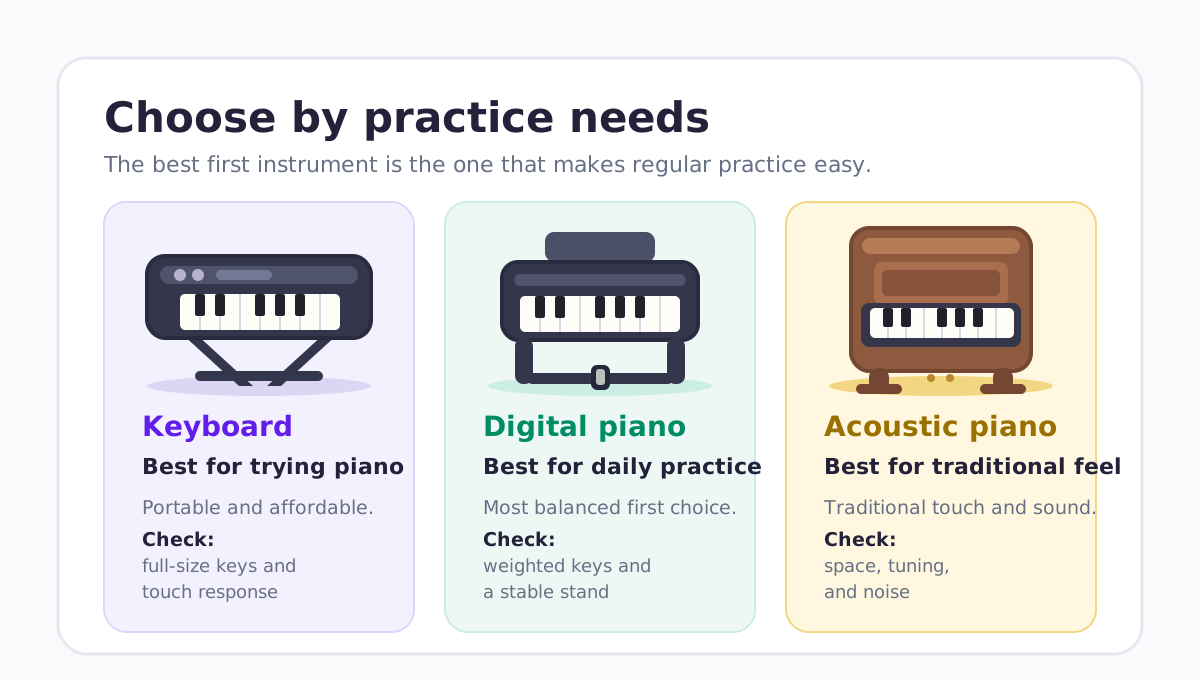
- Keyboard: portable, often cheaper, and useful for early exploration.
- Digital piano: designed to feel more like an acoustic piano while staying practical at home.
- Acoustic piano: a traditional instrument with real strings, hammers, and natural resonance.
All three can help someone start learning, but they do not support practice in the same way.
What Is A Keyboard?
A keyboard is a portable electronic instrument. It may have 49, 61, 76, or 88 keys, and it often includes many sounds, rhythms, buttons, and built-in speakers.
A 61-key keyboard is already enough for serious beginner learning and many early songs, as long as it has full-size, touch-sensitive keys. An 88-key instrument gives more range for later repertoire, but beginners do not need to wait for one before learning properly.
For beginners, a keyboard can be useful when:
- the budget is limited
- space is tight
- the learner is still exploring piano
- portability matters
- quiet practice is important
The main risk is key feel. Some keyboards have small or light keys that do not feel much like a piano. That can make the transition to a digital or acoustic piano harder later.
If you choose a keyboard, look for full-size, touch-sensitive keys. Avoid toy-like instruments for serious practice.
What Is A Digital Piano?
A digital piano is an electronic instrument designed to imitate the experience of playing a piano. It usually has 88 full-size keys, weighted action, and built-in speakers.
For many adult beginners and families, this is the safest first serious choice.
A digital piano works well when:
- the learner wants realistic practice at home
- flexible volume control matters
- tuning and maintenance should be minimal
- space is available for a fixed setup
- the goal is to build piano technique over time
The main tradeoff is cost and space. A good digital piano usually costs more than a basic keyboard and is less portable.
What Is An Acoustic Piano?
An acoustic piano creates sound with hammers, strings, and a wooden soundboard. It does not need electricity, and the sound responds naturally to touch.
An acoustic piano can be a strong choice when:
- the learner is committed to long-term piano
- the home has enough space
- regular tuning is acceptable
- volume is not a major problem
- traditional touch and sound matter
The main tradeoffs are maintenance, size, and cost. Acoustic pianos need tuning, can be difficult to move, and can be harder to fit into a noise-sensitive home.
Which One Is Best For Beginners?
For most beginners, the practical ranking is:
- Digital piano: best overall first serious instrument.
- Keyboard: acceptable for early exploration if the keys are full-size and touch-sensitive.
- Acoustic piano: excellent if budget, space, tuning, and noise are realistic.
This does not mean every beginner must buy a digital piano immediately. A learner who is unsure about piano can start with a suitable keyboard. A family with an acoustic piano already at home can absolutely use it.
The best beginner instrument is the one that makes regular practice easy.
Key Feel Matters More Than Extra Sounds
Beginners are often drawn to keyboards with many sounds, rhythms, and buttons. Those features can be fun, but they are not the most important part of learning piano.
Prioritize:
- full-size keys
- touch sensitivity
- stable stand or cabinet
- comfortable bench height
- flexible volume control
- enough key range for beginner songs
Extra sounds are optional. A beginner needs an instrument that helps the hands learn spacing, touch, and control.
Space, Noise, And Daily Practice
The right instrument also depends on your home.
Choose a keyboard if:
- you need to move it often
- you have very little space
- you are testing whether piano fits your life
Choose a digital piano if:
- you can create a stable practice corner
- flexible volume control matters
- you want a piano-like feel without tuning
Choose an acoustic piano if:
- you have space
- volume is acceptable
- maintenance is realistic
- you want a traditional instrument
Practice happens more often when the setup is easy. An excellent instrument that is inconvenient may get used less than a simpler setup that is always ready.
For Adult Beginners
Adult beginners usually benefit from a comfortable, low-friction setup. A digital piano is often ideal because it feels serious enough for real progress while still offering flexible volume control and predictable practice time.
If you are unsure whether you will continue, a good beginner keyboard can be a reasonable first step. Just avoid very small keys and unstable stands.
Adults should think less about buying the perfect instrument and more about removing practice barriers:
- Can you sit comfortably?
- Can you practice without disturbing others?
- Can you leave the instrument set up?
- Do the keys feel responsive?
- Does the setup make you want to return tomorrow?
For Parents Of Child Beginners
For children, the instrument should support regular practice without becoming a daily obstacle.
A keyboard may be fine for trying piano, but it should not feel like a toy if the child is taking lessons seriously. A digital piano is often a better long-term home option because the child can build more realistic touch and posture.
Parents should also consider:
- bench height
- stable stand or cabinet
- noise levels at home
- whether the child can reach comfortably
- whether the instrument is always available
If practice requires unpacking cables, moving furniture, and finding a chair every time, the habit becomes harder.
Common Buying Mistakes
Avoid these mistakes:
- buying a tiny toy keyboard for serious learning
- choosing extra sounds over key feel
- ignoring bench and stand height
- buying an acoustic piano without considering tuning and space
- assuming the most expensive option is automatically best
- choosing an instrument that cannot stay set up
The best choice is the one that matches the learner’s current stage and makes practice repeatable.
How tonestro Fits Into Instrument Choice
tonestro helps beginners practice with structure and feedback, but the instrument still matters. A comfortable keyboard or piano makes it easier to repeat songs, hear progress, and build a routine.
If you are just starting, choose an instrument that lets you practice often. Then use guided practice to build notes, rhythm, songs, and confidence step by step.
Related Reading
- Best Piano Keyboard for Beginners
- How to Learn Piano for Beginners
- 15-Minute Piano Practice Routine for Beginners
- Easy Piano Songs for Beginners
- Piano Notes for Beginners
FAQ
Is a keyboard enough to learn piano?
Yes, a keyboard can be enough for the first steps if it has full-size, touch-sensitive keys. For longer-term piano learning, a digital piano with weighted keys is usually better.
Is a digital piano better than a keyboard for beginners?
Usually, yes. A digital piano normally gives beginners a more realistic key feel and a more stable practice setup, while staying low-maintenance.
Is an acoustic piano best for beginners?
An acoustic piano can be excellent, but it is not always the most practical first choice. It needs space, tuning, and more commitment than a digital piano or keyboard.
How many keys does a beginner need?
An 88-key digital piano is ideal for long-term learning. A 61-key or 76-key keyboard can work for early beginner practice if the keys are full-size and touch-sensitive.
Do beginners need weighted keys?
Weighted keys are helpful because they feel closer to an acoustic piano. They are not always required for the first experiments, but they are a strong advantage for serious practice.
What should parents buy for a child beginner?
For a child who is only exploring, a good touch-sensitive keyboard may be enough. For a child taking piano seriously, a digital piano with a stable bench and full-size keys is usually a better home setup.
Last updated