
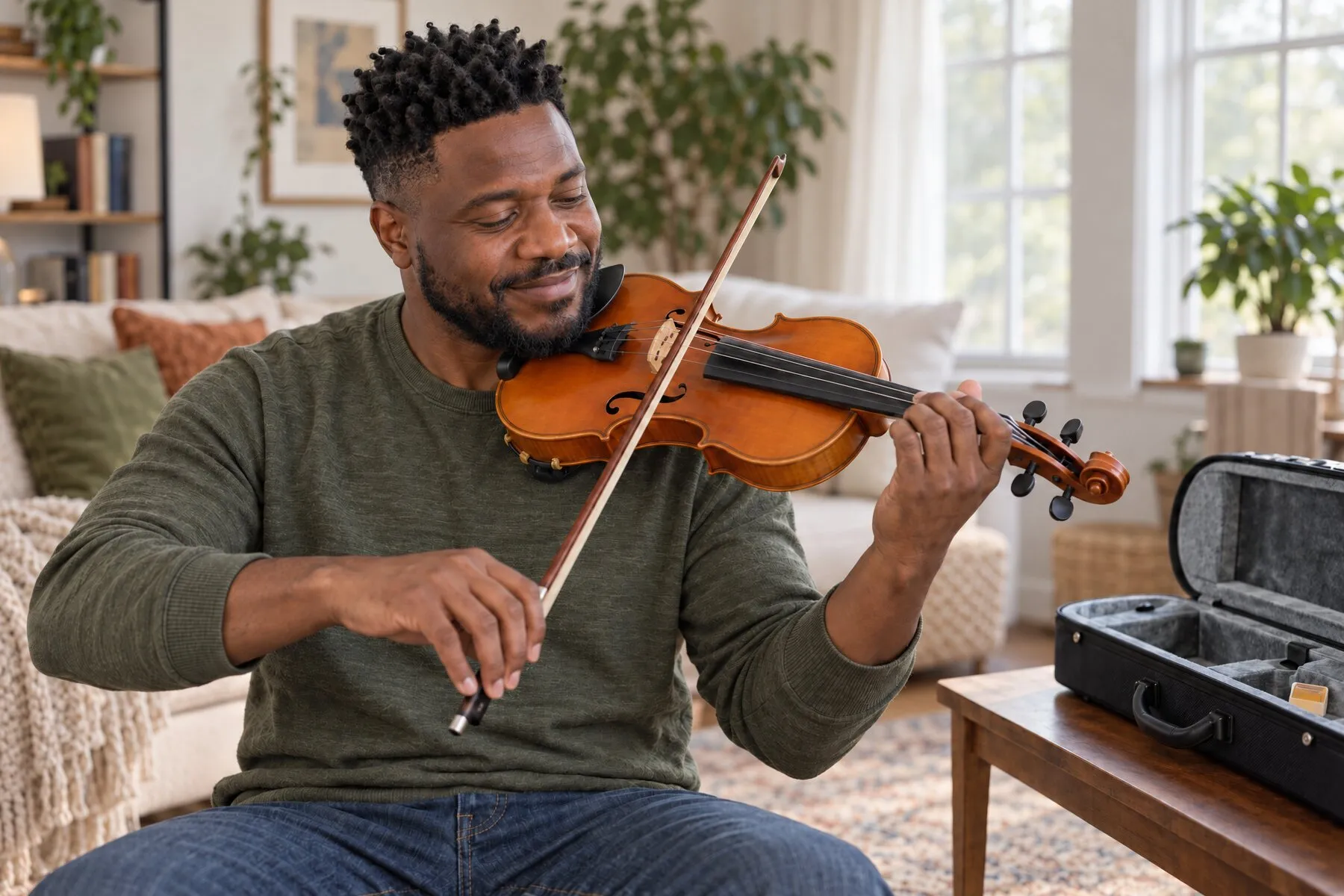
At a glance
- Age
- There is no upper age limit for the violin.
- Violin
- Usually full size (4/4), with bow and rosin.
- Practice
- 15 to 20 minutes on most days.
- First song
- Ten minutes: one or two notes, played along with a real song and band.
Why adults learn the violin well
- One size, chosen once. Children move up through smaller violins as they grow. Most adults play a full-size (4/4) violin, and a violin shop can confirm your size.
- Melodies you already know. You have heard violin music all your life, from Vivaldi to Irish folk. That helps you notice when a note sits right.
- A routine you set yourself. You can choose a regular practice slot that fits around work and family, even if it is only 15 minutes.
What you need to start
- A violin with a bow. Renting is a good start. A violin shop can adjust bridge and strings so it plays easily.
- Rosin. Without it, the bow hair slides over the strings with hardly a sound. A new bow often needs more at first.
- A shoulder rest, if you need one. Fitted with the chinrest to your build, it lets you hold the violin without hunching your shoulder.
- tonestro on an iPhone, iPad or Android phone. Set it at eye level, close enough to read.
How it starts
- First song in ten minutes
In your first session, you tune each string with the tuner in the app and join a real song with one or two notes while a band carries the music. The full tempo comes later.
- The bow comes first
Long, even strokes on the open strings teach your right arm how a clear tone feels.
- Then your fingers join in
Note by note, your left hand learns its places on the fingerboard, and you see right away whether each note landed in tune and on the beat.
Your first violin songs
62 easy violin songs are waiting for you in tonestro, for example:
- Für Elise
- Spring - La Primavera (The Four Seasons)
- Bella Ciao
- The Wild Rover
- Down to the River to Pray
- Korobeiniki (Tetris Theme)
Tips for everyday practice
- Keep the violin within reach. On a wall hanger or stand, away from heat and direct sun, it gets played more often.
- Tighten to play, loosen to rest. Tighten the bow hair before you start, just until there's about a pencil's width between hair and stick in the middle, and loosen it when you finish, so the stick keeps its shape.
- Slow down the hard bits. Set a tricky passage to 80 or 60 percent speed and raise the tempo once you can play it comfortably and steadily.
Frequently asked questions
Am I too old to start the violin at 50 or 60?
Not at all: fingers and ears keep learning at any age. Read more in Too old to learn an instrument?
I played the violin as a child. Can I start again?
Absolutely, and much comes back quickly: the bow hold, the note names, the feel of the strings. Start with slow, easy songs.
Should I rent or buy my first violin?
Both work. Renting lets you start without a big decision. If you buy, have a violin shop check size and setup.
Will my fingertips hurt at first?
Your fingertips may feel tender at first. Keep sessions short and avoid pressing harder than necessary. If discomfort persists, have your technique and the violin’s setup checked.
How long does it take an adult to learn the violin?
Your tone may improve within weeks; a reliably clear, steady sound can take months or longer. More in our rough violin timeline.
Updated: