
The main names you’ll encounter are B♭, C, D, E♭, piccolo, pocket, bass, rotary, herald, natural, baroque, slide and plastic trumpets, alongside relatives such as the cornet, flugelhorn and bugle. Some names describe pitch, others describe shape, valves or material. The B♭ trumpet is the most common type.
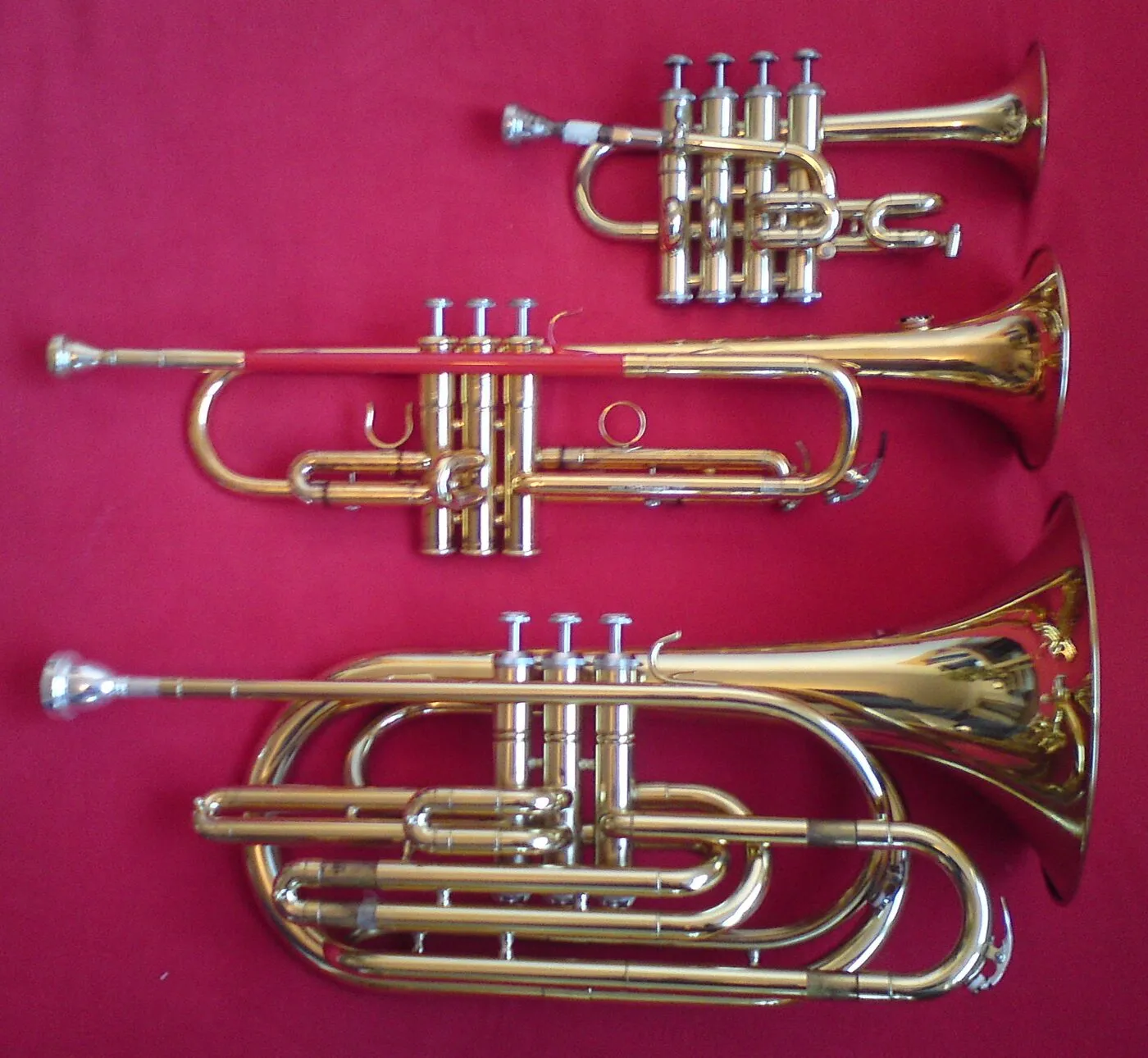

Trumpet types at a glance
These categories overlap. A trumpet can be both a C trumpet and a rotary trumpet, for example. Cornets, flugelhorns and bugles belong here because they are often mistaken for trumpets, although they are distinct instruments.
| Name | Usual pitch or key | Sound or identifying feature | Where you hear it | First instrument? |
|---|---|---|---|---|
| B♭ trumpet | B♭ | Standard trumpet; usually three piston valves | Jazz, bands, orchestras, pop | Our first choice |
| C trumpet | C | Shorter tubing; sounds as written | Especially American orchestras | Usually later |
| D trumpet | D | Higher-pitched specialist trumpet | Orchestral, solo and chamber music | Usually later |
| E♭ trumpet | E♭ | Short tubing; sometimes converts to D | Solo, chamber and ensemble music | Usually later |
| Piccolo trumpet | High B♭ or A | Smallest trumpet; usually four valves | High Baroque parts, solo music | No |
| Pocket trumpet | B♭ | Full-length tubing wound tightly | Travel practice, some jazz | Consider one you already own |
| Cornet | Usually B♭; also E♭ soprano | Compact shape, mellower tone | British brass bands, early jazz | Yes, particularly for brass band |
| Flugelhorn | Usually B♭ | Wide, conical bore; darker sound | Jazz, brass bands | Usually a later addition |
| Traditional bugle | Varies; B♭ and C examples | No valves; limited natural notes | Military calls, ceremonies | For bugle calls |
| Bass trumpet | C or B♭; also E♭ | Lower voice; trombone-like mouthpiece | Opera and orchestral music | Specialist instrument |
| Herald or fanfare trumpet | Varies, including B♭ and E♭ | Long bell section, often with a banner | Ceremonies, parades, fanfares | Specialist instrument |
| Rotary trumpet | Including B♭ and C | Rotary valves operated by levers | German and Austrian orchestras | With suitable teaching |
| Natural and baroque trumpet | Often C or D | No valves; modern baroque copies may have vent holes | Period-instrument performances | Specialist instrument |
| Modern slide trumpet | B♭ | Soprano trombone with a moving slide | Jazz and specialist playing | Not our trumpet-learning choice |
| Plastic trumpet | B♭ models available | Plastic body; construction varies | Beginner use, travel practice | Assess the individual instrument |
The letter names need a little explanation. A standard B♭ trumpet sounds a whole step below its written notes; a C trumpet sounds exactly as written; a D trumpet sounds a whole step above. The letter does not mean the instrument can play only songs in that key.
The everyday trumpet and its orchestral partners
B♭ trumpet: the usual place to start
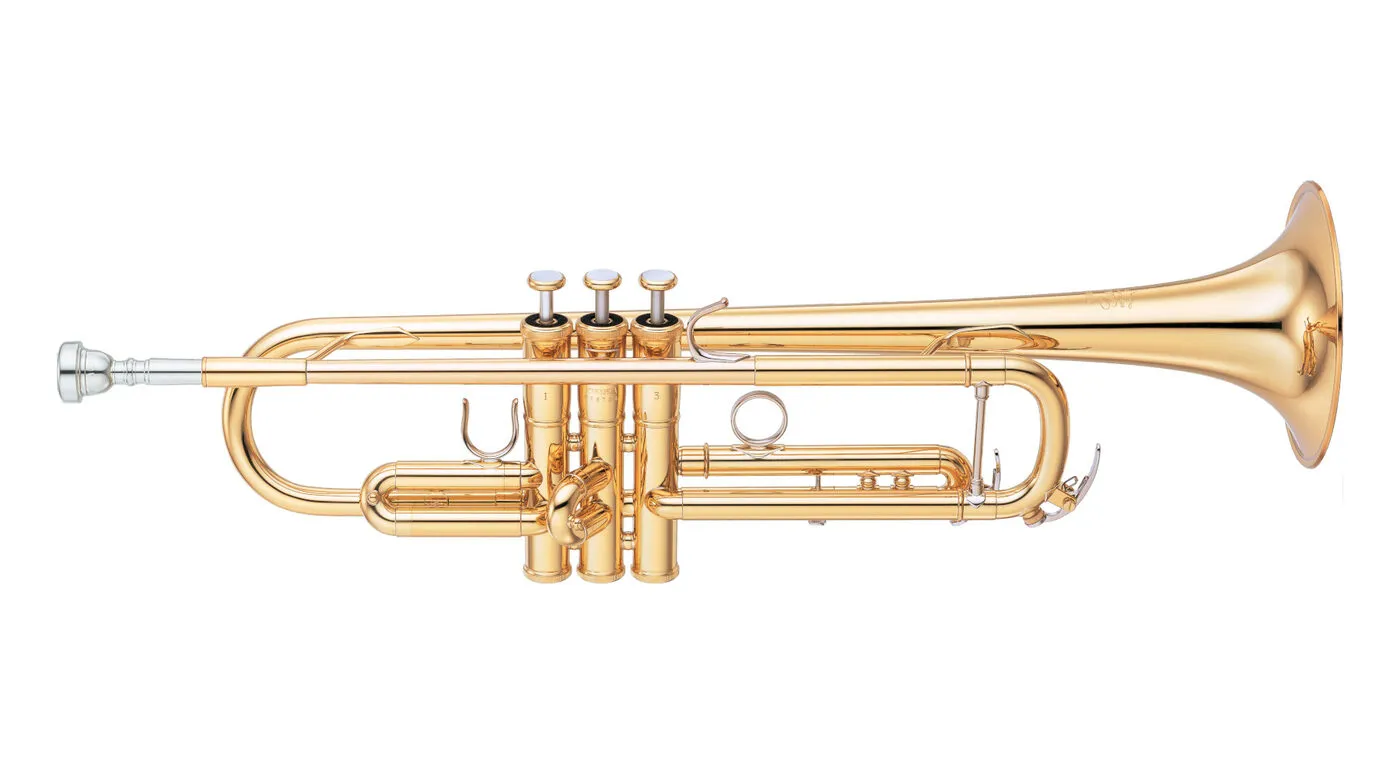

The B♭ trumpet works across jazz, concert bands, orchestras and popular music. If you picture someone playing trumpet, this is probably the instrument you have in mind.
It has about 1.3 to 1.5 m (4 ft 3 in to 4 ft 10 in) of tubing, folded twice. Its bore, the inside of the tubing, stays cylindrical for much of its length before widening into the bell. Pressing a valve sends air through extra tubing and lowers the pitch. Your lips select different notes within each valve combination.
For a memorable example, listen to Louis Armstrong’s introduction to “West End Blues.” The trumpet commands attention before the rest of the band has much to say.
This is our pick for a first trumpet because it is the standard beginner instrument and remains useful across so many musical settings. You don’t graduate out of it when you become an accomplished player.
C trumpet: an orchestral favorite
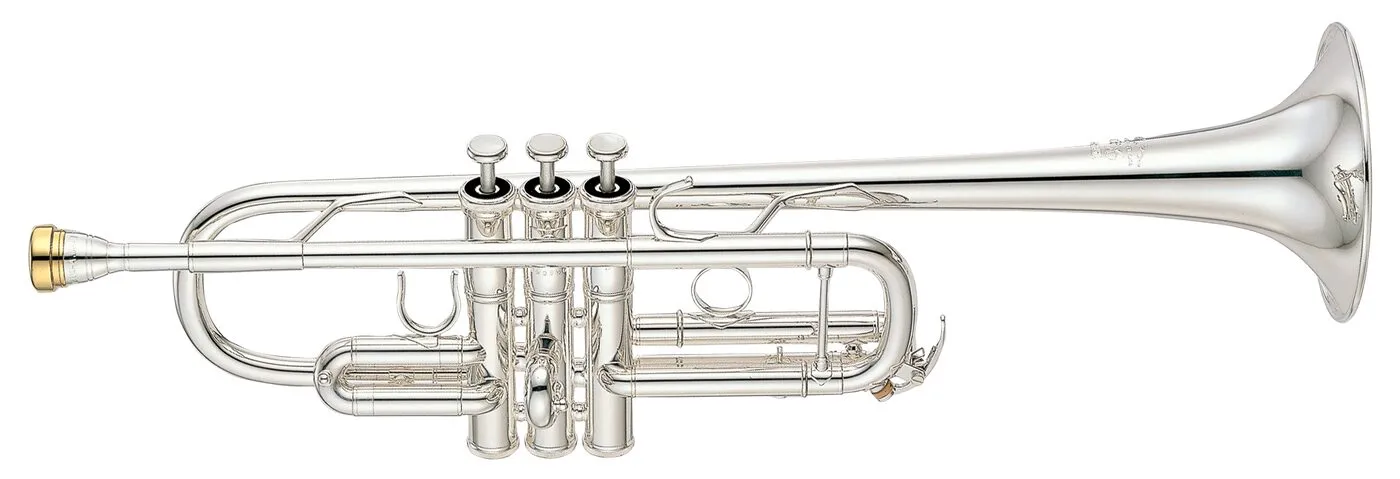
The C trumpet is particularly common in American orchestras. Its sounding notes match the notes on the page, and its tone is generally brighter than the B♭ trumpet’s.
Ravel’s Boléro calls for three trumpets in C and one in D. That is a useful reminder that orchestral trumpet sections can contain instruments in different keys.
For a beginner, reading at concert pitch is not enough reason to choose C. We would start with B♭ and add C when orchestral playing gives you a reason to learn its response and sound.
D and E♭ trumpets: instruments for particular parts
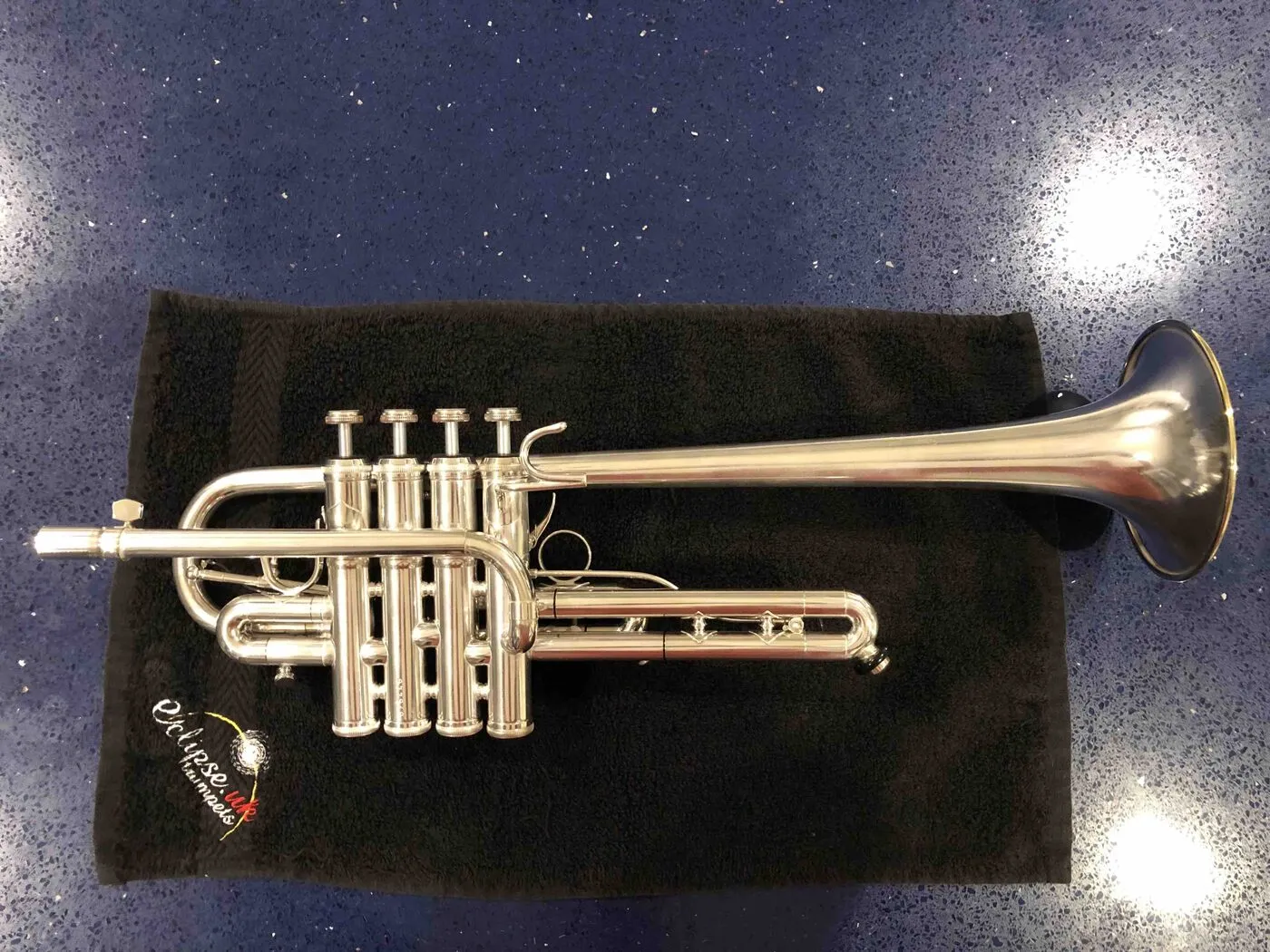

D and E♭ trumpets have shorter tubing than their B♭ counterpart. Some instruments convert between E♭ and D by exchanging the bell and valve slides.
The D trumpet developed for high parts in music by Bach and Handel. Ravel also called for it in Boléro. It is not restricted to supporting other trumpets: modern E♭/D instruments serve solo and chamber players too.
Haydn’s Trumpet Concerto is an important E♭ example, with a historical distinction: he wrote it for a keyed trumpet, which opened holes in the tubing, rather than a modern valve instrument.
These are later choices for particular music. A beginner does not need a different trumpet for every key printed on a piece.
As a range reference, standard trumpet writing spans roughly written F♯3 to C6, though beginners often start with about an octave. A higher trumpet doesn’t give you high notes for free; your range grows with practice on any of them.
Small trumpets: piccolo versus pocket
“What is a small trumpet called?” has two likely answers. A piccolo trumpet has shorter tubing and plays higher. A pocket trumpet packs ordinary B♭ trumpet tubing into a smaller shape and stays at the ordinary pitch.
Piccolo trumpet: small instrument, high voice
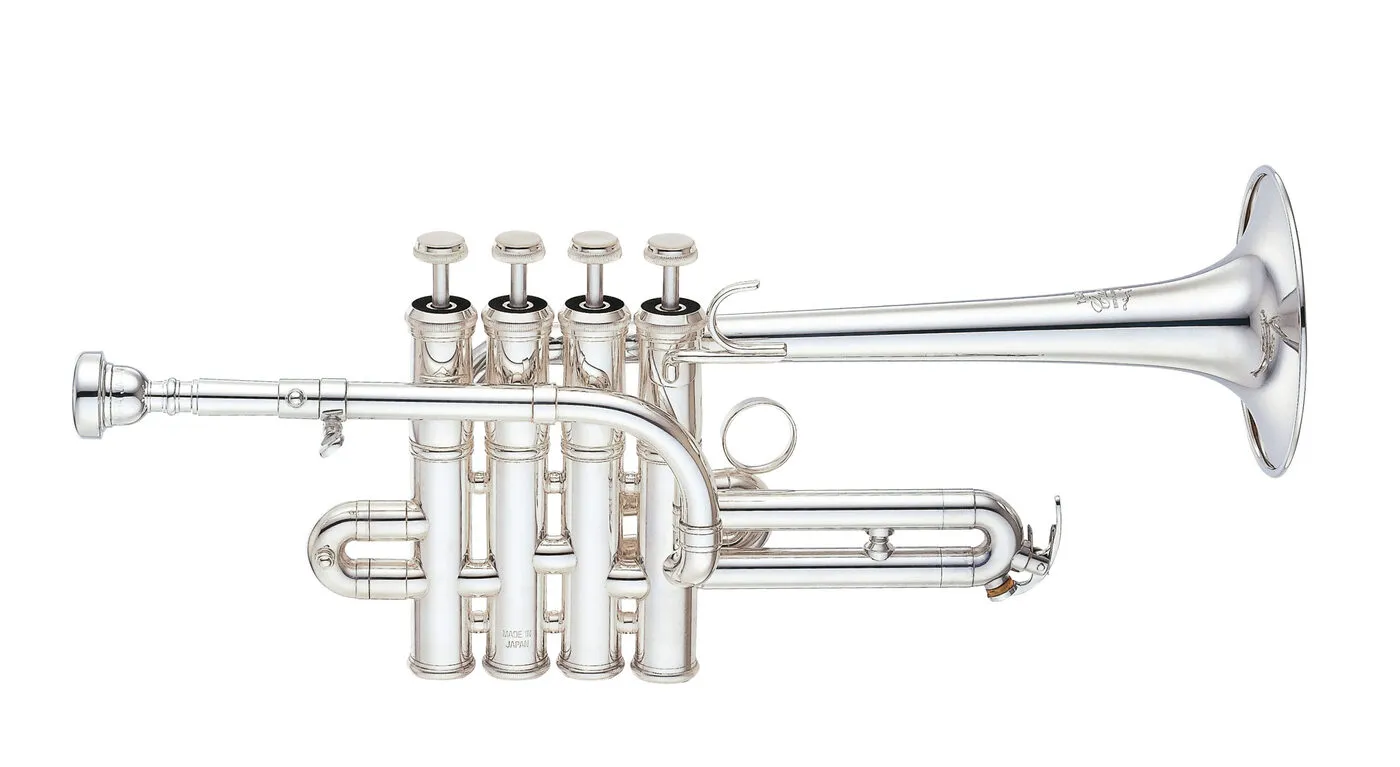

The B♭ piccolo sits an octave above the standard B♭ trumpet and has about half the tubing length. Many models also play in A using a different leadpipe, the tube that receives the mouthpiece.
Its usual fourth valve extends the lower range and offers alternative fingerings. High notes are easier to hit and play in tune, but a piccolo won’t automatically extend your upper range. You still build that through practice. It also asks for different air pressure and tonguing, the way you start notes with your tongue.
For a familiar sound, hear David Mason’s solo on the Beatles’ “Penny Lane,” played on a piccolo in A. In classical music, modern performances of Bach’s Brandenburg Concerto No. 2 often use piccolo, although Bach wrote the part for a natural trumpet.
Save this one for later, when high repertoire becomes a musical goal.
Pocket trumpet: smaller package, same pitch
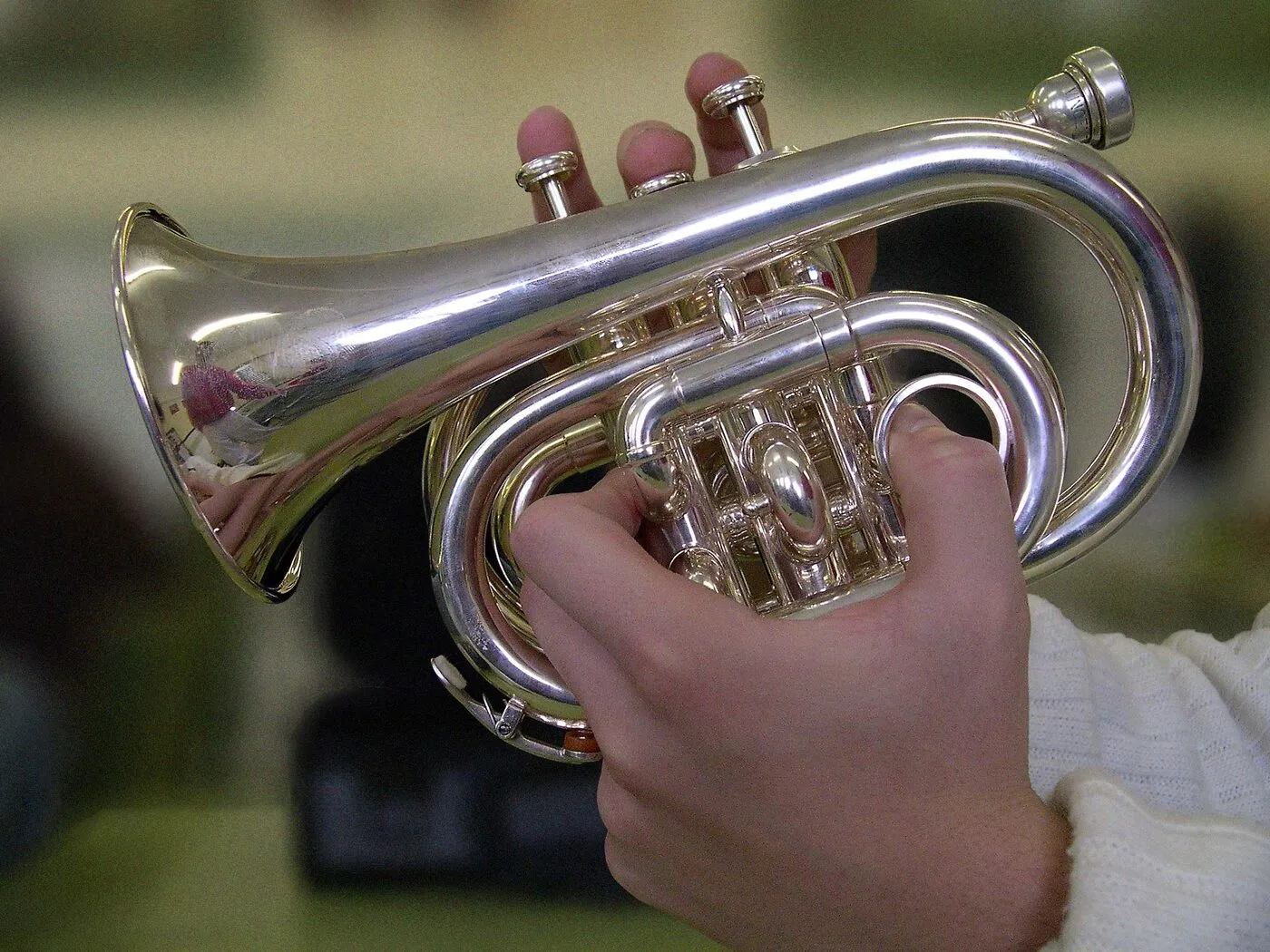

A pocket trumpet uses the same fingerings and plays the same notes as a full-size B♭ trumpet. Its tubing is coiled more tightly rather than shortened.
Players use it for portable practice, and some jazz soloists use compact instruments as an alternative to their regular trumpet. Construction varies: some pocket trumpets retain a full-size bore and bell, while others compromise sound or response.
If one is already at home, have a teacher or repair technician assess it before replacing it. If you are choosing from scratch, our preference is a conventional B♭ trumpet.
A real pocket trumpet is not a toy trumpet: it sounds through buzzing lips, while some trumpet-shaped toys use reeds.
Close relatives: cornet, flugelhorn and bugle
Cornet versus trumpet: a mellower brass-band voice
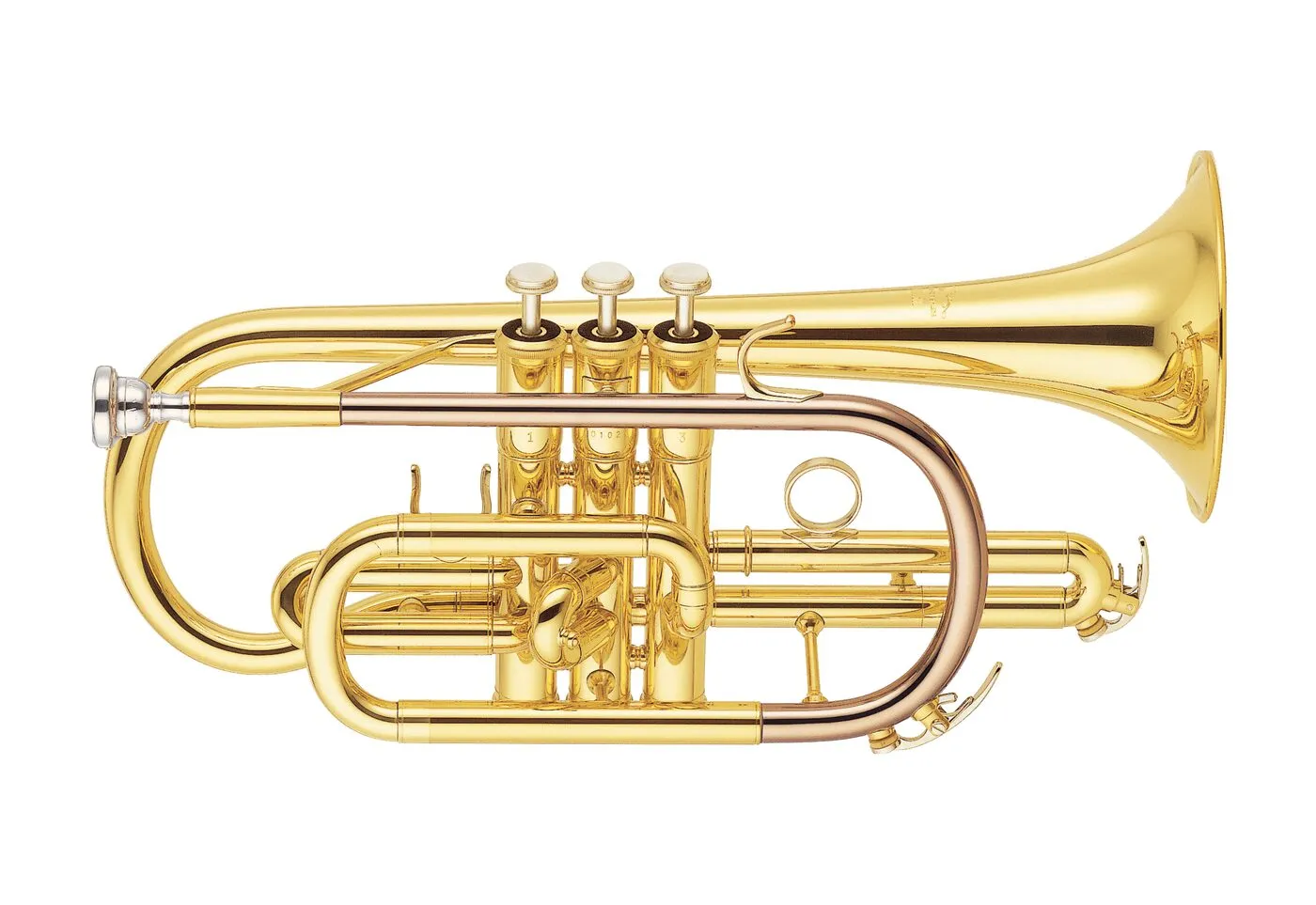

Compared with a trumpet, a cornet has more conical tubing, which widens along its length, and generally produces a mellower tone. A B♭ cornet shares the B♭ trumpet’s pitch and fingerings, but uses a different mouthpiece fitting.
Cornets are central to British brass bands, including the higher E♭ soprano cornet. The B♭ cornet is also a perfectly sensible first brass instrument, especially if joining a brass band appeals to you.
Louis Armstrong began on cornet before switching to trumpet. His early playing with King Oliver is part of that story; our guide to famous trumpet players follows the musicians behind these sounds.
Already own a playable B♭ cornet? You have an instrument worth learning, not an obstacle to getting started.
Flugelhorn versus trumpet: a darker sound
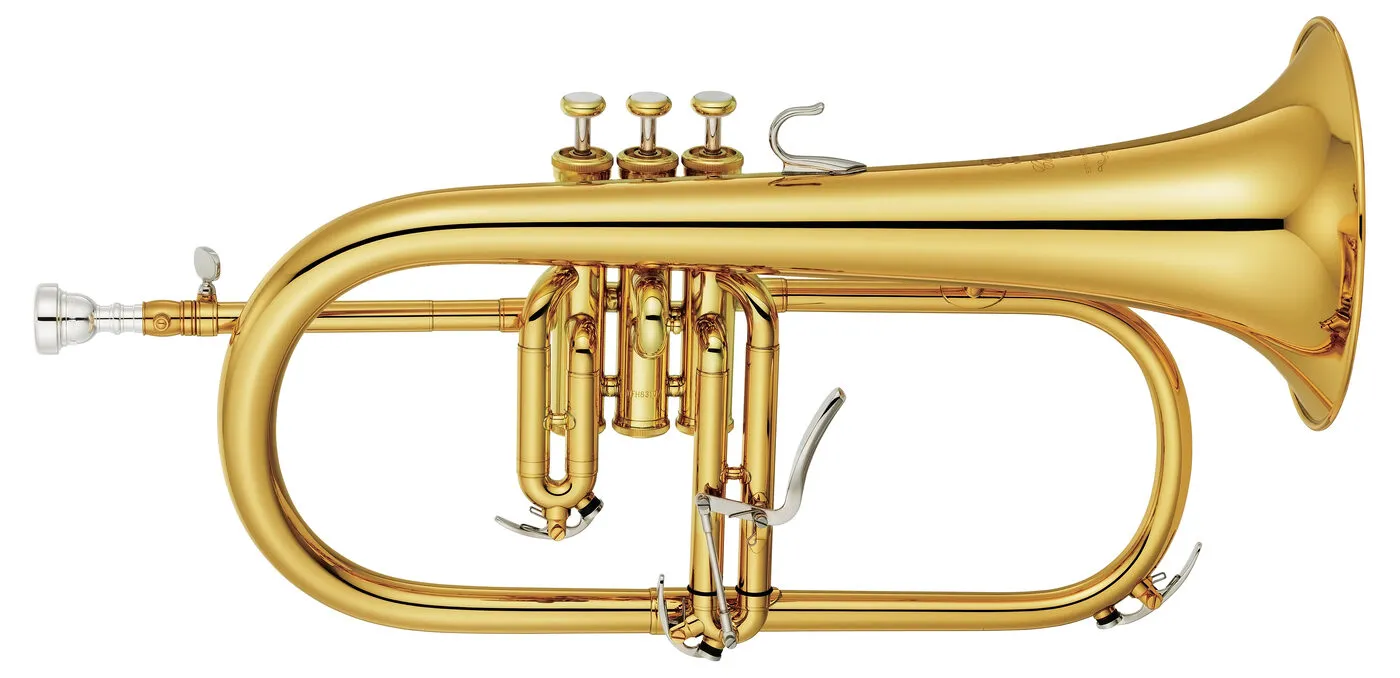

The flugelhorn is usually pitched in B♭, but its wider conical bore gives it a darker, mellower sound than a trumpet. Trumpeters often add it as a second instrument because the fingerings are familiar.
Listen to Chuck Mangione’s “Feels So Good” for a recognizable example. Miles Davis also brought the instrument into jazz recordings, including Miles Ahead.
The flugelhorn’s larger-looking body does not make it a bass trumpet. It belongs to the high brass family, with a different sound color.
We would normally learn on B♭ trumpet first, then add flugelhorn when that softer voice is something you want in your music.
Bugle versus trumpet: calls without valves
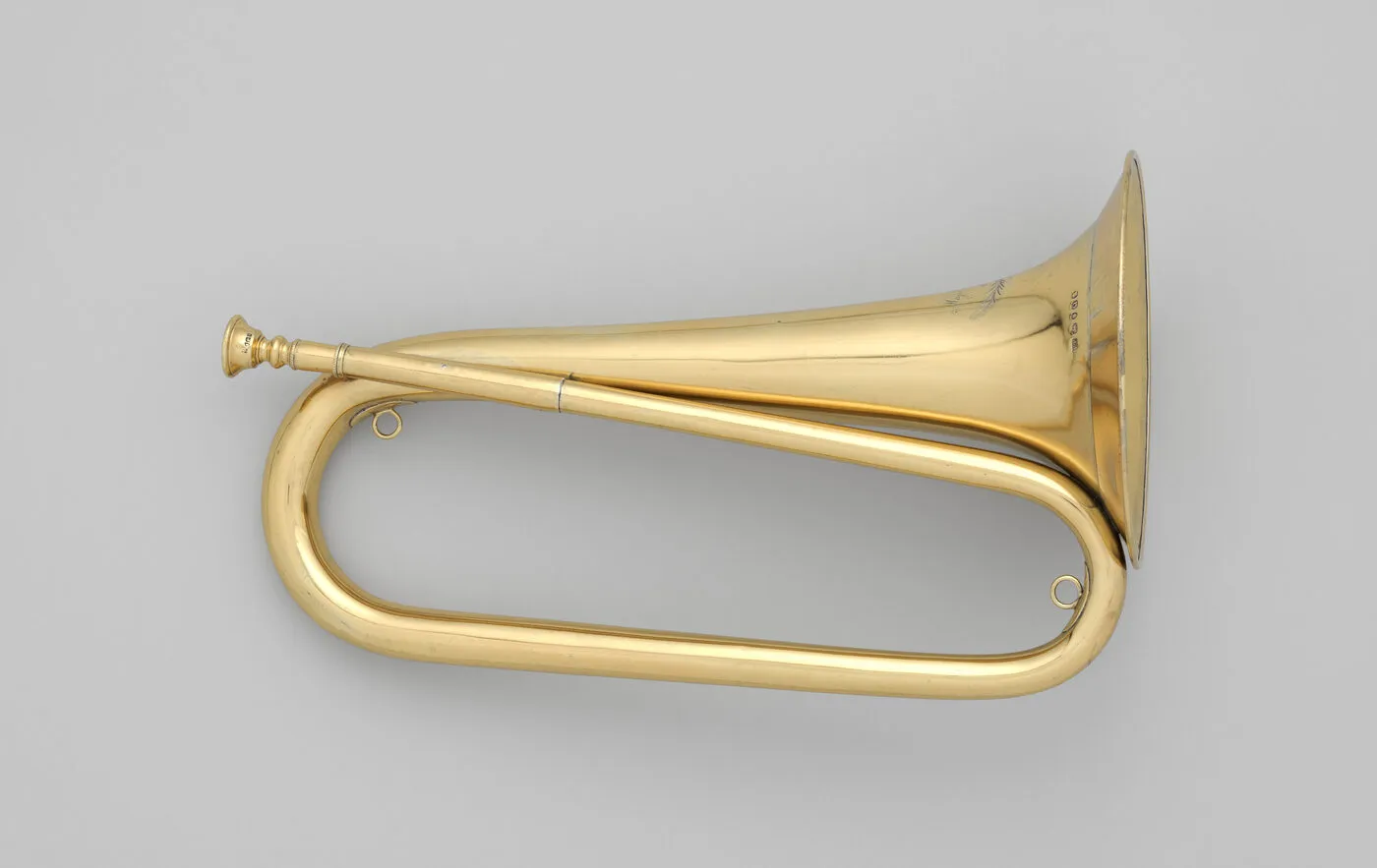

The traditional military bugle has a wide conical bore and no valves, unlike the standard trumpet. It plays the harmonic series: the natural notes available from a fixed length of tubing, selected through the player’s lips and air.
“Taps” is the familiar listening example. It can also be played on a trumpet, so hearing a bugle call does not necessarily mean you are hearing a bugle.
If your question is “What brass instrument has no valves?”, bugle is a common answer. For learning calls, it fits the job. For learning a wider selection of melodies, choose a valved trumpet.
Big and long trumpets
Bass trumpet: the lower voice
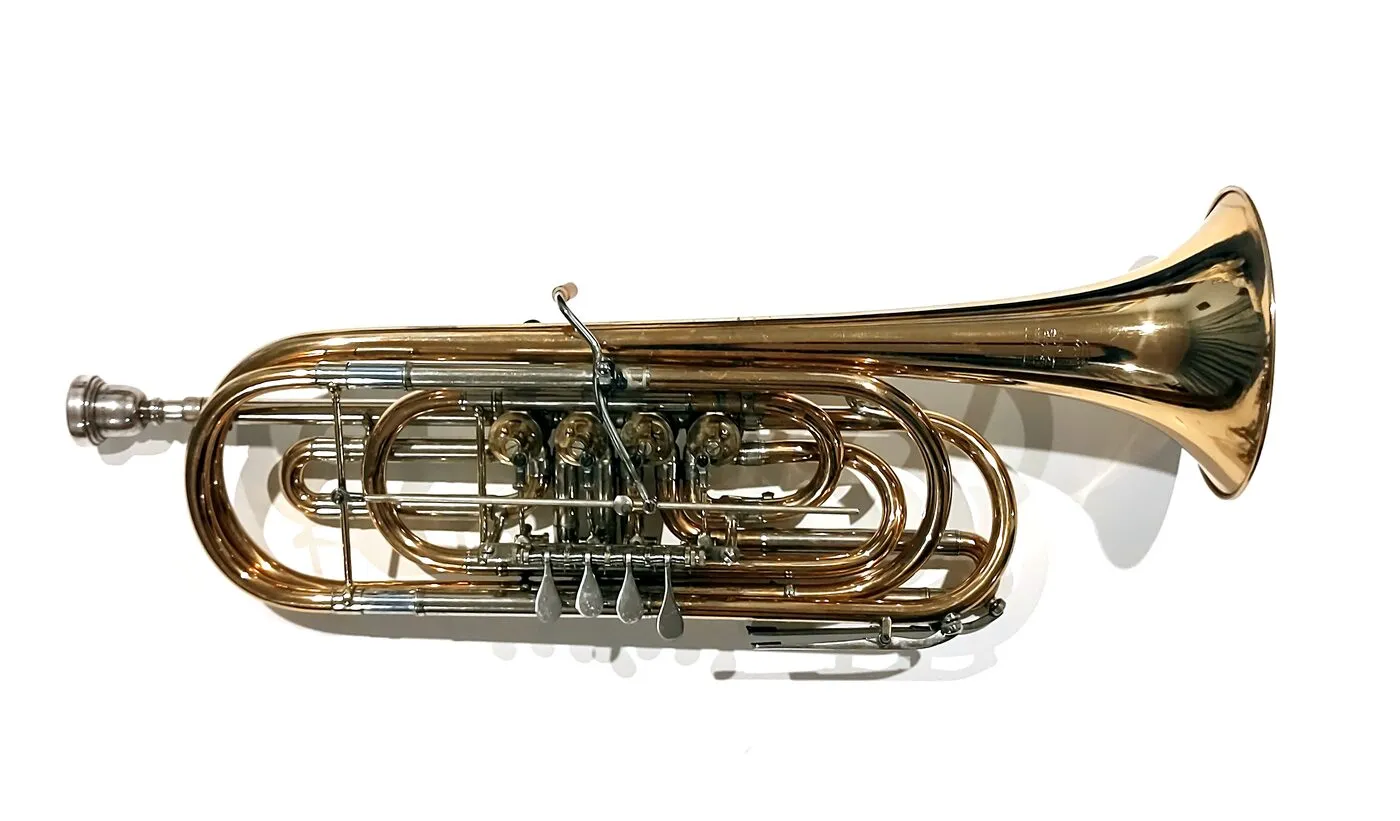

A big trumpet playing low notes may be a bass trumpet. Common C and B♭ versions sit an octave below the corresponding standard trumpets.
The mouthpiece resembles a trombone mouthpiece, and trombonists usually play the instrument. Its sound is harder and more metallic than a valve trombone’s, despite sharing its tubing length.
Wagner used bass trumpet in Der Ring des Nibelungen; it also appears in Stravinsky’s The Rite of Spring. This is an orchestral specialist’s instrument, not the next size up for a beginner with large hands.
Herald trumpet: the long one with a banner
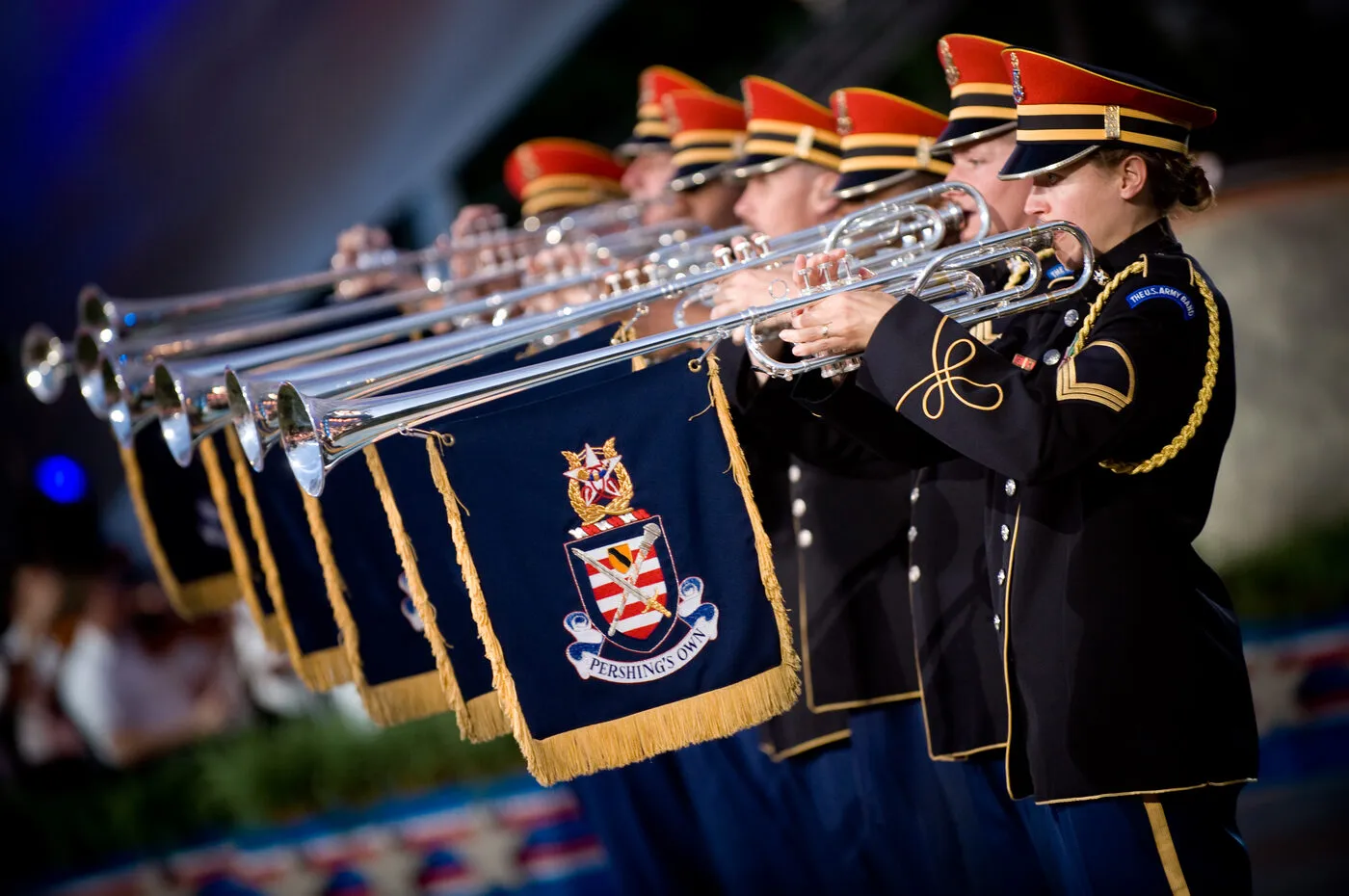

The long, straight-looking trumpet at a ceremony is often called a herald trumpet or fanfare trumpet. Its extended bell section can carry a banner.
A B♭ herald trumpet can have the same total tubing length as a regular B♭ trumpet, arranged less compactly. Looking longer therefore does not necessarily mean sounding lower. Both valved and valveless forms exist.
For a related theatrical example, Verdi’s Aida uses special fanfare trumpets for its Grand March. Herald instruments suit ceremonies and parades; their shape offers no particular advantage for everyday beginner practice.
Different valves, or no valves at all
Rotary trumpet: the German and Austrian orchestral sound
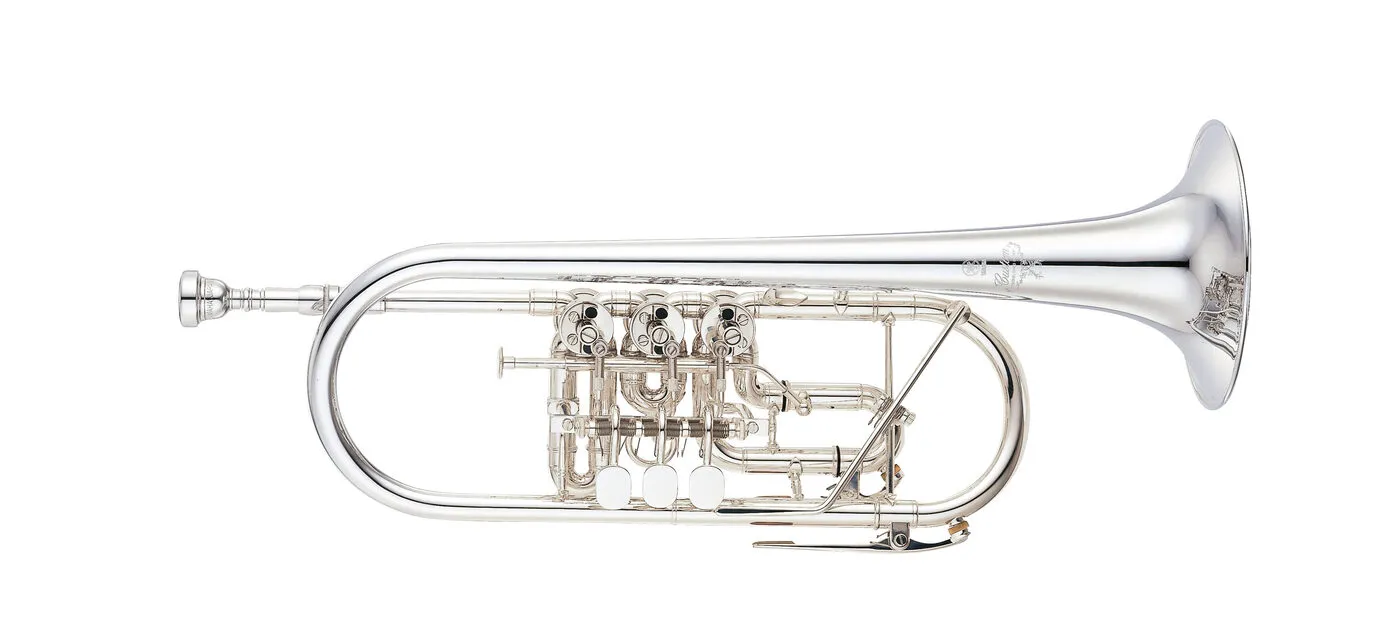

A rotary trumpet changes how the air is redirected. Instead of pistons moving up and down, internal rotors turn to connect extra loops of tubing. The player presses levers and holds the instrument flatter.
Rotary trumpets are common in professional German and Austrian orchestras, particularly for music by Wagner, Richard Strauss, Mahler and Bruckner. Their characteristic mellow sound helps them blend with strings.
“Rotary” describes the mechanism, not the key: B♭ and C versions both exist. Learning on one can make sense with a teacher who uses that tradition. Otherwise, the standard piston-valve B♭ trumpet is our simpler starting recommendation.
Natural and baroque trumpets: before valves
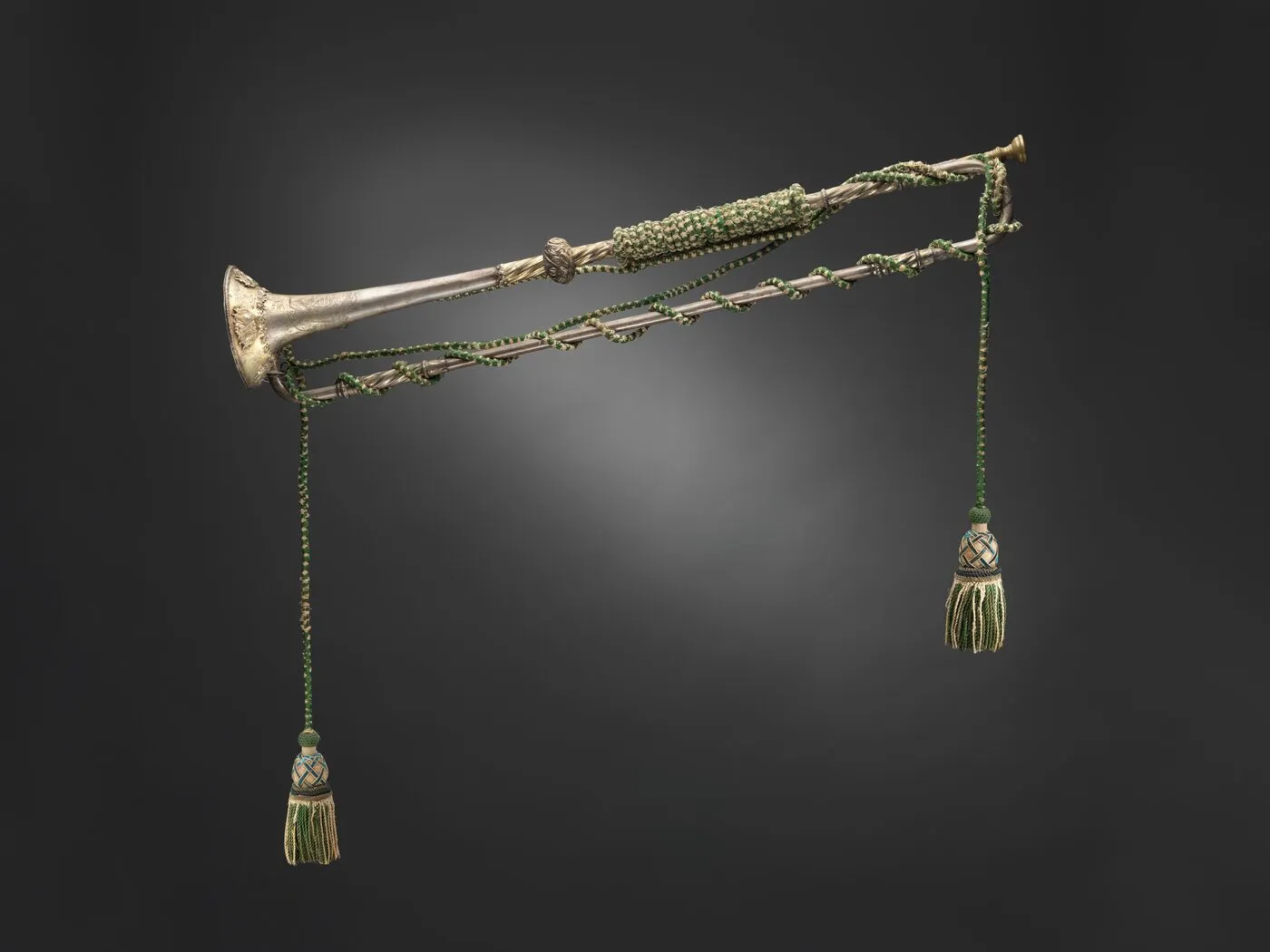

A natural trumpet is a trumpet without valves, keys or finger holes. Like the bugle, it uses the harmonic series, but its longer tubing allows melody playing among the closely spaced higher harmonics.
Historical instruments often used crooks, extra sections of tubing, to change key. Bach’s Brandenburg Concerto No. 2 calls for a natural trumpet in F.
“Baroque trumpet” often means a modern reproduction with vent holes that help correct certain notes. Those holes are a modern adaptation, not a feature of original Baroque instruments. Some period performers play entirely without them.
Both forms require specialist skills. Our trumpet history guide explains how players moved from these instruments to keyed and valved designs.
Slide trumpet: usually a soprano trombone today
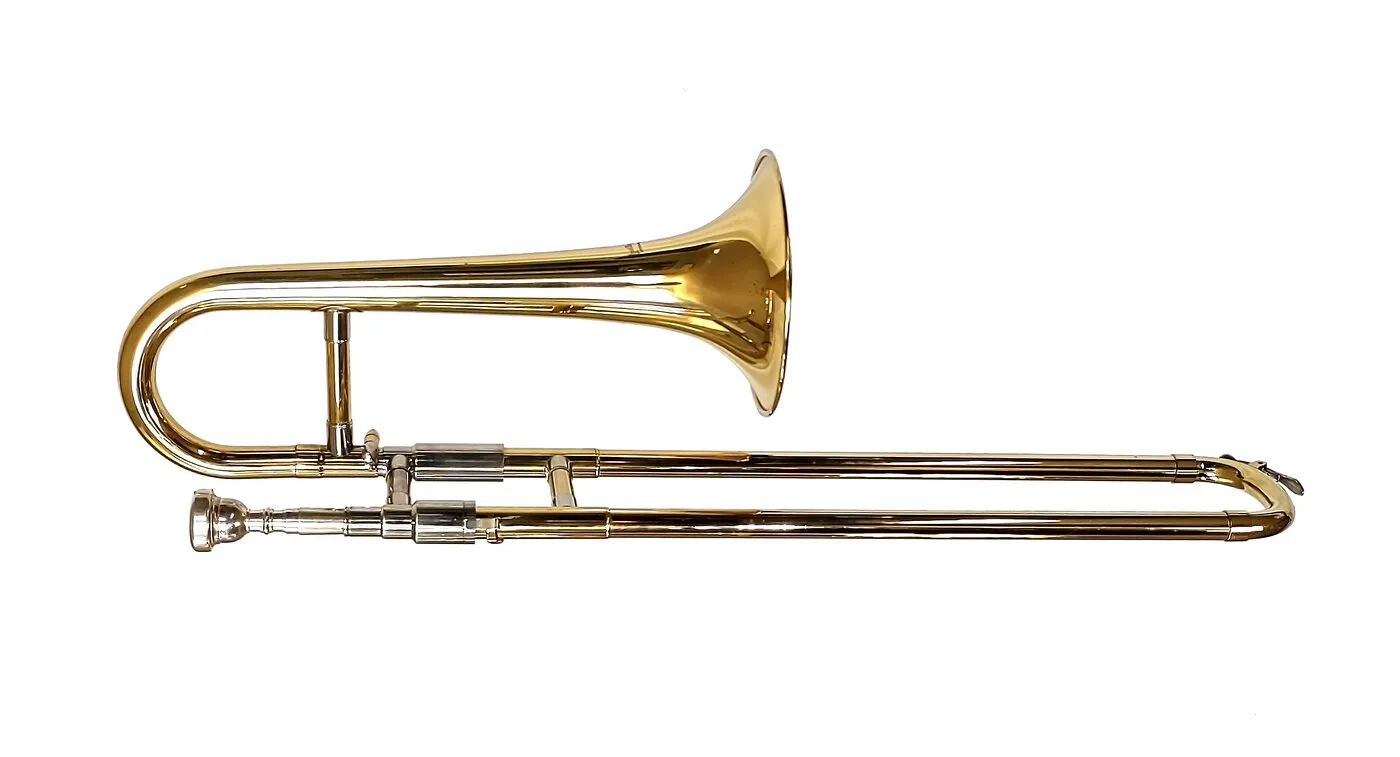

Today, “slide trumpet” usually refers to the B♭ soprano trombone, which plays at the pitch of a standard B♭ trumpet. Trumpeters often play it with a trumpet mouthpiece.
Moving the slide changes the tubing length instead of selecting valve combinations. Jazz players have explored related slide cornets; Louis Armstrong and Dizzy Gillespie are among the documented players.
Historical slide trumpets were different designs, so the name needs context. For someone aiming to learn ordinary trumpet fingerings, this would be an unnecessary detour as a first instrument.
Plastic trumpets: material rather than a new pitch
A plastic trumpet can be a real lip-buzzed instrument with functioning valves. “Plastic” describes its construction rather than a separate musical register.
For example, the pTrumpet, launched in 2014 and documented by the Museum of Design in Plastics, is a B♭ instrument weighing 500 g (1.1 lb), with plastic valves. That illustrates the appeal: lower weight for learners or portable practice.
It does not establish that every plastic trumpet sounds or responds like a metal instrument. Designs range from toys to playable beginner instruments, so judge the particular model rather than its color or material alone.
Our preference for a first purchase remains a conventional B♭ trumpet. If weight is a concern, a playable plastic model is worth assessing with a teacher.
More questions about trumpet types
What is a trumpet without valves called?
A natural trumpet has no valves, keys or finger holes. A traditional bugle is another common answer, though it is a separate instrument with a wider conical bore. Herald trumpets also come in valveless versions.
Other brass instruments without valves include most trombones, which use a slide, as well as the alphorn, post horn, shofar and conch-shell trumpet. “Brass” describes how these instruments make sound through vibrating lips, so they do not have to be made of metal.
Does a fourth valve always do the same thing?
No. On many trumpets it lowers the pitch by a perfect fourth, extending the lower range and providing alternative fingerings. Other designs use a quarter-tone valve: Ibrahim Maalouf plays such an instrument for Arab maqams. Valve count alone does not tell you the trumpet’s purpose.
Is a Bach trumpet a separate type?
Usually, “Bach” on an instrument means the maker’s brand. Historical writing also uses “Bach trumpet” for a D trumpet developed to play high parts in Bach’s music. Bach himself did not know the modern valved trumpet, so the two meanings should not be confused.
Which trumpet should you start on?
Start on a standard B♭ trumpet. It is the usual beginner choice, with a place in everything from a concert band to jazz. You can build your playing on it without planning an upgrade to a different key.
If a B♭ cornet is already waiting at home, use that opportunity: its notes and fingerings transfer to B♭ trumpet. If you own a pocket trumpet, get its playing condition checked; the compact shape alone is no reason to dismiss it.
A C trumpet becomes useful when orchestral work calls for it. A piccolo makes sense when you have the foundation and want to tackle its high repertoire. Choose those instruments for the music you want to play.
With a B♭ trumpet at home, tonestro listens through your microphone and shows you whether each note is in tune and on time. You can play along with your first song in ten minutes, starting with a note or two alongside the band.
Open our trumpet guide for beginners for your first steps, and keep the B♭ trumpet fingering chart nearby as you learn your notes.