
Louis Armstrong, Dizzy Gillespie and Miles Davis appear on almost every “greatest trumpet players” list we checked, with Wynton Marsalis appearing just as often. “The best” is a matter of taste: a soaring jazz solo and a beautifully shaped classical melody ask different things of a player. Our choice for your first listen is Armstrong’s “West End Blues,” because the opening gives the trumpet the whole stage before the band joins in.
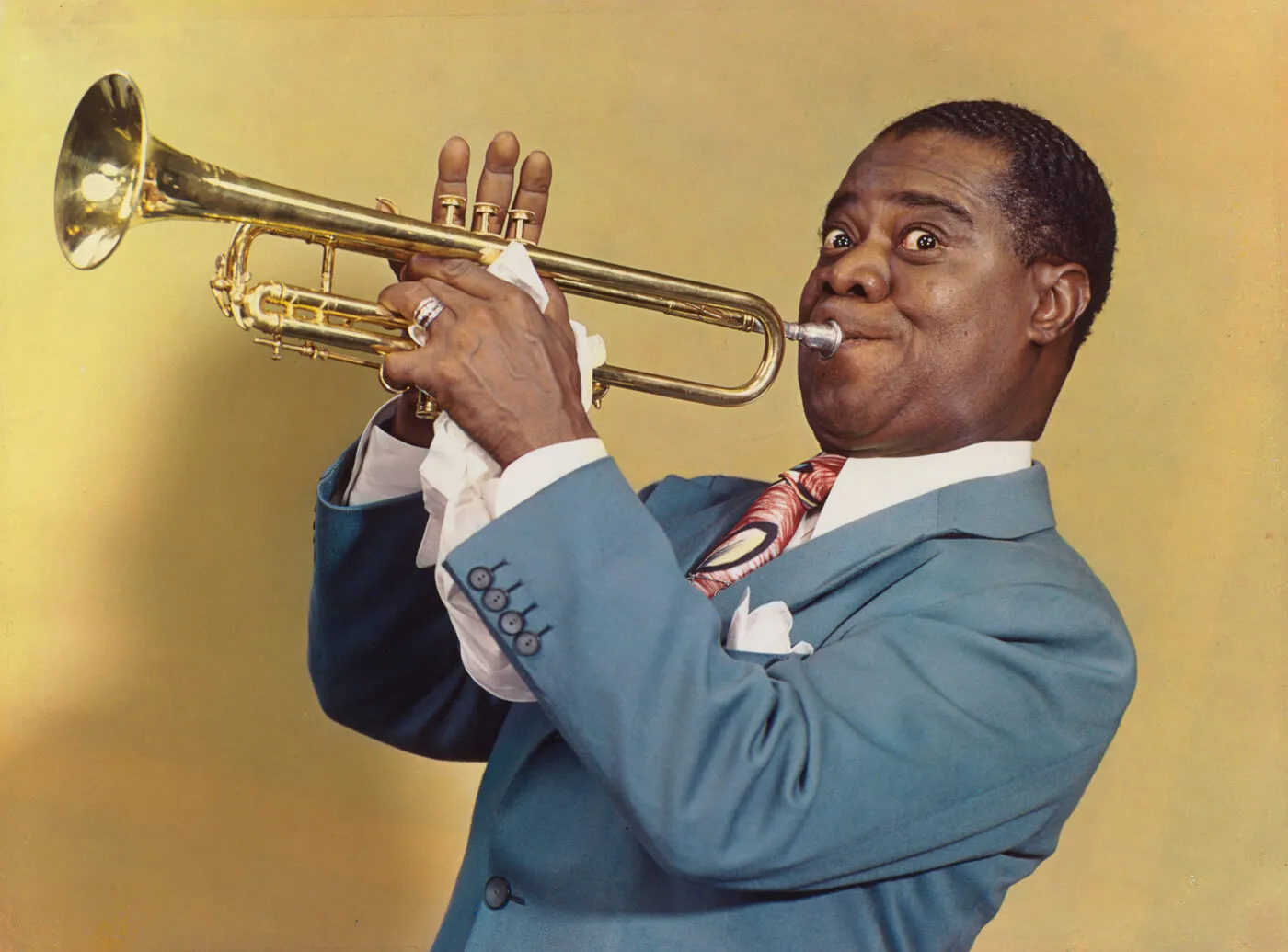

Our comparison covers uDiscover Music’s jazz ranking and three BBC Music Magazine selections spanning jazz, classical and modern players. Armstrong, Gillespie, Davis and Marsalis each appear in three of those four lists. That is useful agreement, though three lists come from the same publisher; it is no universal vote.
Famous trumpet players at a glance
Use this as a listening menu, not a ranking. Years beside names are lifespans; “born” identifies living musicians as of October 2026. Recording years refer to the version or album suggested.
| Player | Years | Known for | Start listening |
|---|---|---|---|
| Louis Armstrong | 1901–1971 | Early jazz solos and singing | ”West End Blues” (1928) |
| Dizzy Gillespie | 1917–1993 | Bebop and Afro-Cuban jazz | ”A Night in Tunisia” (1946) |
| Miles Davis | 1926–1991 | Cool jazz, modal jazz and fusion | ”So What” (1959) |
| Buddy Bolden | 1877–1931 | Early New Orleans cornet playing | No surviving recording |
| King Oliver | c. 1881–1938 | Muted cornet and Armstrong’s mentorship | ”Dipper Mouth Blues” (1923) |
| Bix Beiderbecke | 1903–1931 | Cornet solos in early jazz | ”Singin’ the Blues” (1927) |
| Roy Eldridge | 1911–1989 | Swing connecting Armstrong and Gillespie | ”Let Me Off Uptown” (1941) |
| Harry James | 1916–1983 | Big-band trumpet and ballads | ”You Made Me Love You” (1941) |
| Louis Prima | 1910–1978 | Trumpet, singing and swing entertainment | ”Just a Gigolo / I Ain’t Got Nobody” (1956) |
| Clark Terry | 1920–2015 | Trumpet, flugelhorn and scat | ”Mumbles” (1964) |
| Chet Baker | 1929–1988 | Cool jazz and intimate vocals | ”My Funny Valentine,” Chet Baker Sings (1954) |
| Clifford Brown | 1930–1956 | Bebop and hard bop | ”Joy Spring” (1954) |
| Lee Morgan | 1938–1972 | Hard bop | ”The Sidewinder” (1964) |
| Freddie Hubbard | 1938–2008 | Hard bop and fusion | ”Red Clay” (1970) |
| Maynard Ferguson | 1928–2006 | High-register big-band playing | ”Gonna Fly Now” (1977) |
| Doc Severinsen | Born 1927 | The Tonight Show band | The Tonight Show Band with Doc Severinsen (1986) |
| Al Hirt | 1922–1999 | New Orleans trumpet and pop instrumentals | ”Java” (1963) |
| Herb Alpert | Born 1935 | The Tijuana Brass and instrumental pop | ”A Taste of Honey” (1965) |
| Hugh Masekela | 1939–2018 | South African jazz and Afropop | ”Grazing in the Grass” (1968) |
| Arturo Sandoval | Born 1949 | Latin jazz and classical playing | Danzón (Dance On) (1994) |
| Wynton Marsalis | Born 1961 | Jazz, classical music and composition | Black Codes (From the Underground) (1985) |
| Roy Hargrove | 1969–2018 | Hard bop, Latin jazz and soul | Habana (1997) |
| Chris Botti | Born 1962 | Jazz-pop crossover | Impressions (2012) |
| Valaida Snow | c. 1904–1956 | Trumpet, singing and stage performance | ”High Hat, Trumpet and Rhythm” (c. 1936) |
| Maurice André | 1933–2012 | Classical and piccolo trumpet | Trumpet Concertos, with Karajan (1974) |
| Adolph “Bud” Herseth | 1921–2013 | Orchestral trumpet | Haydn’s Trumpet Concerto, with Abbado (1984) |
| Håkan Hardenberger | Born 1961 | Contemporary classical trumpet | HK Gruber’s Aerial (2006 recording) |
| Sergei Nakariakov | Born 1977 | Classical trumpet and flugelhorn | Carmen Fantasy (1994 recording) |
| Alison Balsom | Born 1978 | Classical and natural trumpet | Italian Concertos (2010) |
| Tine Thing Helseth | Born 1987 | Classical solo and ensemble playing | Echoes (2025) |
Oliver’s and Snow’s birth years differ between sources; Snow’s suggested recording date is also not settled.
Louis Armstrong: the trumpet and the voice
What instrument did Louis Armstrong play?
Louis Armstrong played cornet, then trumpet, and he sang. He moved toward the trumpet in the mid-1920s; accounts differ on the precise date. Early photographs and recordings therefore do not always show or feature the same instrument.
For the physical differences, see our guide to trumpets, cornets and other trumpet-family instruments.
New Orleans, the Karnofskys and his first lessons
Armstrong was born in New Orleans. A baptismal certificate found in the 1980s gives August 4, 1901 as his birthday; Armstrong himself said July 4, 1900.
His father left early. His grandmother and mother raised him in poverty in a neighborhood known as the Battlefield. As a boy, he worked for the Karnofskys, a Lithuanian Jewish family, collecting discarded goods and delivering coal. They fed him and cared for him. That work helped him obtain his first cornet. He wore a Star of David for the rest of his life, partly in their memory.
When did Louis Armstrong start playing? He had a cornet as a boy, but his documented instruction came at the Colored Waif’s Home for Boys in 1913, when he was about twelve. He had been arrested after firing blanks from a pistol into the air on New Year’s Eve 1912.
At the home, Peter Davis taught him cornet. Armstrong learned to read music and became the band’s leader. His ear mattered enormously, but his story also includes lessons, reading and supervised practice.
King Oliver, riverboats and Chicago
After Armstrong’s release in 1914, Joe “King” Oliver became his mentor. When Oliver left for Chicago in 1918, Armstrong took his place in Kid Ory’s band.
The Mississippi riverboats came next. During the summers of 1919–1921, he played for Fate Marable, whose written arrangements pushed his reading forward. Armstrong called the experience “going to the University.” Those trips were an education, though he already had professional playing experience.
In August 1922, Oliver called him to Chicago to play second cornet in his Creole Jazz Band. Armstrong made his first recordings with the group in 1923. Listen to “Dipper Mouth Blues” for the world he entered: several musical voices sharing the foreground, with Oliver’s muted solo cutting through.
Armstrong joined Fletcher Henderson in New York in 1924, then returned to Chicago in 1925. Now the records would carry his own name.
The Hot Five and Hot Seven
The Hot Five began recording in November 1925. The Hot Seven followed in 1927, including “Potato Head Blues.” These were small-group recordings that gave Armstrong room to make the solo a central event.
On “Potato Head Blues,” listen for the stop-time passage: the band punctuates the beat while his line continues through the gaps. On “West End Blues,” recorded in 1928, hear the unaccompanied opening, called a cadenza. Before anyone else plays, he has already given you a complete musical thought.
The Louis Armstrong House Museum’s biography traces this journey from New Orleans to the Hot Five and Hot Seven.
His voice belonged in that story too. “Heebie Jeebies” from 1926 helped popularize scat singing, using syllables instead of lyrics. He was not its inventor. The often-repeated story that dropped sheet music prompted the scat chorus remains disputed.
His trumpet, handkerchief and later hits
What kind of trumpet did Armstrong play? He used Selmer trumpets from 1932. The Smithsonian holds a custom-made Henri Selmer B♭ trumpet from 1946, engraved with his name.
His white handkerchief became another familiar part of his appearance. He used it to wipe his brow between solos, often with a theatrical flourish.
In 1964, “Hello, Dolly!” displaced the Beatles at the top of the US singles chart. Armstrong was 62. “What a Wonderful World,” recorded in 1967, reached No. 1 in the UK in 1968. If those vocals are your introduction to him, go back to “West End Blues” next: hear the horn alongside the voice.
Armstrong died on July 6, 1971. New Orleans remained central to how he described his music. Laurence Bergreen’s biography Louis Armstrong: An Extravagant Life quotes him:
“Every time I close my eyes blowing that trumpet of mine—I look right in the heart of good old New Orleans … It has given me something to live for.”
Dizzy Gillespie: bebop, a bent bell and dancing rhythms
John Birks “Dizzy” Gillespie was born in Cheraw, South Carolina, in 1917. Roy Eldridge’s radio performances gave him an early model. In Philadelphia, his antics in Frankie Fairfax’s band earned him the nickname “Dizzy”; in 1937, he joined Teddy Hill’s band, where Eldridge had previously starred.
With saxophonist Charlie Parker, Gillespie helped develop bebop in the 1940s: jazz built around intricate melodies and improvisation, often at startling speed. Try “Salt Peanuts” from 1945. Follow the recurring musical phrase before trying to follow every note.
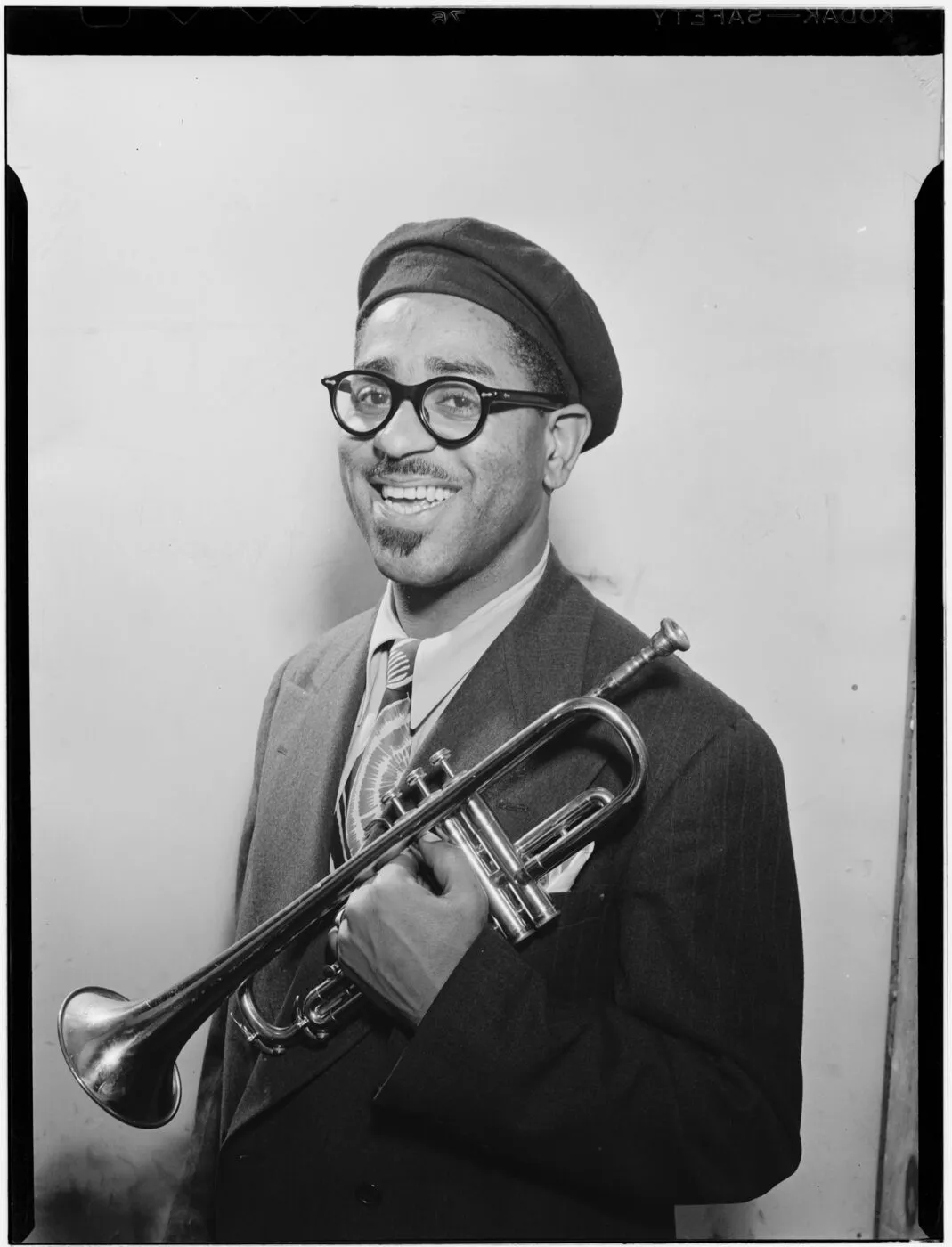

His later trumpet looked unmistakable. After an accident bent its bell upward in 1953, he liked the result and had instruments made with a bell raised at 45 degrees. Accounts differ on exactly how the accident happened.
Then there were the puffed cheeks. They were part of his appearance, but a photograph cannot tell you how to build your own embouchure, the way your lips and facial muscles work around the mouthpiece.
Gillespie’s musical curiosity also reached beyond bebop. Cuban percussionist Chano Pozo joined him in 1947; with arranger Gil Fuller, they wrote “Manteca,” a landmark of Afro-Cuban jazz. Hear how the percussion and trumpet phrases work together.
Our starting choice is the 1946 recording of “A Night in Tunisia.” Stay with the underlying rhythm even when the solo races ahead. Gillespie later mentored Arturo Sandoval and remained an international jazz figure until his death on January 6, 1993.
Miles Davis: making room for a different sound
Miles Davis was born in Alton, Illinois, in 1926 and grew up in East St. Louis. His teacher Elwood Buchanan encouraged a clear tone without heavy vibrato, the regular wavering of pitch. Clark Terry also offered informal guidance.
Davis arrived in New York in 1944 to study at Juilliard. He left in 1945 and that year replaced Gillespie in Charlie Parker’s quintet. The connection is striking: players whose sounds became so different passed through the same group.
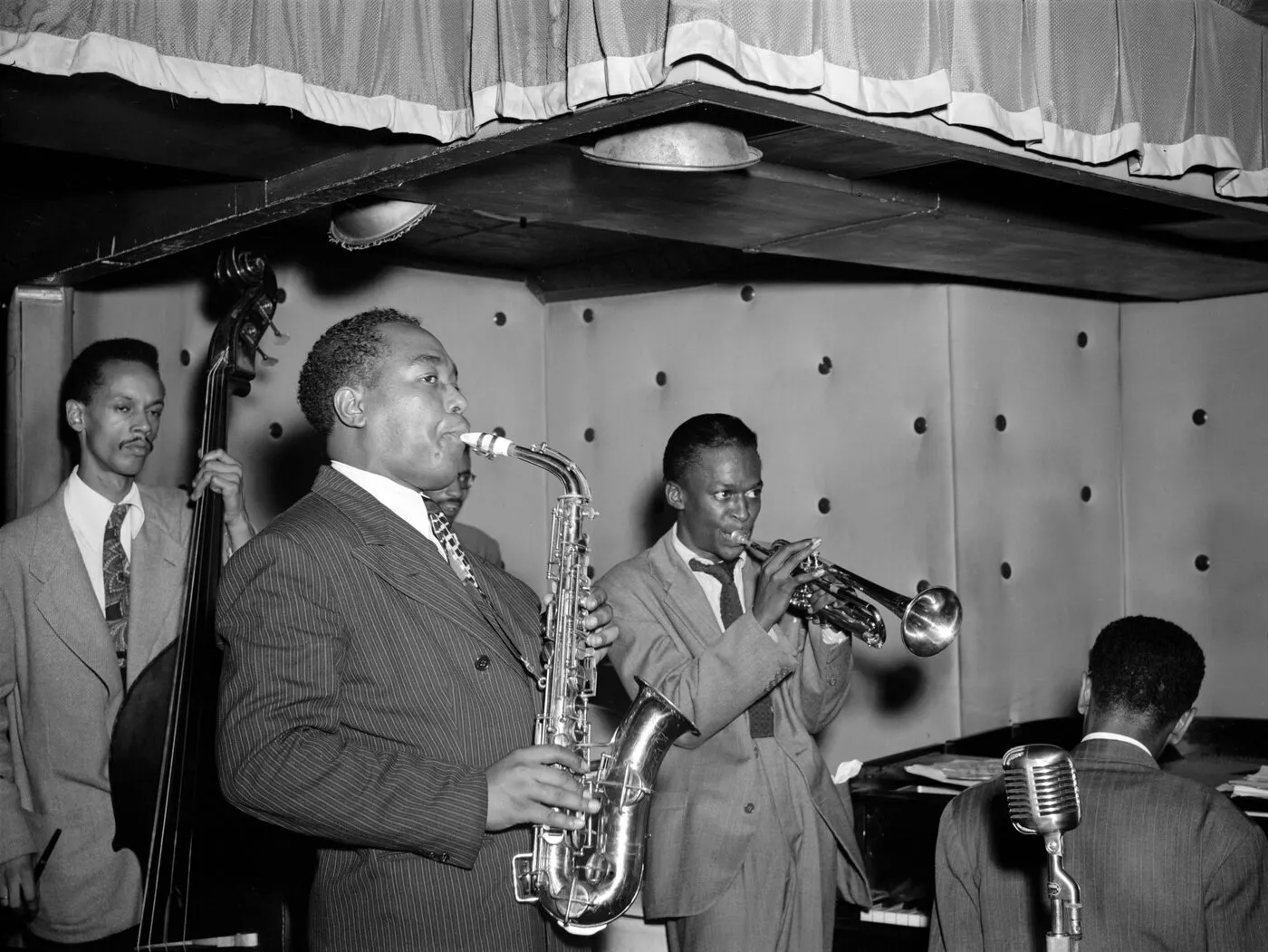

The recordings later collected as Birth of the Cool came from 1949–1950. Their nine-piece ensemble included French horn and tuba, giving Davis a different setting from Parker’s small group.
His Harmon mute became another recognizable sound. A mute fits into the trumpet’s bell to change its tone; Davis used the Harmon with its stem removed. It is a useful reminder that trumpet expression includes much more than volume.
For a first album, we would choose Kind of Blue from 1959. Begin with “So What” and attend to the spaces between phrases. You can enjoy the conversation without naming the harmony.
Davis kept changing direction. Bitches Brew, released in 1970, moved into jazz fusion, bringing jazz into contact with electric sounds and rock influences. Put it beside Kind of Blue and you hear why reducing him to one style misses so much.
He died in 1991. His recordings offer a particularly useful listening question: what happens when a musician changes the setting around an already distinctive voice?
Early jazz: the players behind the breakthroughs
Buddy Bolden played cornet in New Orleans, where his band helped shape what became jazz. No recording of his playing survives. “Buddy Bolden’s Blues,” recorded by Jelly Roll Morton, offers a connection to his repertoire, not a sample of Bolden himself.
King Oliver made the cornet speak through mutes, including a plunger held over the bell. His solo on “Dipper Mouth Blues” became widely imitated. He also composed “West End Blues,” giving Armstrong the material for that extraordinary opening.
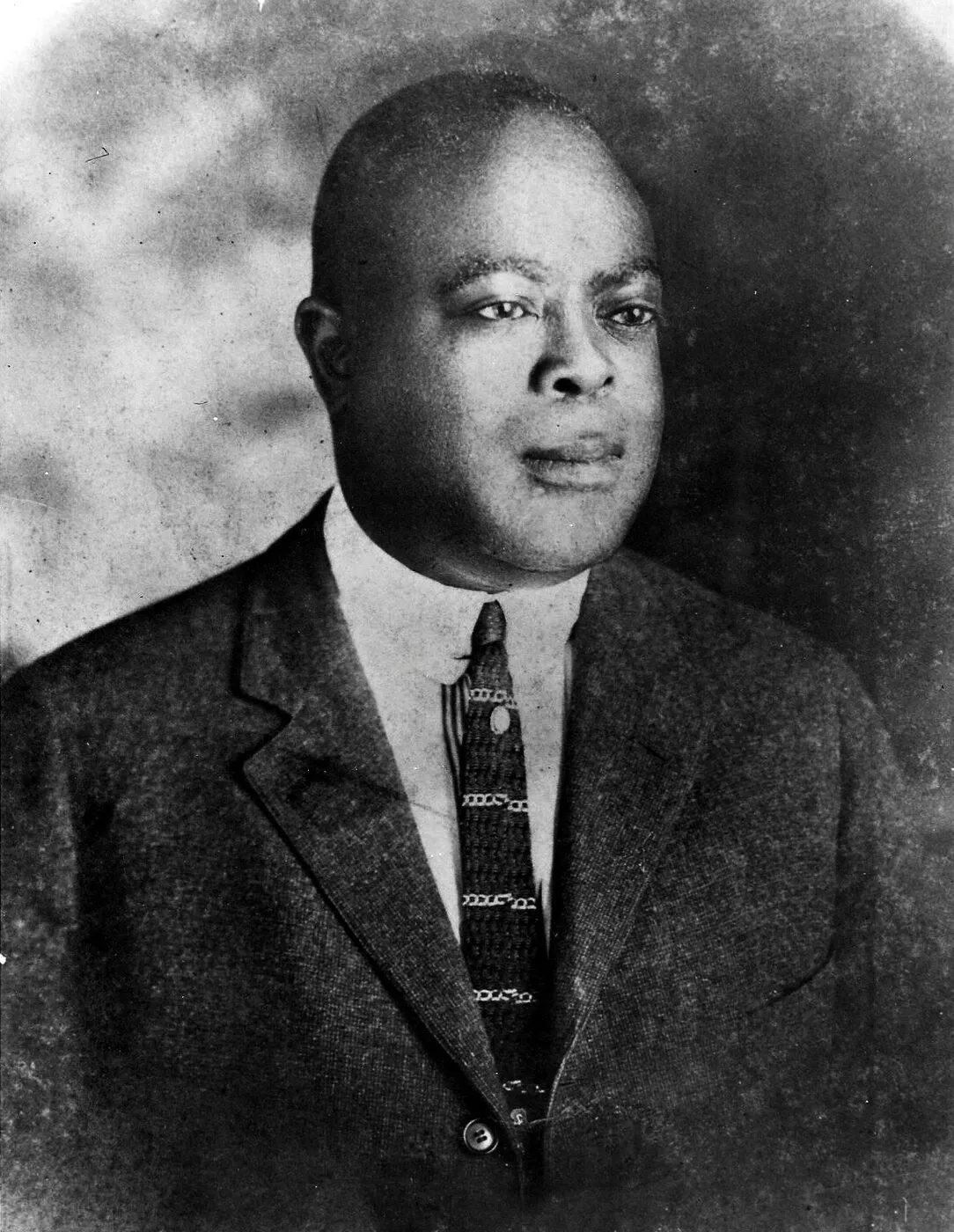

Bix Beiderbecke taught himself cornet by ear from records. Try “Singin’ the Blues” alongside Armstrong’s recordings and notice how differently a player can shape a phrase.
Roy Eldridge connects the Armstrong and Gillespie generations. “Let Me Off Uptown,” with Anita O’Day and Gene Krupa’s band, gives you trumpet and voice in direct conversation.
For the instrument’s wider story, our history of the trumpet follows the changes behind these musical possibilities.
Swing, big bands and stage personality
Harry James grew up in a traveling circus and took trumpet lessons from his father. His “You Made Me Love You” is our pick when you want a melody to follow rather than a fast solo to untangle.
Louis Prima combined trumpet and singing with stage entertainment. He wrote “Sing, Sing, Sing,” later made famous by Benny Goodman. Start with the medley “Just a Gigolo / I Ain’t Got Nobody” to meet the performer.
Clark Terry played with Count Basie and Duke Ellington and became one of the first Black musicians in a network television house band. He also helped establish the flugelhorn in jazz. “Mumbles” introduces his comic scat persona; his instrumental work rewards further listening.
Cool jazz and hard bop
Chet Baker played trumpet and flugelhorn and sang. “My Funny Valentine” became his signature with Gerry Mulligan’s quartet in 1952; the 1954 Chet Baker Sings version introduces his vocal side. Compare the two rather than treating every recording with the same title as interchangeable.
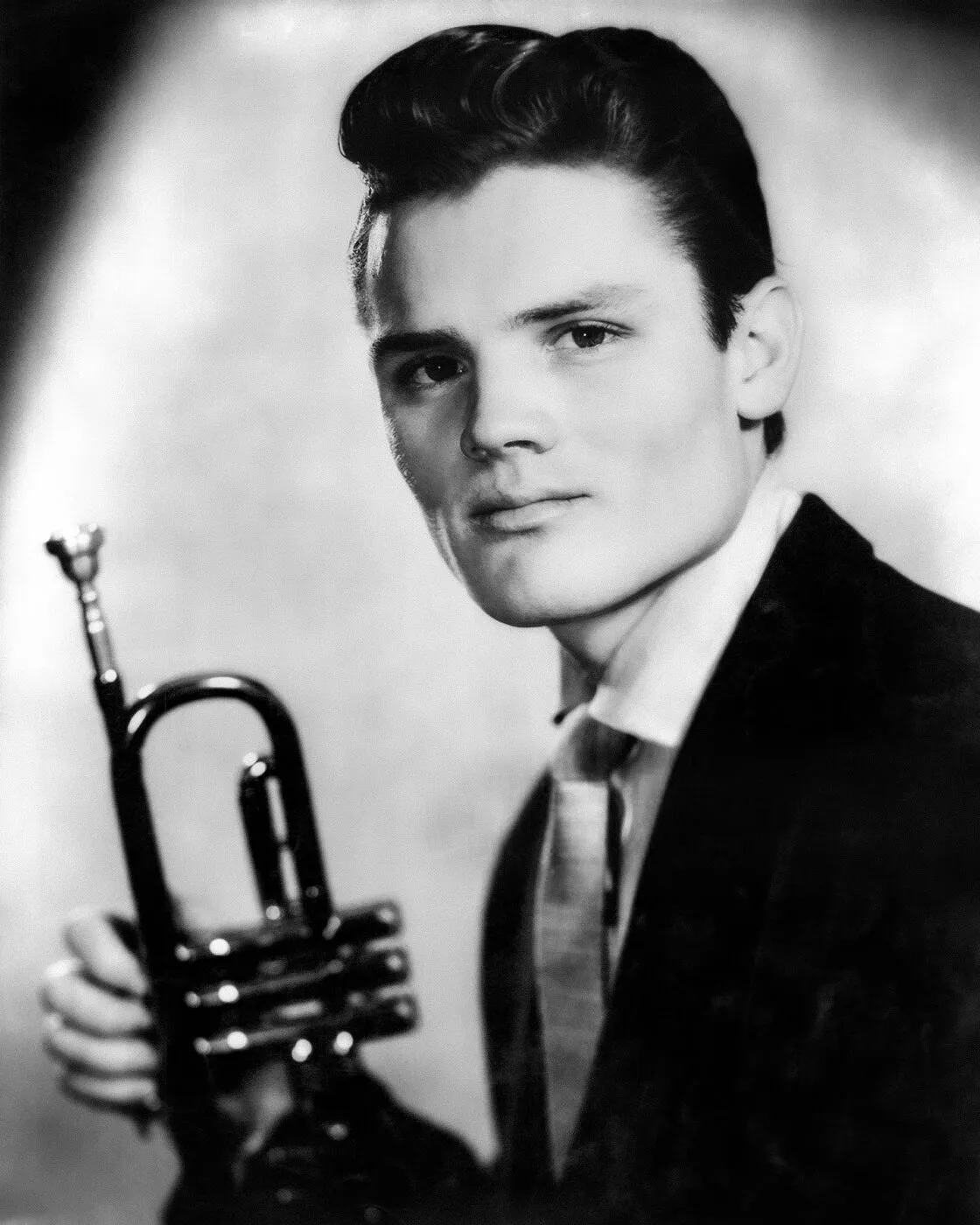

Clifford Brown recorded “Joy Spring” with drummer Max Roach in 1954. Follow the melody, then listen for how the solo grows from it. Brown died in a car crash in 1956, aged 25; Benny Golson later wrote “I Remember Clifford” in his memory.
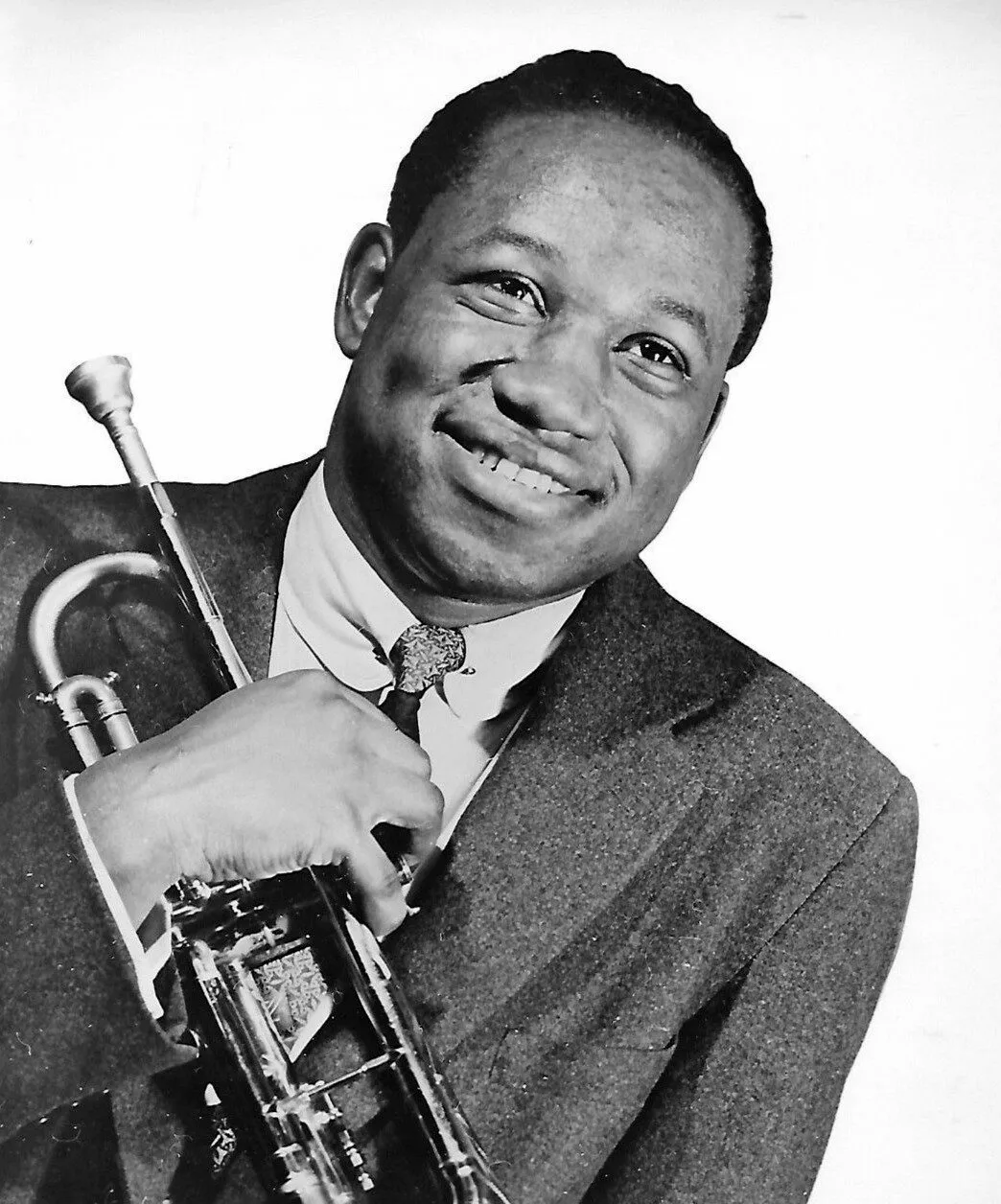

Lee Morgan took lessons with Brown and joined Gillespie’s big band at eighteen. “The Sidewinder” is an inviting entrance to hard bop, a jazz style drawing on bebop with strong blues and gospel influences.
Freddie Hubbard carried hard bop into other settings, including fusion. Start with “Red Clay.” You may also know his playing without knowing his name: the trumpet solo on Billy Joel’s “Zanzibar” is his.
High notes, television and pop hits
Maynard Ferguson made high-register playing a calling card. His recording of “Gonna Fly Now,” the theme from Rocky, is a good place to hear that sound. Enjoy the altitude without making it your first practice goal.
Doc Severinsen led The Tonight Show band from 1967 to 1992. His bright outfits made him easy to spot; the band’s 1986 album gives the music room beyond a television segment. He retired from concert performance in 2022.
Al Hirt brought trumpet instrumentals to a broad pop audience with “Java.” He also played the theme for The Green Hornet and gave the young Wynton Marsalis his first trumpet.
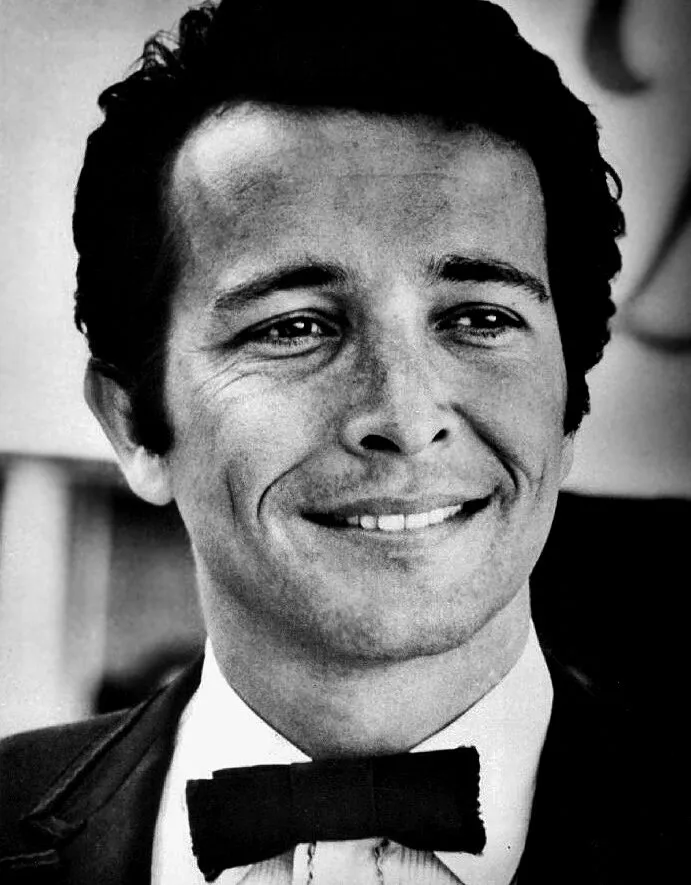
Herb Alpert, leader of the Tijuana Brass, made the trumpet central to instrumental pop. Try “A Taste of Honey,” then “Rise” for a different setting. A short tune can be as memorable as a long solo.

South African jazz, Latin jazz and newer voices
Hugh Masekela played trumpet, cornet and flugelhorn. “Grazing in the Grass” reached No. 1 in the US in 1968; “Bring Him Back Home” later called for Nelson Mandela’s release. Those recordings open different doors into his music.
Arturo Sandoval co-founded Irakere in Cuba and became Gillespie’s protégé. Danzón (Dance On) is a starting point for his Latin jazz; his work also extends into classical music.
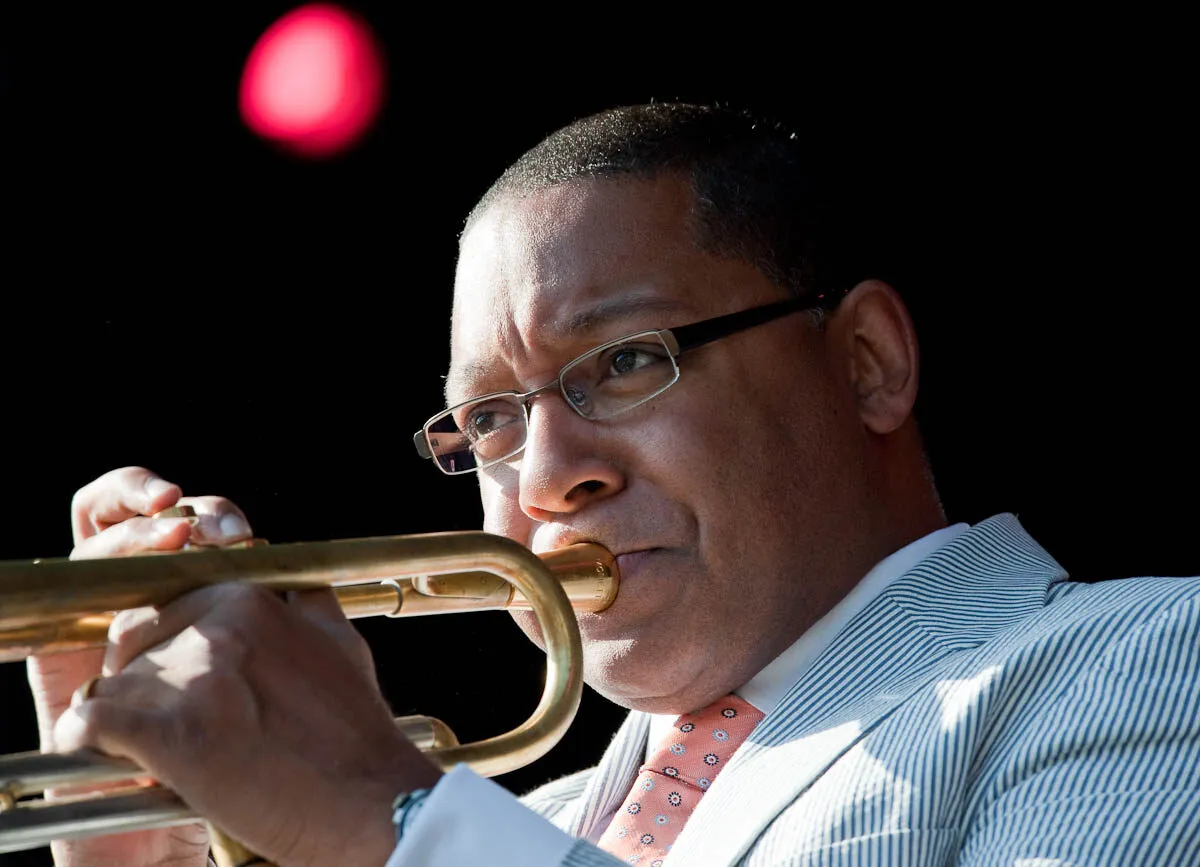
Wynton Marsalis moves between jazz and classical trumpet and works as a composer and educator. Begin with Black Codes (From the Underground). His Blood on the Fields won the Pulitzer Prize for Music in 1997.

Chris Botti offers a jazz-pop route through Impressions. Hearing Miles Davis play “My Funny Valentine” helped him commit to trumpet as a child.
Roy Hargrove (1969–2018) brought hard bop, Latin jazz and soul together. Try Habana with his group Crisol.
Classical trumpet: orchestras, soloists and new music
Maurice André is a starting point for classical and piccolo trumpet. His concerto recording with Herbert von Karajan places him beside the Berlin Philharmonic. If the smaller instrument catches your eye, our trumpet types guide explains the piccolo trumpet and flugelhorn.
Adolph “Bud” Herseth was Chicago Symphony principal trumpet from 1948 to 2001. His Haydn concerto recording lets you hear the orchestral player as soloist.
Håkan Hardenberger has expanded the contemporary trumpet repertoire through works written for him. HK Gruber’s Aerial offers a different listening adventure from a familiar classical concerto.
Sergei Nakariakov plays both trumpet and flugelhorn, often in transcriptions: music adapted from another instrument. Try Carmen Fantasy and follow the shape of the line through the rapid passages.
Alison Balsom has recorded on modern and natural trumpet. Italian Concertos is a welcoming introduction to her work. She retired from concert performance in September 2025; her recordings remain available to explore.
Tine Thing Helseth began in a school band at seven and founded the all-female brass ensemble tenThing in 2007. Her album Echoes brings together concertos by Arutiunian, Penderecki and Weinberg.
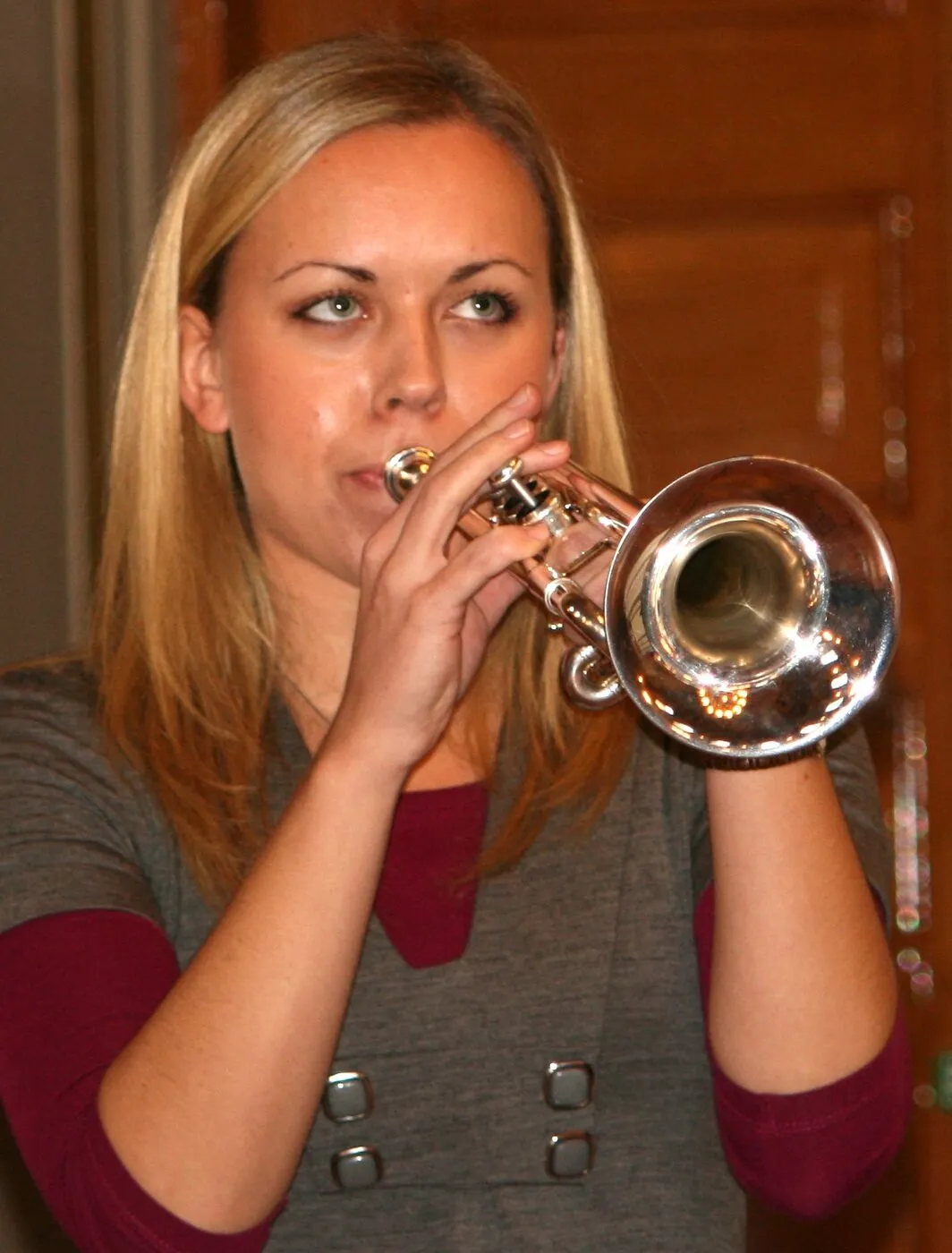

Valaida Snow: trumpet, voice and dance
Alongside Balsom and Helseth, Valaida Snow belongs on a listening list of famous female trumpet players. Her career brought trumpet playing together with singing and dancing, including international tours. W. C. Handy called her the “Queen of the Trumpet.”
All her commercial recordings as a trumpeter were made in Europe. Start with “High Hat, Trumpet and Rhythm.” Then compare her approach to combining voice and horn with Armstrong, Prima or Terry. That is a musical connection worth hearing for yourself.
Questions about famous trumpet players
Who are famous trumpet players today?
As of October 2026, Wynton Marsalis, Arturo Sandoval and Chris Botti remain active names in jazz and crossover music. In classical music, try Håkan Hardenberger, Sergei Nakariakov and Tine Thing Helseth. Herb Alpert is still touring in 2026, too.
For a first listen, choose Impressions for Botti’s jazz-pop sound or Echoes for Helseth’s classical playing. Doc Severinsen and Alison Balsom are also living, but retired from concert performance in 2022 and 2025 respectively.
What does Louis Armstrong’s nickname “Satchmo” mean?
The Louis Armstrong House Museum traces “Satchmo” to “Satchelmouth,” a childhood nickname. Its account says British music editor Percy Brooks greeted Armstrong with the shortened form, which Armstrong adopted. Other accounts of the nickname’s origin differ.
Which trumpet player won jazz and classical Grammys in the same year?
Wynton Marsalis won both at the 1984 Grammy ceremony, for Think of One and a recording of Haydn, Leopold Mozart and Hummel trumpet concertos. He repeated the achievement at the 1985 ceremony.
What you can take from them for your own playing
Choose a phrase you can sing back. Borrow the listening-and-copying approach that mattered to Armstrong: hear it, hum it, then find it on your instrument. Start with a short melody within your comfortable range.
Slow the recording down while keeping its pitch unchanged, if your player allows it. Play along with a small section, then try it alone. Listen for where the phrase begins and ends, not just whether you found the notes.
Spend some time on long tones: hold an easy note at a comfortable volume and listen for steadiness. Leave room to breathe and rest. These recordings can give you a sound to aim toward without becoming a daily comparison you have to win.
With your own B♭ trumpet, you can get started with tonestro and join a real song with a band in ten minutes, playing just one or two notes while tonestro listens to your notes and timing.