
The trumpet has no single inventor, birthplace, or invention date: people in different parts of the world developed instruments sounded by vibrating lips. Metal trumpets existed in Egypt by the 2nd millennium BCE, while horns and shells have a much longer history: a conch from Marsoulas Cave was played about 18,000 years ago. Two of the oldest surviving, still playable trumpets come from the tomb of Tutankhamun, who ruled Egypt around 1332–1323 BCE. The modern valve trumpet traces a decisive step to Prussian Silesia, where Heinrich Stölzel and Friedrich Blühmel developed valves and secured a joint Prussian patent on April 12, 1818.
Trumpet history at a glance
The biggest changes were in what players could do with the instrument: send a signal, play a melody, change notes freely, or take a jazz solo.
| Time | What changed | Example |
|---|---|---|
| Prehistoric times | Horns and shells became instruments sounded by the lips. | A conch from Marsoulas Cave was played about 18,000 years ago. |
| Around 1332–1323 BCE | Metal trumpets served ancient Egyptian ceremonial and military life. | Tutankhamun’s silver trumpet and its bronze or copper companion. |
| Around 1000 BCE | Scandinavian makers cast long, curved bronze instruments. | Bronze Age lurs, often found in pairs. |
| Ancient Rome | Different instrument shapes served organized signaling. | The straight tuba, curved cornu, and buccina. |
| Middle Ages | Long trumpets announced authority and carried military signals. | The herald’s buisine. |
| Around 1400–1500 | Makers bent the tube into an S-shape, then an elongated loop. | The folded natural trumpet. |
| By 1600 and through the Baroque | Skilled players used high natural notes for melodies. | Clarino playing; later, trumpet parts by Bach and Handel. |
| 1796–1804 | Keyed trumpets made chromatic melodies possible. | Concertos by Haydn and Hummel. |
| 1818 | A joint valve patent marked a turning point for brass instruments. | Stölzel and Blühmel’s Prussian patent. |
| 19th century | Valves spread, and the cornet became a leading band instrument. | Arban’s cornet method, published in 1864. |
| Early 20th century | Cornet and trumpet helped shape jazz. | Buddy Bolden, King Oliver, and Louis Armstrong. |
| 20th century onward | B♭ became the most common trumpet; older instruments also returned. | Modern B♭ trumpets, piccolo trumpets, and natural trumpets in concert. |
Before metal: horns and shells
Long before anyone pressed a valve, people made sound by blowing with vibrating lips into animal horns and shells. These early instruments belong to the wider story of lip-blown instruments; they were not modern trumpets waiting for their buttons.
A conch found in Marsoulas Cave in the French Pyrenees was used as a horn about 18,000 years ago. Researchers think it probably had an inserted mouthpiece. The shofar, made from a ram’s horn, remains part of Jewish religious practice today.
What did the first trumpet look like? We cannot identify a single first trumpet, but early examples were animal horns or shells, while ancient metal trumpets had straight tubes barely 2 feet (60 cm) long.
Ancient Egypt: Tutankhamun’s trumpets
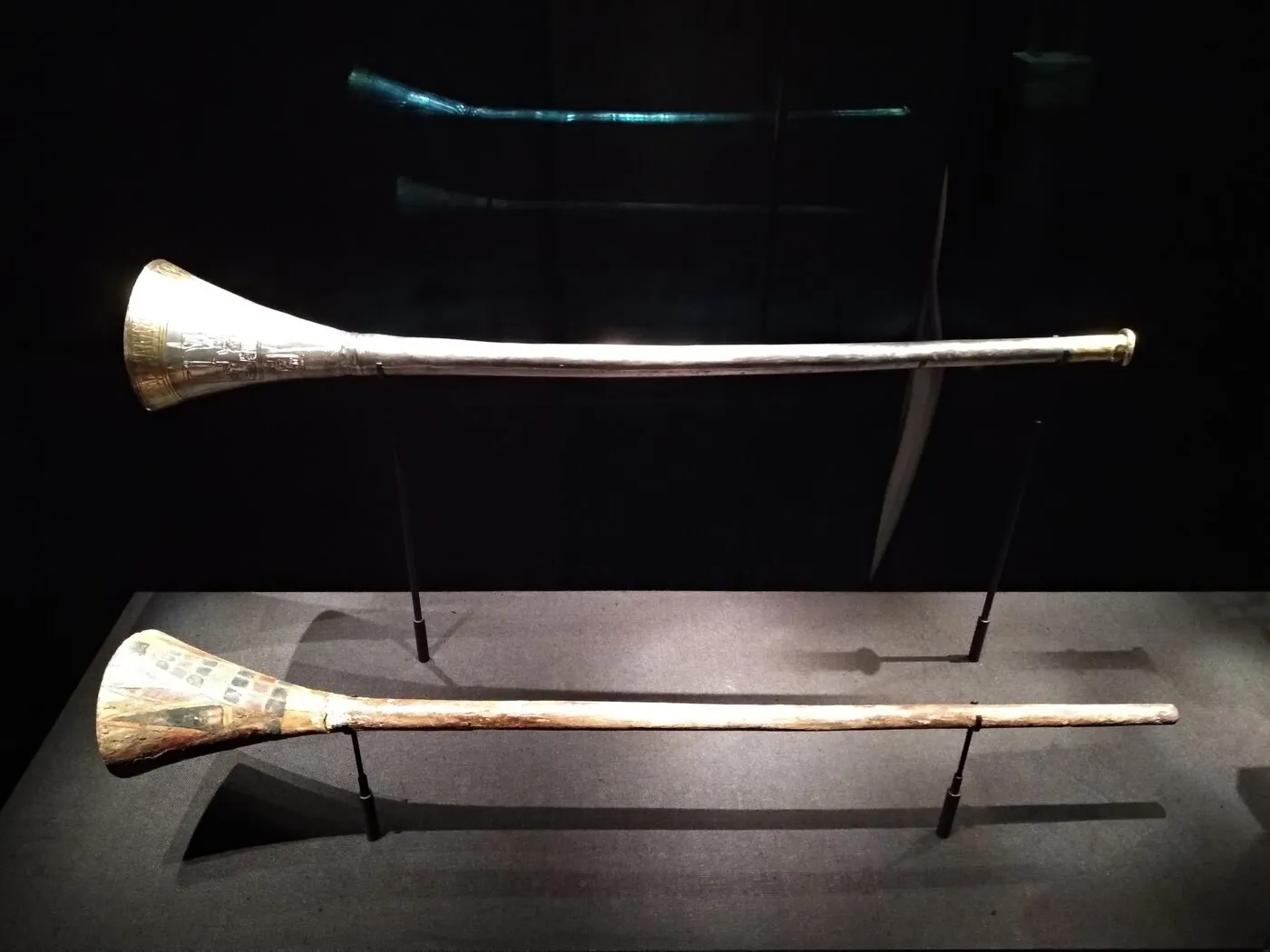

The instruments from Tutankhamun’s tomb make this ancient history unusually tangible. There are two trumpets: one is silver; the second is bronze or copper, and its metal has never been analyzed.
Howard Carter’s team discovered the tomb in 1922. Excavation continued afterward: the Griffith Institute’s record of the silver trumpet places it in the 1923–1924 season. Its long, straight shape is easy to recognize as a trumpet, even without the loops and valves you expect today.
These instruments probably sounded military signals on a single note, with rhythm carrying the message. Their purpose was far removed from playing a modern melody.
Then ancient Egypt reached the radio. On April 16, 1939, bandsman James Tappern played the trumpets using a modern mouthpiece in a BBC broadcast from the Egyptian Museum in Cairo. The audience was estimated at 150 million listeners.
The event also exposed their fragility. Presenter Rex Keating later recounted that the silver trumpet shattered during rehearsal; it was repaired before the broadcast. These are delicate archaeological objects, even though they have produced sound in modern times.
Bronze Age lurs: curved instruments from Scandinavia
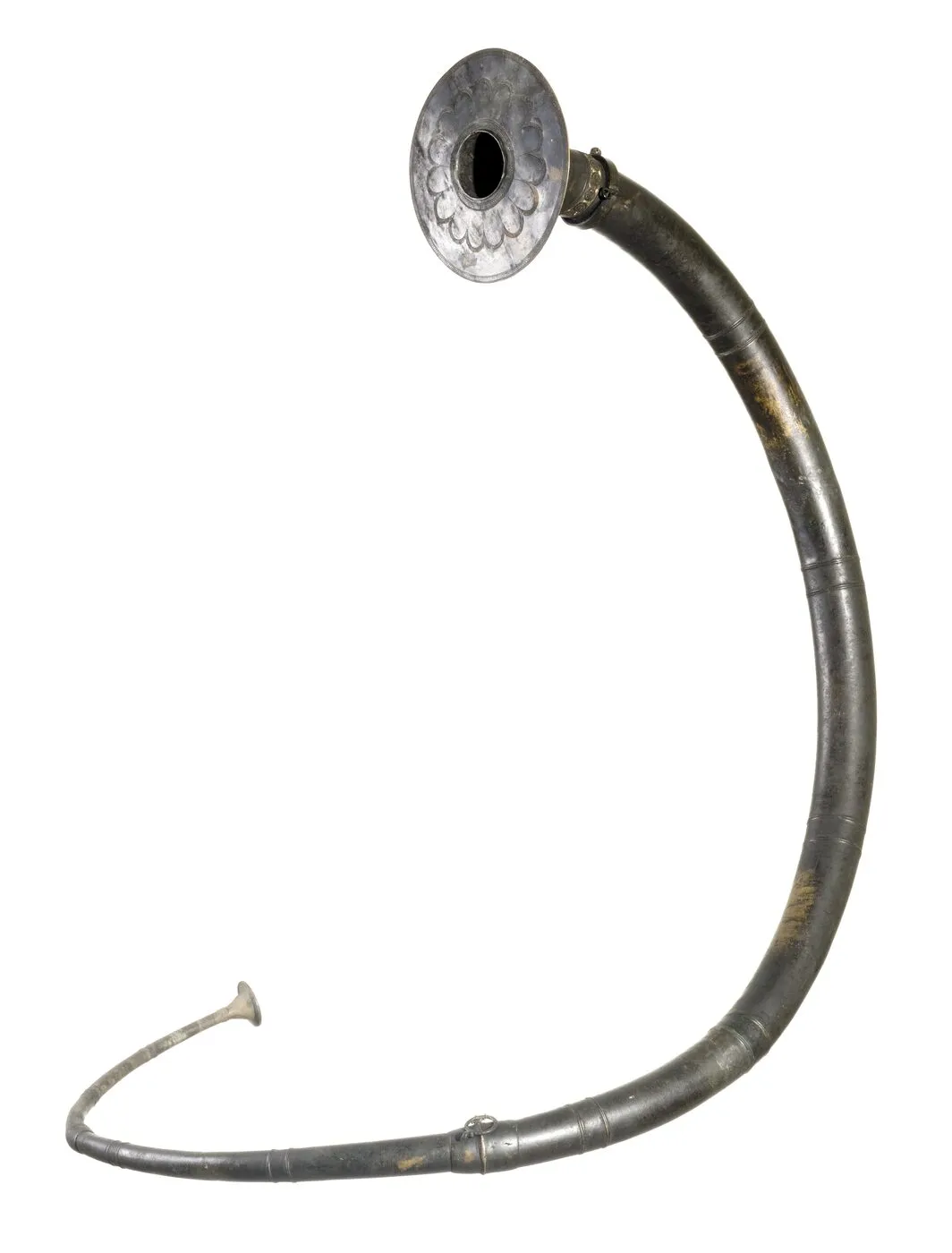

Around 1000 BCE, Scandinavian makers were casting bronze lurs with long, sweeping tubes. Many have been found in pairs in bogs.
The Brudevælte discovery is especially striking: six lurs were found in 1797, followed a week later by their six mouthpieces, tied together. The instruments were made around 800–700 BCE, and paired instruments were tuned to the same note.
Rock carvings show lur players in processions. The National Museum of Denmark considers ritual use more likely than battlefield signaling. Their separate mouthpieces show how refined Bronze Age instrument making already was.
Rome: the tuba, cornu, and buccina
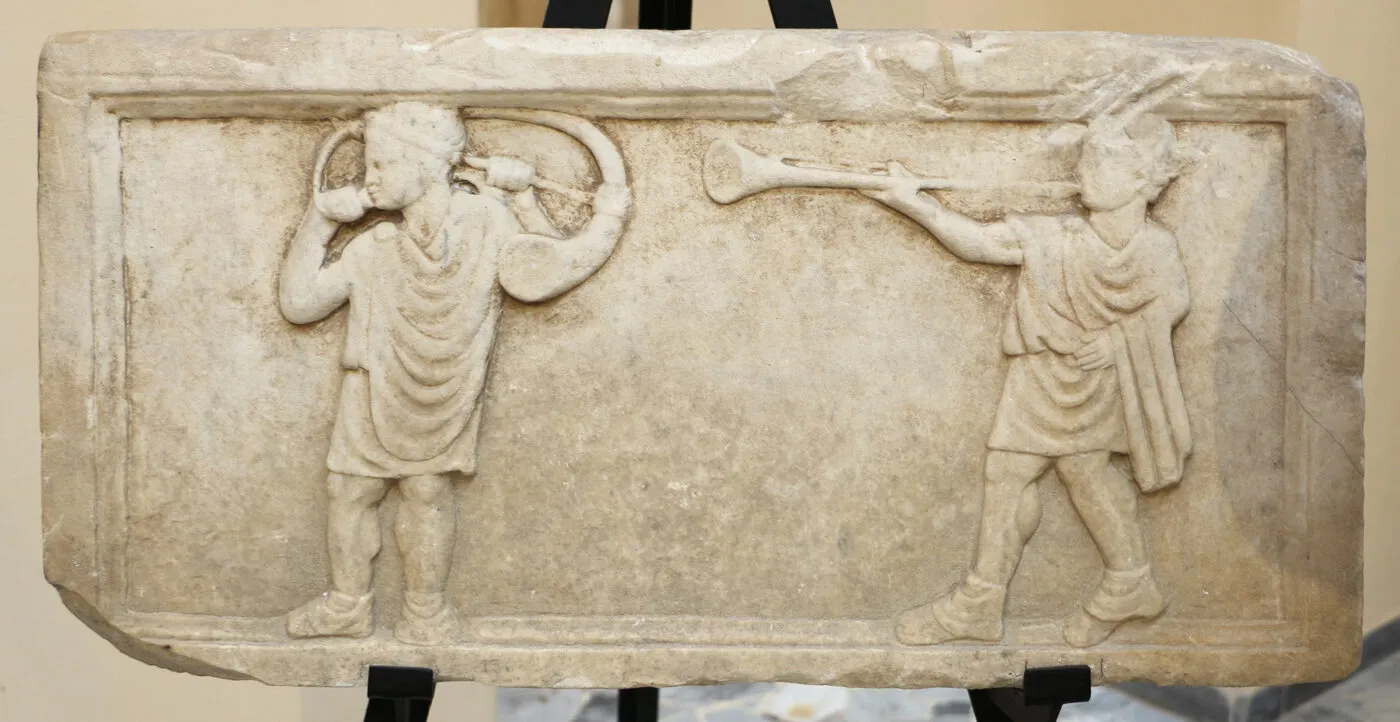

The Roman tuba was a straight trumpet with a detachable mouthpiece, quite unlike the large orchestral tuba familiar today. The cornu curved around into a G-shape, with a crossbar supporting it. Surviving examples come from Pompeii.
A similar instrument, the buccina, had a narrower bore, meaning the passage inside its tube. Its duties included signaling the night watches.
These instruments helped organize military life. Different players delivered the legion’s signals, turning breath and rhythm into instructions that could carry across a gathering of soldiers. The Greeks even held trumpet contests at Olympia, judged by loudness. The trumpet’s association with public authority would continue long after Rome.
Medieval heralds and the folding of the tube
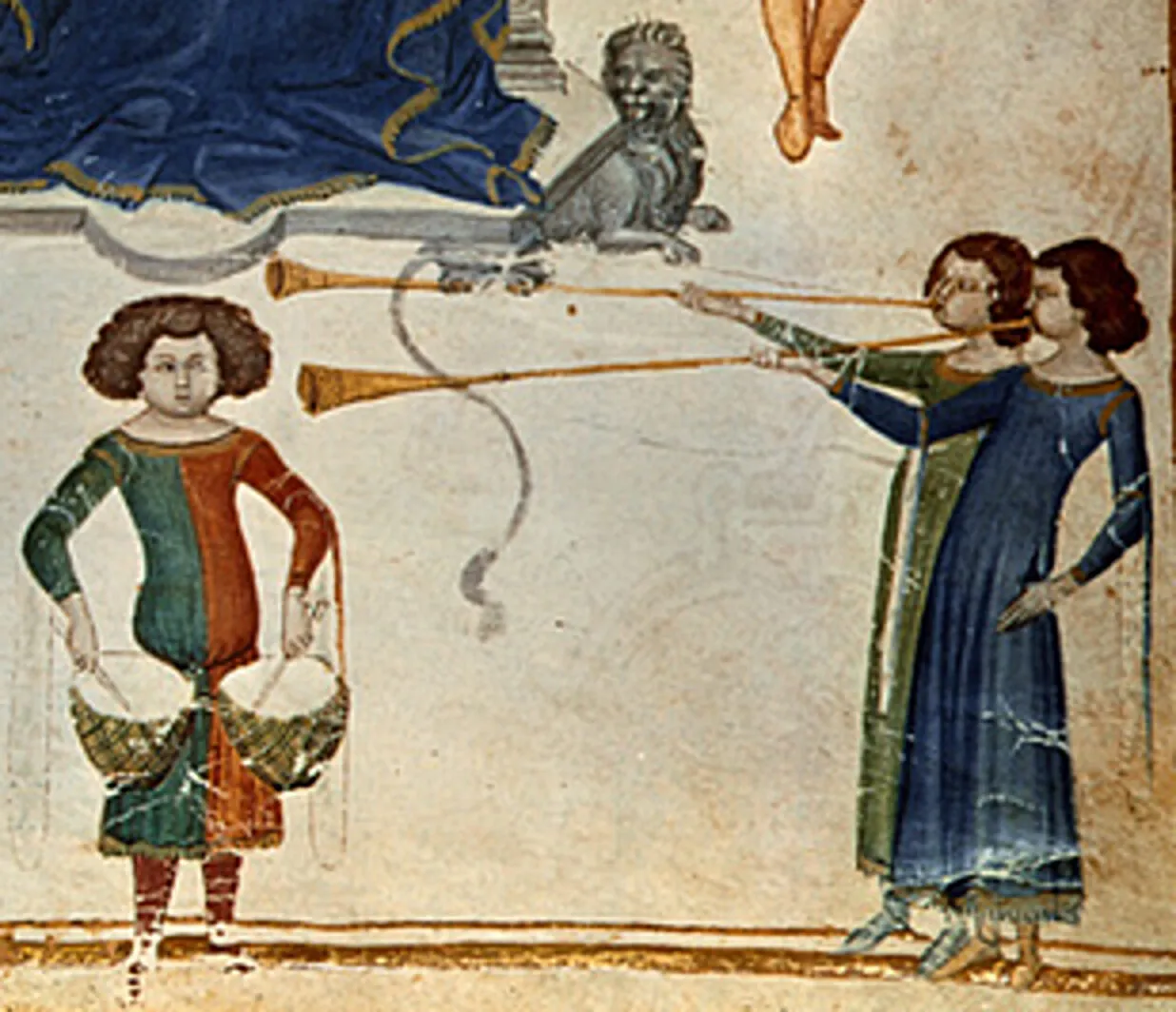

After the fall of the Western Roman Empire, the straight metal trumpet disappeared from Europe for centuries; encounters during the Crusades and the Reconquista brought it back.
The medieval buisine was a long, straight trumpet, often shown carrying a nobleman’s banner. Its name appears in the Chanson de Roland around 1100. Some instruments reached about 6 ft (almost 2 m) in length.
Trumpeters announced rulers and transmitted military signals. Their work demanded training: an incorrect signal could have serious consequences. Town tower watchmen also played signal trumpets.
The familiar folded shape arrived gradually. Around 1400, makers bent the tube into an S-shape; by about 1500, it formed the elongated loop associated with later natural trumpets.
Folding made a long tube easier to handle. It did not create valves or give players every note. The next chapter depended on what a skilled player could do with the notes already available.
Baroque trumpets: high notes, guilds, and Bach
A natural trumpet has no valves. It plays a harmonic series: a set of notes available from one length of tubing. Low in that series, the notes sit far apart. Higher up, they lie closer together, making melodies possible.
That high area is called the clarino register. By 1600, court and guild trumpeters were playing melodies there. It required precise control of the embouchure, the way a player shapes and uses the lips around the mouthpiece. Some notes also needed adjustment with the lips to bring them into tune.
Nuremberg became a major center of trumpet making. Instruments by Anton Schnitzer survive from the 1580s, and the Haas family became prominent makers. Trumpet making and playing in Germany were tightly regulated by guilds. Access to the profession, teaching, and prestigious performances came with rules. The Imperial Trumpeters’ and Kettledrummers’ Guild, founded in 1623, restricted its musicians to performing for the emperor, kings, electors, counts, knights, and people of similar rank.
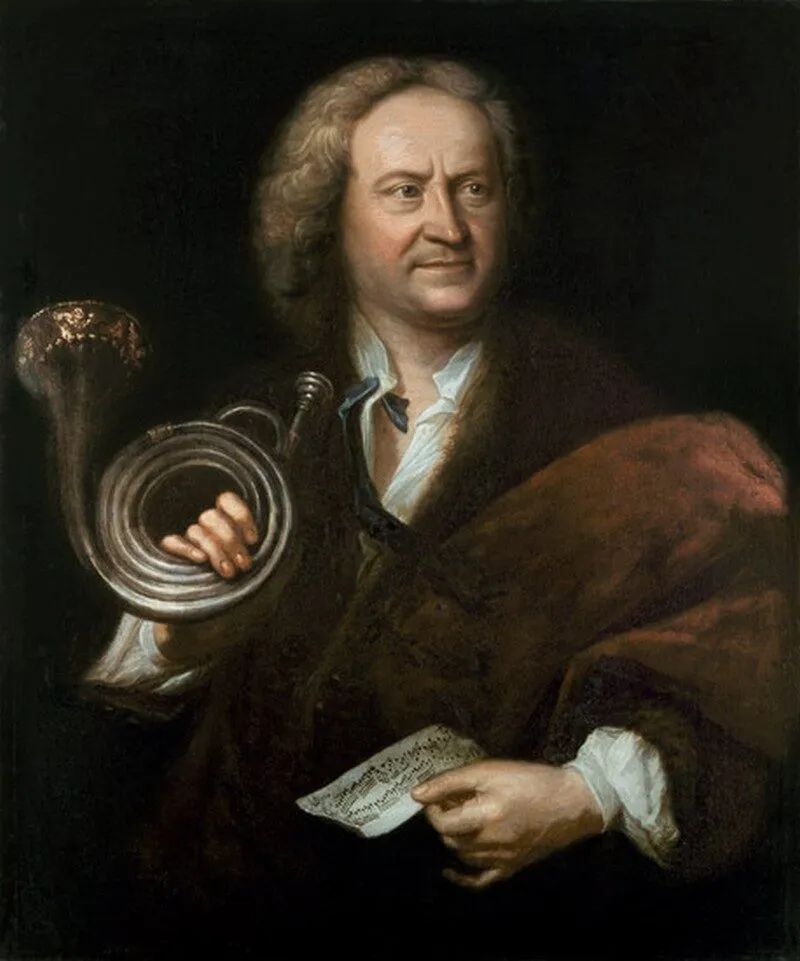

Gottfried Reiche played for Bach in Leipzig from 1723 until his death in 1734. His portrait shows a tightly coiled instrument and a sheet bearing a fanfare. The exact identification of the instrument is debated, so its unusual shape should not be treated as the standard Baroque trumpet.
Bach’s Brandenburg Concerto No. 2, presented in 1721, has a famously demanding part for natural trumpet in F. Handel gave the instrument another memorable role in “The trumpet shall sound” from Messiah, composed in 1741.
When you hear those parts, remember what the players were working with: no valves, and high notes selected through the lips. The instrument’s limitations prompted remarkable playing.
The keyed trumpet: Haydn and Hummel
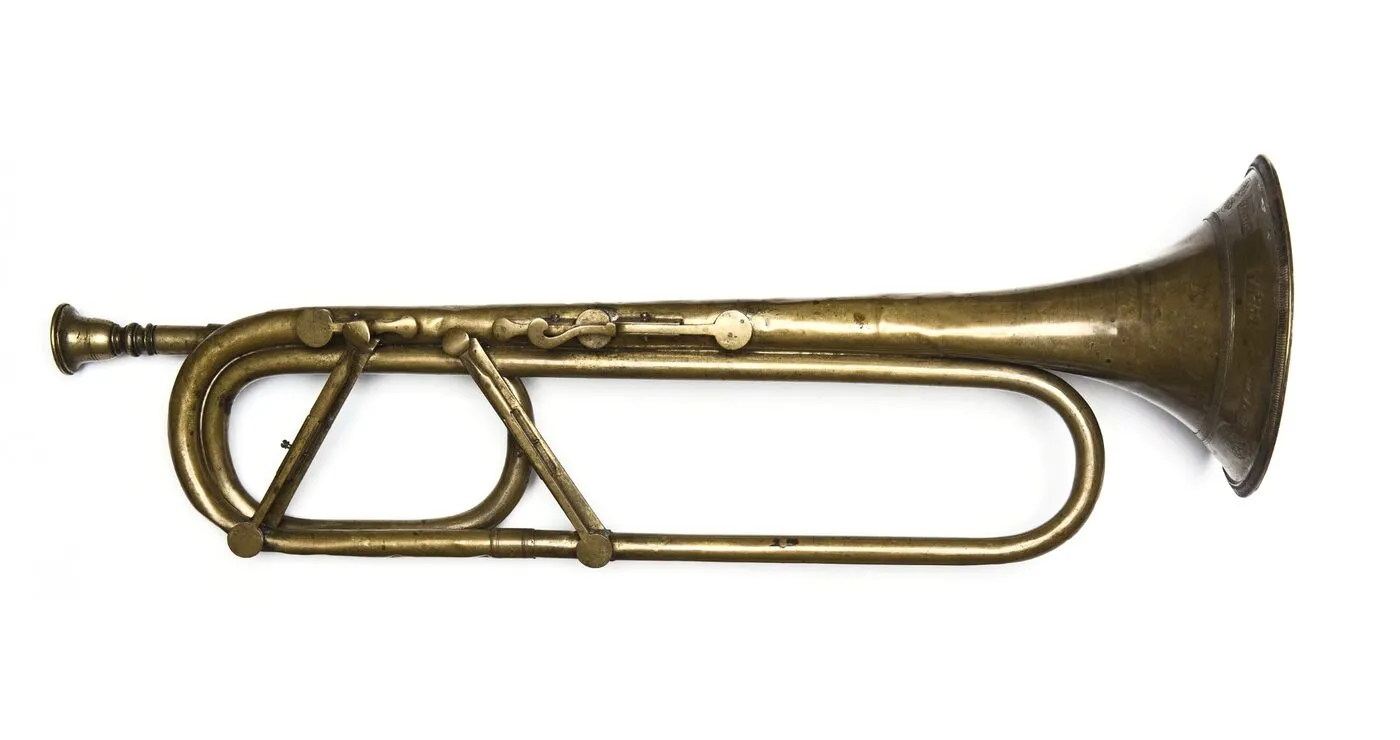

Before valves became established, makers tried another solution: holes in the tube covered by keys. The keyed trumpet could play chromatically, meaning it could move through all the half steps of a scale.
Viennese court trumpeter Anton Weidinger is closely associated with its development, although similar inventions probably appeared in several places. Haydn wrote his Trumpet Concerto in E♭ for Weidinger in 1796. Weidinger premiered it in Vienna in 1800.
Hummel followed with a concerto completed in December 1803 and performed at the Esterházy court on January 1, 1804. Originally in E major, it is often played in E♭ today.
Those works capture a moment when composers could explore notes that had been difficult or unavailable on the natural trumpet. The keyed instrument did not become the lasting standard, but its repertoire survived its decline.
Valves: the change behind the modern trumpet
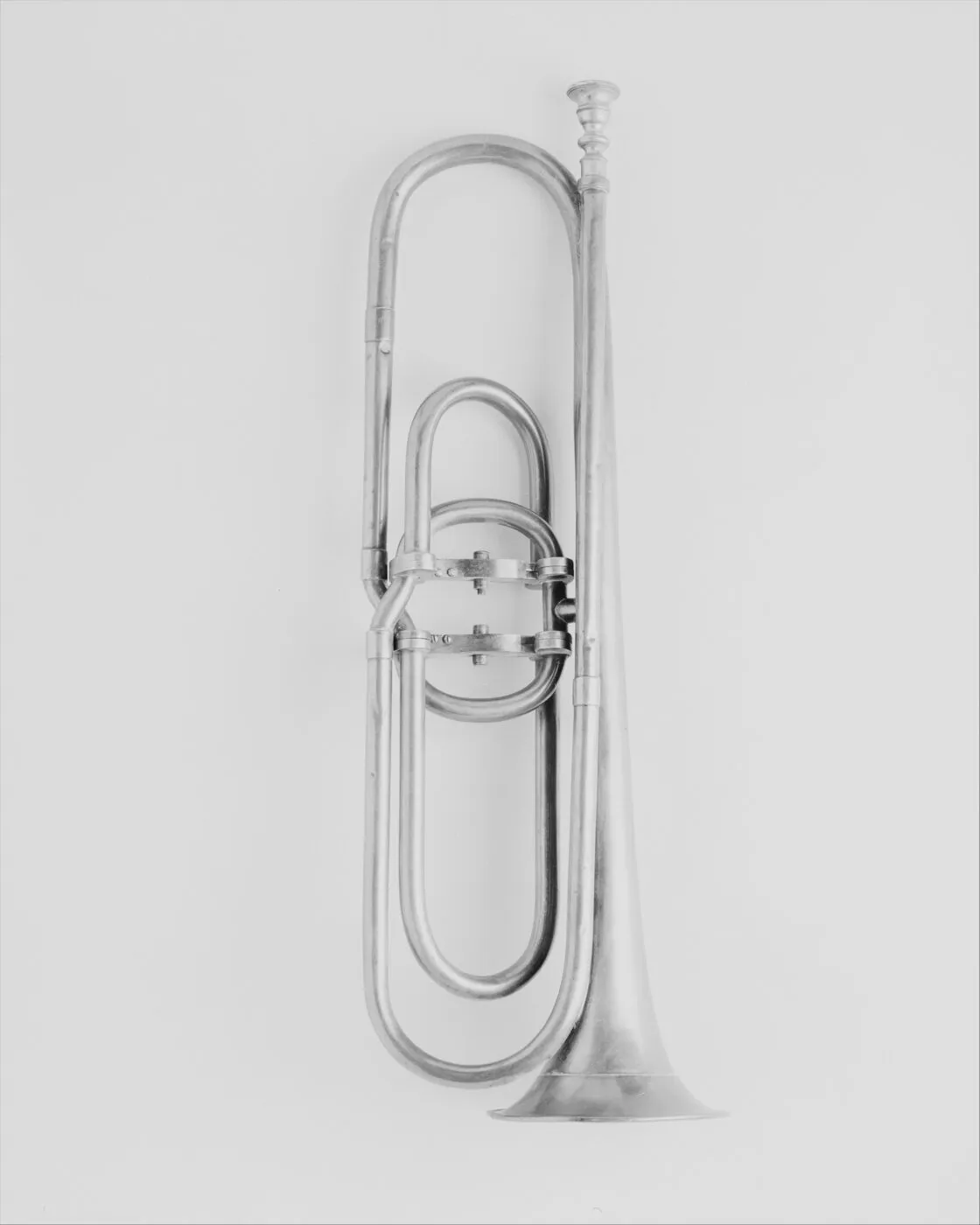

Valves offered a different way to change pitch: redirect the air through extra tubing. A longer air path lowers the notes available to the player.
Heinrich Stölzel had a playable valve horn by 1814. Friedrich Blühmel developed a valve system apparently independently in Prussian Silesia. Their joint patent of April 12, 1818, is a firm milestone, although development began before that date.
Further improvements followed. In Vienna, Joseph Felix Riedl and Joseph Kail received a privilege for a double-tube slide valve in 1823. Riedl later patented a rotary valve. In Paris, François Périnet developed the piston-valve system that underlies most trumpets today.
The change was gradual. Natural and valved trumpets continued alongside each other in orchestras during the first half of the 19th century. A patent could introduce a mechanism; players and composers still had to adopt it.
The cornet’s place in the story
The 19th-century story also belongs to the cornet. It evolved from the continental post horn in the 1820s and quickly became a leading instrument in brass and military bands, especially in England and the United States.
Its valves suited melodic playing. Composers could assign fanfares to trumpets and flowing melodies to cornets, sometimes writing separate parts for both. Jean-Baptiste Arban published his cornet method in 1864.
The cornet is a separate instrument, with a more conical tube and a generally mellower sound. Yet its history is inseparable from the trumpet’s, especially when the story reaches New Orleans.
Jazz: Bolden, Oliver, and Armstrong
Buddy Bolden, a key figure in early New Orleans jazz, played cornet. His band reached its peak around 1900–1907, but no recordings survive.
King Oliver also played cornet. His Creole Jazz Band recorded in 1923 with Louis Armstrong on second cornet. Oliver helped develop the expressive use of mutes.
Armstrong had learned cornet at the Waif’s Home in New Orleans in 1913–1914. He later switched to trumpet, a change often associated with the trumpet’s growing dominance in jazz. From the swing era onward, the louder trumpet largely took over the cornet’s earlier place.
For a listening starting point, try Armstrong’s “West End Blues” from 1928. Its trumpet introduction and solo are among the most influential improvisations in jazz history. Our guide to famous trumpet players follows the musicians who carried the instrument further.
The trumpet today
During the 20th century, the smaller B♭ trumpet became the most common type. It appears in jazz, concert bands, orchestras, and popular music, and it is the standard starting instrument for beginners.
Older music also encouraged different approaches. Modern orchestras often use piccolo trumpets for high Baroque parts. Interest in natural trumpets revived in the mid-20th century, bringing their sound back to concert performances.
Some modern Baroque copies have vent holes to help notes speak and tune more reliably; others reproduce the fully natural, hole-free instrument. Our guide to types of trumpets explains these differences, including why a piccolo and a pocket trumpet are not the same thing.
Eight trumpet facts that explain the instrument
1. How long is a trumpet uncoiled?
A standard B♭ trumpet contains roughly 1.3–1.5 meters of tubing, about 4 feet 3 inches to 4 feet 10 inches. Measurements vary by instrument and source. Folded into its normal shape, it is about 49 cm (19 in) long, or around 55 cm (22 in) with the mouthpiece.
2. What is a trumpet made of?
Most trumpets are made mainly from brass, an alloy of copper and zinc. Lacquer or plating provides a surface finish. A silver-plated trumpet is therefore not necessarily made from solid silver. Plastic trumpets also exist. A common student trumpet weighs about 1.1 kg (2.4 lb).
3. How many valves does a trumpet have?
Most modern trumpets have three valves. On a piston trumpet, the three buttons operate them. Piccolo trumpets usually have four valves, while a natural trumpet has none.
4. What do the valves do?
Each valve sends air through extra tubing and lowers pitch. The first lowers it by a whole step, the second by a half step, and the third by one and a half steps. Players combine them to reach further notes and adjust tuning with valve slides and the lips.
5. Why is the trumpet a brass instrument?
It belongs to the brass family because the player’s vibrating lips start the sound. Material alone does not determine the family: even a plastic trumpet remains a brass instrument. The lips work with the air column inside the tube.
6. Is the trumpet a woodwind?
No. A trumpet is a wind instrument in the brass family. Woodwinds start sound with a reed or by directing air against an edge, as on a flute. A saxophone may be made of brass, but its reed makes it a woodwind.
7. What is the trumpet’s range?
The standard written range is F♯3 to C6, about two and a half octaves. Experienced players can go higher. Beginners often have about an octave available, and range develops gradually. On a B♭ trumpet, these written notes sound a whole step lower.
8. How can one fingering produce different notes?
Each tube length offers several notes from its harmonic series. Players choose among them through their embouchure. Written C, G, and high C can all be played with no valves pressed. The fingers select a tube length; they do not determine the note by themselves.
More questions about the trumpet
How old is the trumpet?
Metal trumpets existed in Egypt by the 2nd millennium BCE. Lip-blown horns and shells are much older: a conch from Marsoulas Cave was played about 18,000 years ago. The modern valve trumpet came much later, with Stölzel and Blühmel’s joint valve patent in 1818 marking a turning point.
Where does the word “trumpet” come from?
“Trumpet” entered English in the late 14th century from the Old French “trompette,” a diminutive of “trompe.”
Can you play bugle calls on a trumpet?
Yes. A bugle call can be played without moving the trumpet’s valves, sometimes with one valve held down throughout. Traditional military bugles have no valves and use notes from the harmonic series.
Why is it called a B♭ trumpet?
When you play a written C, a B♭ trumpet sounds B♭, a whole step lower. That is why it is called a transposing instrument. The name does not mean it can play only music in B♭.
Put the history in your hands
Since Tutankhamun’s time, the basic principle has remained recognizable: vibrating lips, air, and a tube. The valves have changed what you can play; you still supply the sound.
Today, you can practice your own B♭ trumpet with a music school that listens. With tonestro’s trumpet lessons, you can play along with your first song in ten minutes: one or two notes in a real song with a band, with full tempo coming later. The lessons guide you from your first notes toward songs, while the app listens through the microphone and shows whether each note is right and in time. Use a mirror or a short video of yourself to check your hands and embouchure.
If the first sound feels like the biggest hurdle, start with what makes the trumpet hard to learn. You can begin with the notes available to you today.