
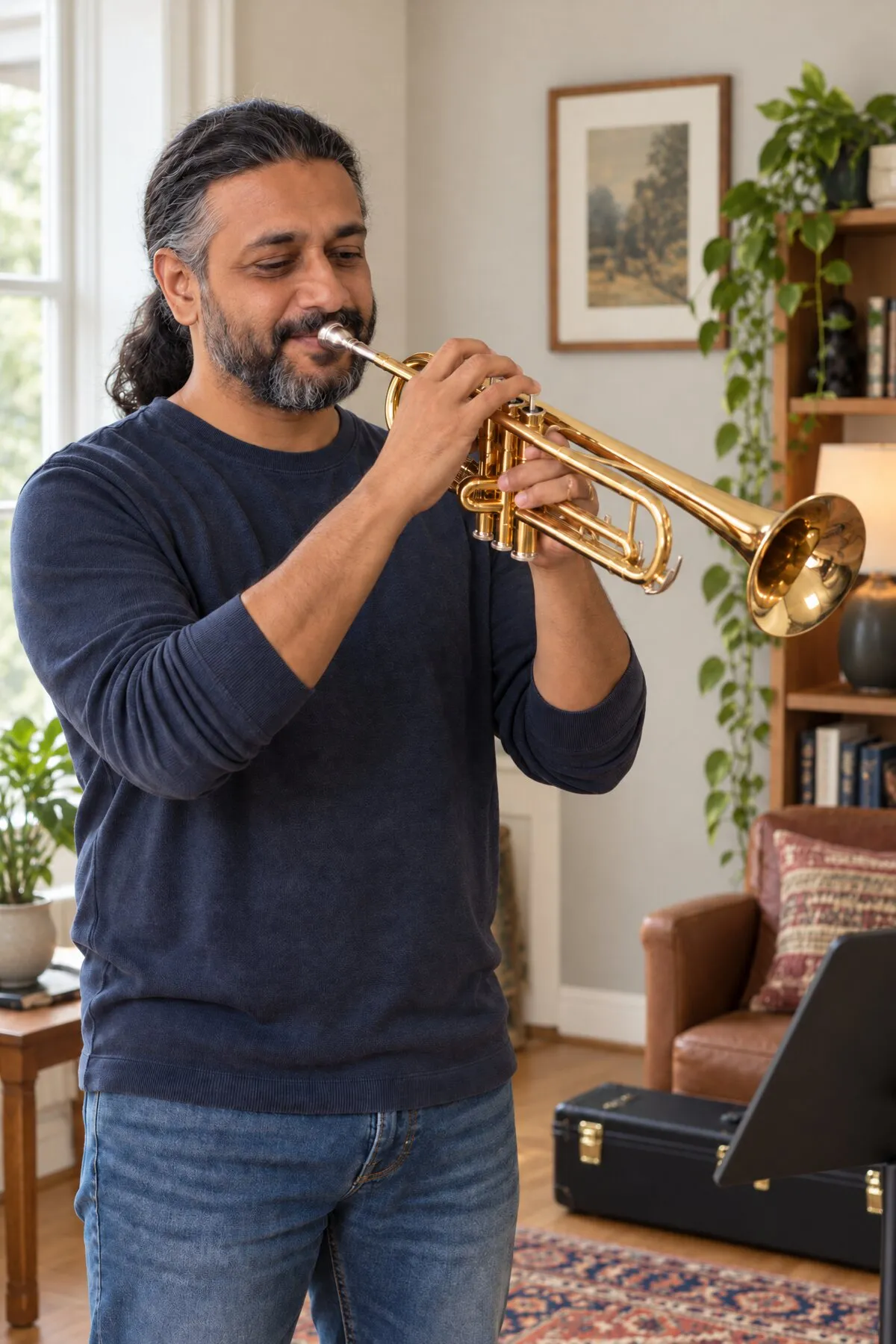
What you can do on your own
- Learn the fingerings. Look up the notes the app’s fingering chart covers and practice each until your fingers know it.
- Know if a note was right. Each note gets an instant check for pitch and rhythm. Your lips and posture are yours to watch in a mirror.
- Set your own pace. Pick songs from the library and repeat a tricky bar as often as you like.
Typical self-study mistakes
- Puffing your cheeks
Many beginners don’t notice their cheeks filling with air, which costs control and endurance.
What helps: tonestro gives you feedback on pitch and rhythm. Check your cheeks in a mirror or a short video of yourself: cheeks flat, corners of the mouth firm.
- Starting notes without the tongue
On your own, it is easy to start tongued notes with just a puff of breath, so they speak late and sound blurry.
What helps: Use a gentle “too” for each separately articulated note. Under a slur, tongue only the first note.
- Playing out of tune without noticing
Small pitch differences are hard to hear at first. On most trumpets, the written D4 and C#4 (fingered 1-3 and 1-2-3) tend to sound sharp.
What helps: Compare with a reference pitch; tonestro also shows at once when a note is out of tune. Written D4 and C#4 tend to sound sharp: push the third valve slide out a little, usually with its finger ring, and listen until the note sits. Bring the slide back for the next note.
Your practice week
- Every session: warm up
A minute of mouthpiece buzzing, then a few long tones and slow lip slurs in the middle range, with short rests.
- First days: something new
Work on the next note or rhythm from your course, slowly, until tonestro shows it in tune and in time.
- Then: one song
Pick a song from the library and choose one short, tricky passage. Clap its rhythm, play it slowly with deliberate valve changes, then add the bar before and after it.
- Once it feels steady: play it through
Play your song from start to finish at full tempo, as if for an audience.
- One or two easy days
Keep one day light or take it off so your lips recover; on the other, play just for fun.
Songs for your practice week
Pick your song of the week from 63 easy songs for trumpet in Bb, for example:
- Happy Birthday
- Downtown Boogie
- Old MacDonald Had a Farm
- Monkeys Spinning Monkeys
- Danse macabre
- Happy Whistling Ukulele
Questions about teaching yourself
Can you really teach yourself trumpet?
Yes, with a plan, short sessions and honest feedback. tonestro checks pitch and rhythm as you play; a mirror shows you your lips and posture. More: Learning without a teacher
Why does a C on my trumpet sound like a Bb on the piano?
Your trumpet is in Bb: a written C4 sounds as Bb3, a whole step lower. That is why music for Bb trumpet is written a whole step higher than it sounds. On a trumpet in C, written and sounding notes match.
How do trumpet fingerings work?
The valves are numbered 1, 2 and 3 from the one closest to you, pressed by your index, middle and ring fingers. A fingering like 1-3 means the first and third valve together.
Should I buzz on the mouthpiece alone?
A minute or two at the start of a session can help your lips find the buzz; spend the rest on the trumpet itself.
Updated: