
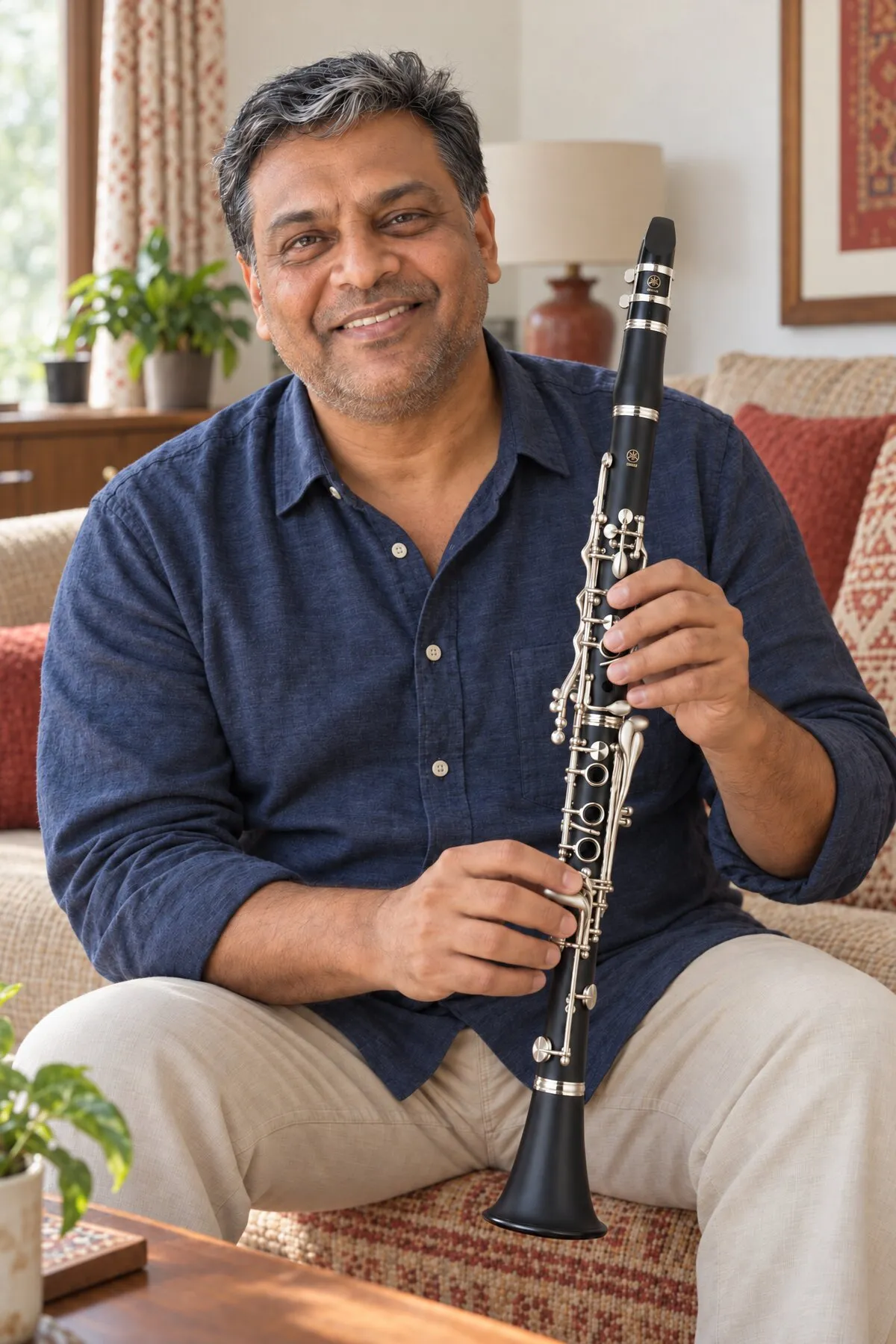
At a glance
- Age
- Any age is a good age to start.
- Instrument
- A Bb clarinet; plastic is fine to begin with.
- Practice
- 15 to 30 minutes on most days.
- First song
- One or two notes along with a real song and a band, in ten minutes.
Why adults learn the clarinet well
- You know what you want. Maybe it's the warm low notes, a jazz line or a seat in a wind band. That goal carries you through the squeaky first weeks.
- You value small steps. Notice the small changes: can you hold a note more steadily, or start it more clearly than last week?
- You read just one line. Clarinet music sits on a single staff in treble clef, so reading grows step by step alongside your playing.
What you need to start
- A Bb clarinet. A plastic student model is robust and fine for the first years. Have a used one checked for leaky pads.
- A few reeds. Choose a cut and strength that suit your mouthpiece; around 2 to 2.5 is a common starting point.
- A swab. Pull it through the clarinet after playing, so no moisture stays inside.
- Your phone or tablet with tonestro: iPhone or iPad with iOS 15 or later, or an Android phone with Android 8 or later and at least 4 GB of memory.
How it starts
- Your first song on day one
You play one or two notes along with a real song while a band plays with you. That takes ten minutes, and the full tempo comes later.
- A round, steady tone
Your embouchure, the way lips and teeth sit on the mouthpiece, grows stronger over the first weeks. tonestro gives you instant feedback on pitch and rhythm, and a mirror helps you check what you can see of your embouchure.
- Both hands, then the upper register
Once your right hand joins, the low notes open up. Later the register key takes you into the upper register, and your songs grow with it.
Your first clarinet songs
tonestro has 63 easy clarinet songs, and these get by with just a handful of notes:
Tips for everyday practice
- Keep your clarinet within reach. A clarinet stand next to your chair turns a spare ten minutes into practice.
- Begin with long tones. Two minutes of long, calm notes with short breaks in between wake up your lips and your air.
- End on a favorite. Finish each session with a song you already play well, so you put the clarinet away smiling.
Questions adults ask
Am I too old to learn the clarinet at 60?
No. Steady air and relaxed fingers improve with practice at any age. More on that: too old to learn an instrument?
Should I start on a plastic or a wooden clarinet?
Plastic is a great start: light, robust and less prone to cracking. Wooden clarinets sound warmer to many ears but need more care.
Bb or A clarinet: which one do I need?
The Bb clarinet. Beginner music is written for it, and the A clarinet usually comes later, mostly for orchestra music.
I played clarinet years ago. How do I get back into it?
Start with long tones and a fresh reed while your embouchure comes back. Then pick a tonestro course that matches your level.
How long does it take to learn the clarinet as an adult?
Many beginners play their first notes on day one, while a reliable tone takes longer. For what follows, read how long it takes to learn the clarinet.
Updated: